Discover how centuries of artistic mastery have shaped the royal narratives of Prague Castle. This article explores the deep symbolic connection between architecture, sculpture, and the coronation rituals that defined Bohemian history. The article now includes expanded details on St. Vitus Cathedral, including the Golden Gate mosaic and Chapel of St. Wenceslas.
When you step into the vast courtyards of Prague Castle, you are not merely entering a fortress; you are stepping onto a grand stage where the drama of Bohemian history has played out for over a thousand years. For travelers and history enthusiasts alike, the castle is often admired for its panoramic views and architectural dominance over the city. However, beneath the stone surfaces and within the gilded frames lies a deeper narrative. Art at Prague Castle has never been just about decoration. It has served as a potent political tool, a divine bridge, and a silent participant in the most significant royal ceremonies in Central Europe.
Throughout history, from the early Přemyslid dukes to the Habsburg emperors, every statue, fresco, and architectural flourish was calculated to convey a specific message during state events. Whether it was a coronation, a royal wedding, or a diplomatic reception, the art surrounding these events amplified the legitimacy and power of the monarch. As we explore the castle grounds today, in January 2026, we can still feel the echoes of these grand rituals. Understanding the role of art in these ceremonies transforms a simple visit into a profound journey through time, revealing the symbiotic relationship between beauty and power.
The Visual Language of Power and Legitimacy
In the medieval and Renaissance periods, literacy was not widespread, making visual art the primary language of communication between the ruler and the realm. The architecture itself was designed to guide the flow of ceremonial processions, creating a theatrical experience that emphasized the monarch's divine right to rule. When a new king entered the castle, he didn't just walk through doors; he passed through triumphal arches and beneath intricate iconography that linked his lineage to biblical heroes and past saints.
This visual language was particularly evident during the Habsburg era. The ruling dynasty utilized Mannerist and Baroque art to create an overwhelming sense of awe. Frescoes on the ceilings of reception halls often depicted the monarch ascending to the heavens or being crowned by angels. During diplomatic visits, these artistic choices served a crucial diplomatic function: they signaled to foreign envoys that the Bohemian King was not merely a political leader, but a sovereign chosen by God, surrounded by the tangible evidence of his cultural and spiritual superiority.
St. Vitus Cathedral: The Sacred Stage
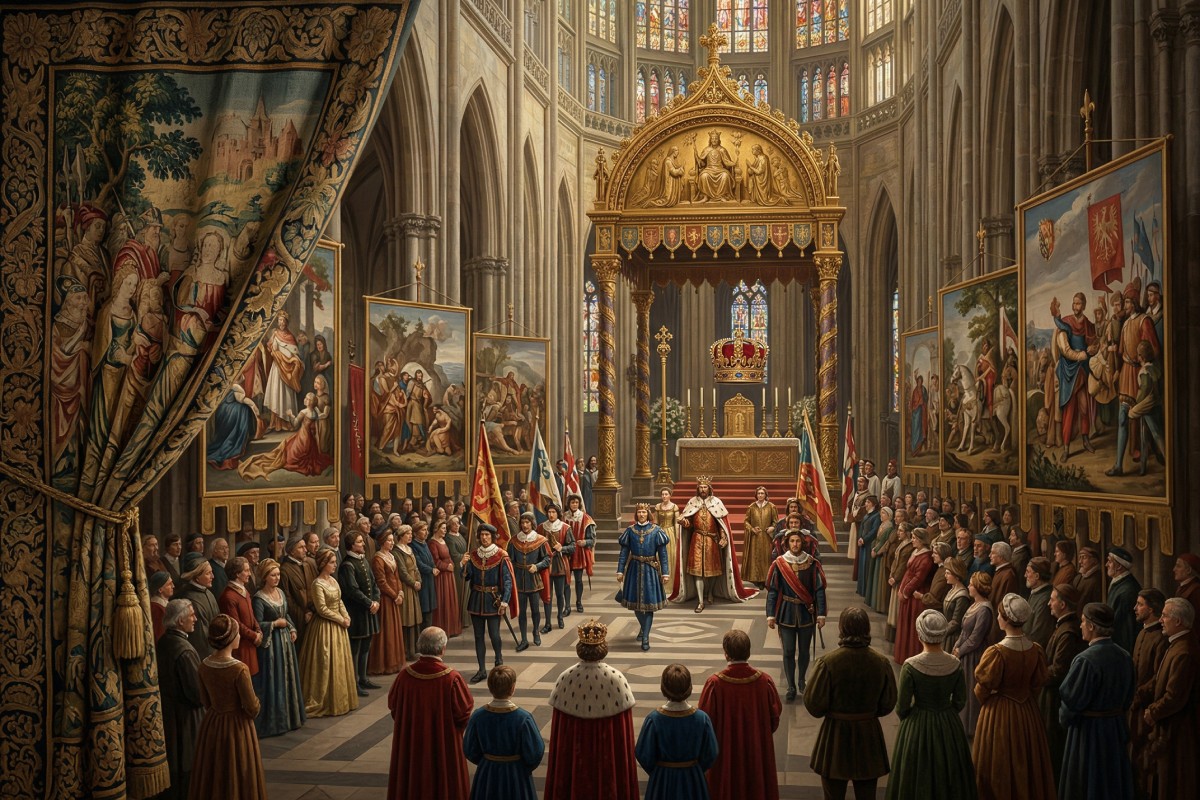
The spiritual heart of Prague Castle, St. Vitus Cathedral, is perhaps the most significant example of art functioning as a ceremonial device. This Gothic masterpiece was not built solely for prayer; it was the designated theater for the coronation of Bohemian kings. Every element, from the stained glass to the layout of the chapels, was orchestrated to heighten the spiritual gravity of the coronation ritual.
The cathedral's construction spanned centuries, beginning in 1344 under Charles IV and only being completed in the 20th century. This long gestation period resulted in a fascinating blend of architectural styles, from the soaring Gothic arches of Peter Parler to the neo-Gothic additions of Josef Mocker. This stylistic diversity itself became a symbol of the enduring nature of the Bohemian kingdom.
The Golden Gate and the Last Judgment Mosaic
Before the nave was completed in the modern era, the primary ceremonial entrance was the Golden Gate (Porta Aurea) on the south side. Above this entrance lies a breathtaking 14th-century mosaic depicting the Last Judgment. This artwork played a pivotal role in royal ceremonies. As the future king approached the cathedral for his coronation, he was forced to walk beneath this terrifying and majestic image. It served as a stark, final reminder: while he would judge his people on earth, he too would eventually face the ultimate judgment of God. This artistic placement ensured that humility and responsibility were visually imprinted on the monarch moments before receiving the crown.
The mosaic itself is a masterpiece of Byzantine-influenced art, crafted by Italian artisans. The gold tesserae shimmer in the sunlight, creating a dazzling effect that would have been even more pronounced in the flickering light of torches during a royal procession. The figures are depicted with a remarkable degree of realism, their expressions conveying a range of emotions from terror to hope. This powerful imagery served not only as a reminder of divine judgment for the king but also as a powerful statement of the Church's authority.
The Chapel of St. Wenceslas
Inside the cathedral, the Chapel of St. Wenceslas stands as a reliquary of art and history. The walls, encrusted with semi-precious stones and adorned with cycles of frescoes, create an otherworldly atmosphere. During ceremonies, this space acted as the spiritual anchor. The crown jewels were kept here, physically and symbolically guarded by the saint. The art within the chapel—depicting the life and martyrdom of St. Wenceslas—connected the living monarch to the patron saint of the land, reinforcing a continuity of protection and governance that spanned centuries.
The frescoes in the Chapel of St. Wenceslas, painted in the 14th century, depict scenes from the saint's life and miracles. The vibrant colors and intricate details of these paintings offer a glimpse into the artistic sensibilities of the medieval era. The chapel also houses the tomb of St. Wenceslas, making it a focal point for prayer and pilgrimage. The presence of the saint's relics further enhanced the spiritual significance of the coronation ceremonies, linking the new monarch to the legacy of Bohemian statehood and Christian faith.
The Bohemian Crown Jewels: Art as Sovereignty
No discussion of royal ceremonies is complete without examining the Bohemian Crown Jewels. These are not merely accessories; they are supreme works of art that function as the legal embodiment of the state. The Crown of Saint Wenceslas, fashioned in the 14th century, is a masterpiece of goldsmithing, but its role in ceremonies went beyond aesthetics. It was believed to hold the spiritual authority of the nation.
The design of the regalia was intentional, with each gemstone and shape carrying specific theological and political meanings utilized during the coronation mass. To understand their significance, we can look at the specific symbolic roles of the key items:
| Regalia Item | Artistic Feature | Ceremonial Significance |
| The Crown of St. Wenceslas | Pure gold, sapphires, spinels, pearls, and a thorn relic. | Symbolized the marriage between the King and the land. Placing it on the head was the moment legal power was transferred. |
| The Royal Scepter | Renaissance style, detailed chasing, large sapphire. | Represented the executive power and justice of the ruler. It was an artistic display of the King's ability to maintain order. |
| The Royal Orb | Gold with scenes from the Old Testament and Genesis. | Symbolized the world under Christ's dominion. The intricate scenes reminded the King that his power was a trust from God, not absolute ownership. |
The Vladislav Hall: A Venue for Secular Spectacle
While the cathedral handled the spiritual aspects, the Vladislav Hall served as the grand venue for secular celebrations, including coronation banquets and knightly tournaments. The art here is structural; the late Gothic vaulting is a masterpiece of stone masonry that mimics the intertwining branches of a dry forest. This architectural daring was a status symbol in itself.
During royal ceremonies, the vast emptiness of the hall was transformed. The walls were often hung with rich tapestries, and the unique indoor space allowed for jousting tournaments to take place right on the wooden floors. The art of the hall—its light, its impossible ceiling, and its sheer scale—provided a backdrop that elevated the festivities. It demonstrated to the nobility and foreign guests that the Bohemian King commanded the best architects and artisans of the age.
Rudolf II and the Gallery of Wonders
The role of art at Prague Castle shifted significantly under Emperor Rudolf II. He transformed the castle into a "Kunstkammer" (Cabinet of Curiosities), collecting masterpieces from across the known world. For Rudolf, art was not just for public ceremony but for intellectual and alchemical contemplation. However, his massive collection also played a role in statecraft.
- Diplomatic Intimidation: Visiting dignitaries were toured through the Spanish Hall and the Rudolf Gallery. The sheer volume of Titians, Dürers, and exotic artifacts served to intimidate and impress, showcasing the Emperor's reach and wealth.
- Allegorical Sculptures: The gardens and courtyards were populated with statues by Adrian de Vries. These dynamic bronze figures often depicted mythological scenes that allegorically praised the Emperor's virtues, turning a simple garden walk into a lesson on imperial ideology.
- The Masquerades: Rudolfine art extended to costume and set design for court masques. These elaborate parties were highly ritualized, with the Emperor often dressed in costumes designed by his court artists, blurring the line between the ruler and a mythological deity.
Modern Echoes in Contemporary State Events
Today, the function of art in ceremonies at Prague Castle has evolved but remains significant. The castle is the seat of the President of the Czech Republic, and the historic spaces are still used for inaugurations, state dinners, and awarding state honors. The backdrop of ancient art lends gravitas to modern democracy.
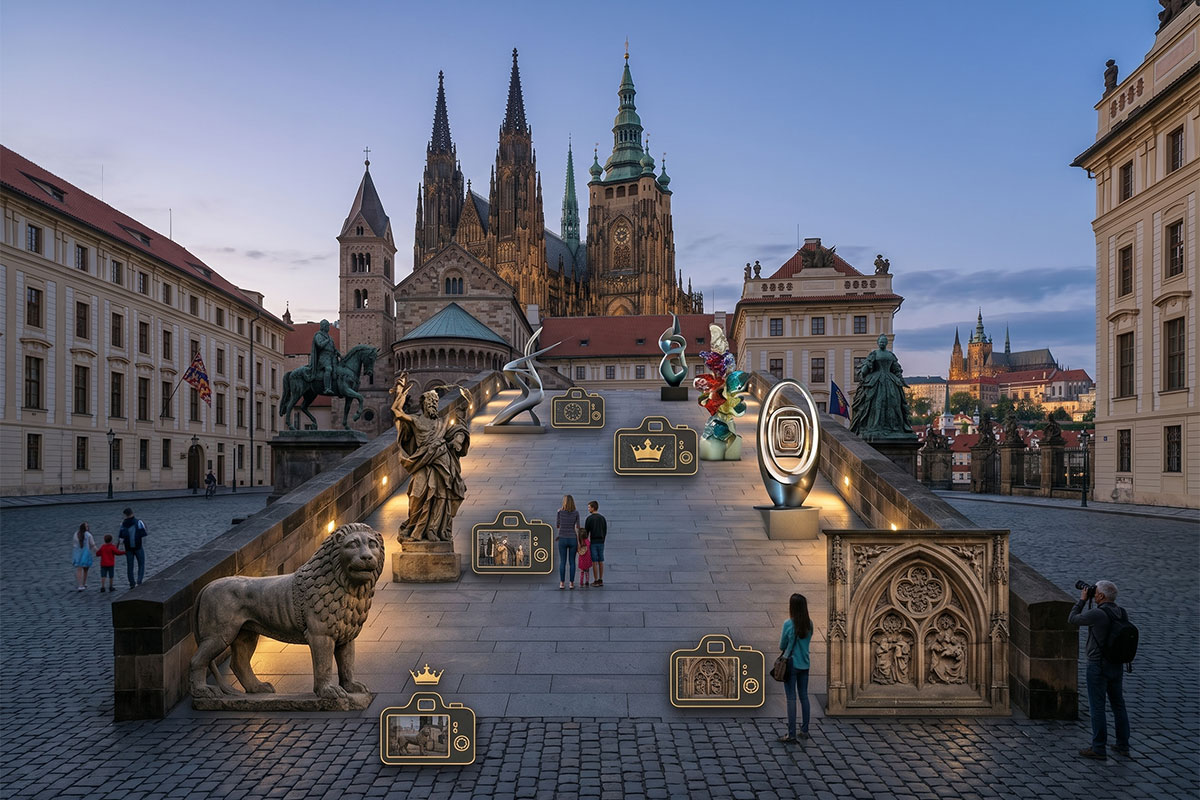
When the President greets world leaders, they often do so in the Habsburg-era salons, surrounded by Brokoff’s sculptures or beneath the crystal chandeliers of the Spanish Hall. This visual continuity asserts that the modern Czech state is the legitimate heir to the region’s long history. Even the changing of the guard, a popular event for tourists, is a choreographed ritual set against the backdrop of the Titans statues at the castle gates, merging military discipline with Baroque sculpture.
Experiencing the Art Today
For the modern visitor, understanding this context enriches the experience of walking through the castle complex. It is not enough to simply look at the paintings or the architecture; one must imagine them in motion. Imagine the flickering candlelight reflecting off the Crown Jewels, the sound of horses' hooves echoing against the Vladislav Hall vaulting, and the silence of a king passing beneath the Last Judgment mosaic.
Art at Prague Castle was never static. It was a dynamic participant in the rituals that defined the nation. By recognizing the ceremonial role of these masterpieces, we connect more deeply with the human aspirations, fears, and triumphs that are embedded in the very walls of this magnificent monument.