A comprehensive guide to navigating Prague Castle for visitors with mobility challenges, covering wheelchair access, barrier-free entrances, and essential facilities for a comfortable experience.
Visiting the largest ancient castle complex in the world is a dream for many travelers, offering a breathtaking journey through centuries of Bohemian history. However, for visitors with limited mobility or disabilities, the prospect of navigating a medieval fortress perched on a hill can seem daunting. The good news is that Prague Castle has made significant strides in recent years to become more inclusive, ensuring that the magic of this UNESCO World Heritage site is accessible to everyone. While the historical architecture presents certain unchangeable challenges, such as cobblestones and uneven terrain, a well-planned visit allows you to experience the grandeur of the St. Vitus Cathedral, the Old Royal Palace, and the stunning courtyards without unnecessary stress.
Understanding the layout and knowing which entrances are barrier-free is crucial before you arrive at the castle gates. This guide is designed to provide you with practical, detailed information to ensure a smooth visit. From the best public transport stops to specific elevator locations within the monuments, we cover the essential logistics so you can focus on enjoying the stunning views and rich history. Whether you are a wheelchair user, traveling with elderly companions, or simply need a more comfortable route, preparation is the key to unlocking the wonders of Prague Castle.
Getting to the Castle: Transport and Entrances
Reaching the castle complex is the first step, and choosing the right approach can make a world of difference in conserving your energy. The castle sits atop a steep hill, so walking up from the city center (Lesser Town) is generally not recommended for those with mobility issues due to the steep incline and cobblestone streets. Instead, utilizing public transport or private vehicles to reach the higher ground is the most practical strategy.
Accessible Public Transport Options
The most popular and scenic route is via the city's tram network. Tram line number 22 is the lifeline for visitors heading to the castle. You should aim to disembark at the Pražský hrad stop. This stop is located on the same level as the Second Courtyard entrance, minimizing the need to navigate steep hills. From the tram stop, a paved path leads you toward the security checkpoint. While there is a slight incline, it is far more manageable than the alternative routes. Modern low-floor trams frequently service this line, making boarding and alighting with a wheelchair or walker straightforward and safe.
Tip: Before you go, consider checking the Prague Public Transit Company's (DPP) website for real-time updates on tram schedules and potential service disruptions. You can also find accessibility information for all tram lines on their website.
Parking and Drop-off Points
If you are arriving by car or taxi, it is possible to get even closer to the gates. Vehicles carrying holders of disability identification cards are often permitted to drive closer to the complex for drop-off purposes, though long-term parking right at the gate is restricted. The most convenient drop-off point is near the Riding School (Jízdárna Pražského hradu), which is close to the Pražský hrad tram stop. For parking, there are limited designated spots in the vicinity, so it is advisable to check current availability or use a taxi service that can drop you right at the barrier-free entrance point.
Helpful Resource: The Prague Castle Administration website offers a downloadable map highlighting accessible routes and facilities within the complex. Consider downloading this map to your phone or printing it out before your visit for easy reference. (Link: example.com/prague-castle-accessibility-map - *replace with actual link*)
Navigating the Interiors: Monuments and Exhibitions
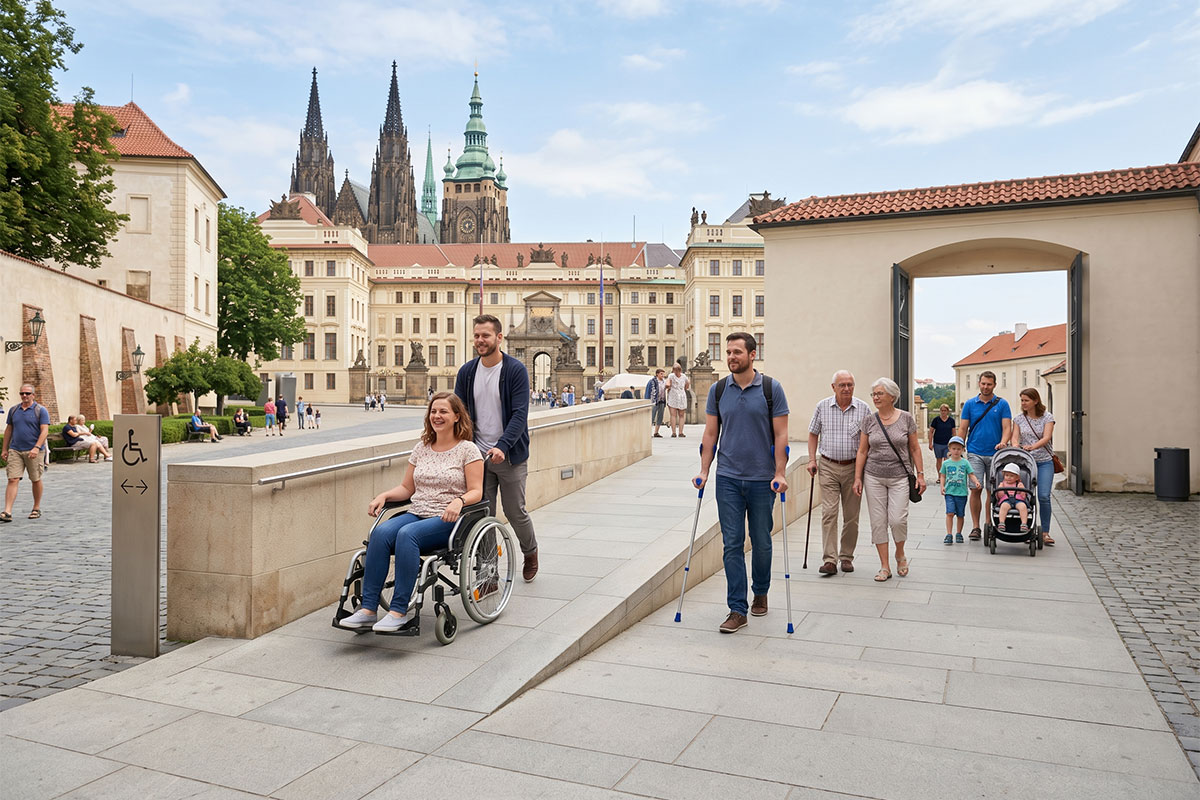
Once inside the complex, the experience is a mix of broad courtyards and intricate interiors. The castle administration has installed various ramps and lifts to bridge the gap between medieval construction and modern accessibility standards. While the courtyards are paved with cobblestones—which can be a bit bumpy for wheelchair users—the interiors of the major sights are largely accessible.
St. Vitus Cathedral
The dominant feature of the skyline, St. Vitus Cathedral, is accessible to wheelchair users through a specific entrance. While the main western portal has stairs, there is a side entrance located on the northern side (facing the Powder Bridge) that is equipped with a ramp or is level with the ground. Inside, the vast nave is smooth and easy to navigate. Visitors can admire the stained glass windows and the majestic vaulted ceilings without obstruction. However, please note that the Great South Tower, famous for its views, is only accessible via a narrow spiral staircase and is not suitable for those with mobility impairments.
Old Royal Palace and St. George’s Basilica
The Old Royal Palace, home to the massive Vladislav Hall, is another highlight that has been made accessible. The entrance to the Vladislav Hall usually involves steps, but a platform lift is available for visitors who need it. Staff members are generally on hand to assist with the operation of the lift. Similarly, St. George’s Basilica offers a ramp at the entrance, allowing access to the nave. The dark, Romanesque atmosphere is a stark contrast to the Gothic cathedral, and being able to access the main floor allows visitors to appreciate the architectural diversity of the complex.
Summary of Accessibility by Location
To help you prioritize your itinerary, here is a quick overview of the accessibility status of the main attractions within the castle complex:
| Location / Monument | Accessibility Status | Notes |
| St. Vitus Cathedral | Accessible | Use the designated side entrance; main nave is barrier-free. |
| Old Royal Palace | Accessible | Lift available for Vladislav Hall; ask staff for assistance. |
| St. George's Basilica | Accessible | Entrance ramp provided. |
| Great South Tower | Not Accessible | Requires climbing nearly 300 steep stairs. |
| Golden Lane | Partially Accessible | The lane itself is accessible, but entering the tiny historic houses often involves steps. |
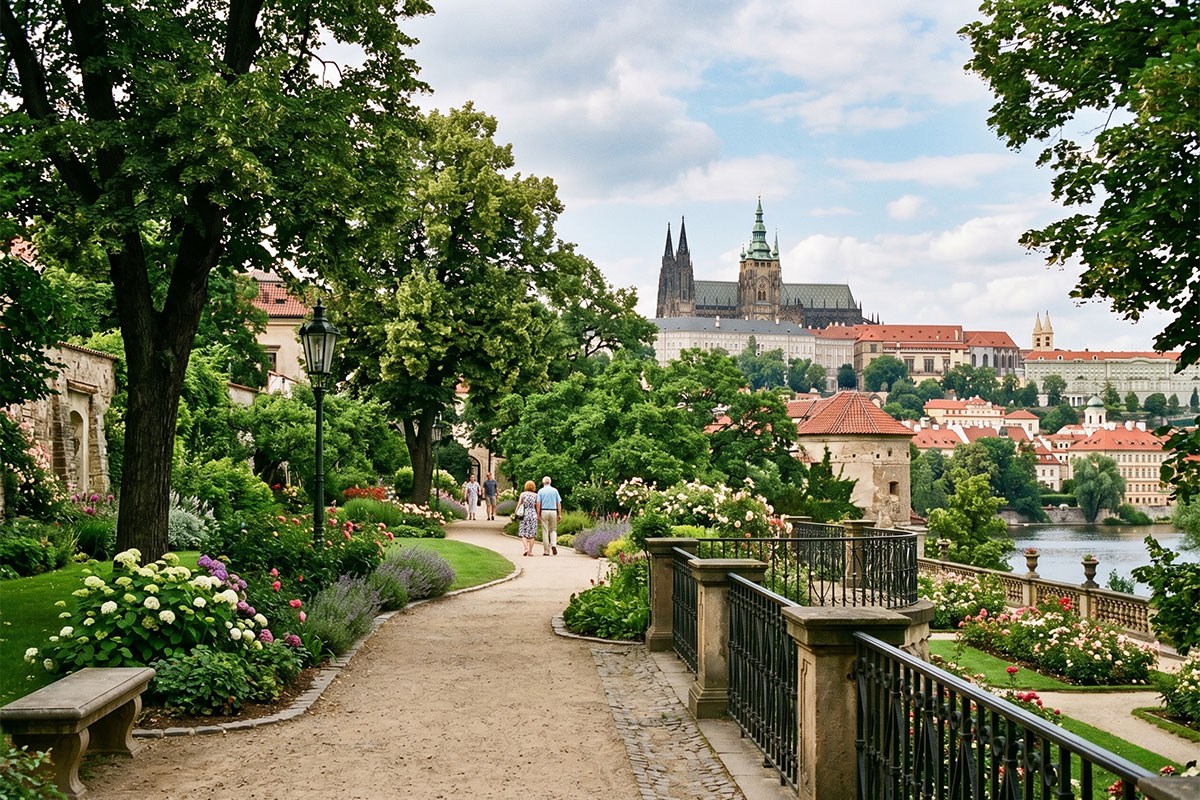
| Castle Gardens | Partially Accessible | Royal Garden is mostly flat; South Gardens have many stairs and terraces. |
Essential Facilities and Services
Beyond the monuments themselves, practical facilities are vital for a comfortable visit. Prague Castle is equipped with accessible restrooms located in several key areas. You will find barrier-free toilets near the St. Vitus Cathedral, in the Third Courtyard near the Old Post Office, and at the Old Royal Palace. These facilities are generally well-maintained and marked with the international symbol of access. It is often necessary to have a Eurokey or to ask the attendant for access, so keeping some loose change or your disability card handy is a good idea.
Ticket Information and Assistance
Visitors with valid disability identification often qualify for discounted or free entry, and this benefit frequently extends to one accompanying person. It is important to present your documentation at the ticket office to avail of these concessions. Furthermore, the information centers located in the Second and Third Courtyards can provide specific advice on the day of your visit, including updates on any temporary elevator maintenance. If you require a wheelchair, a limited number are available for loan at the castle, though it is highly recommended to reserve one in advance or bring your own to guarantee availability.
Tips for a Comfortable Experience
To make the most of your trip, timing and preparation are everything. The castle grounds are open from early morning until late evening, and visiting earlier in the day can help you avoid the largest crowds, making navigation easier. The surfaces throughout the complex vary significantly; while the interiors are smooth, the courtyards feature large, historic cobblestones. These can be jarring for wheelchair users and slippery when wet, so sturdy tires and cautious movement are advised. If you are visiting during the winter months, be extra careful of ice or snow on these uneven surfaces.
- Check the Surface: Be prepared for vibrations from cobblestones; a wheelchair cushion can provide extra comfort.
- Security Checks: Security lines can be long, but staff will often prioritize visitors with disabilities. Don't hesitate to make eye contact with security personnel to ask for priority access.
- Tactile Models: For visually impaired visitors, there are tactile models of the castle and the cathedral available in certain areas, allowing for a sensory understanding of the architecture.
- Hydration and Rest: The complex is large. Plan for breaks at the accessible cafés located within the grounds to rest and recharge.
Share Your Experience
We'd love to hear about your visit to Prague Castle! Sharing your experiences can help other travelers with disabilities plan their trips. Please feel free to leave comments below with your tips, insights, and suggestions for improving accessibility at the castle.
Visiting Prague Castle is a memorable experience that connects you with the heart of European history. While the medieval architects did not design the fortress with modern accessibility in mind, today's adaptations ensure that the beauty of the castle is shared with a wider audience. By planning your entry route, utilizing the available lifts, and taking advantage of the support services, you can enjoy a rich and barrier-free exploration of this magnificent landmark.