Gothic Architecture
St. Vitus Cathedral
The Gothic masterpiece that took 600 years to complete
45-60 min
The Gothic masterpiece that took 600 years to complete
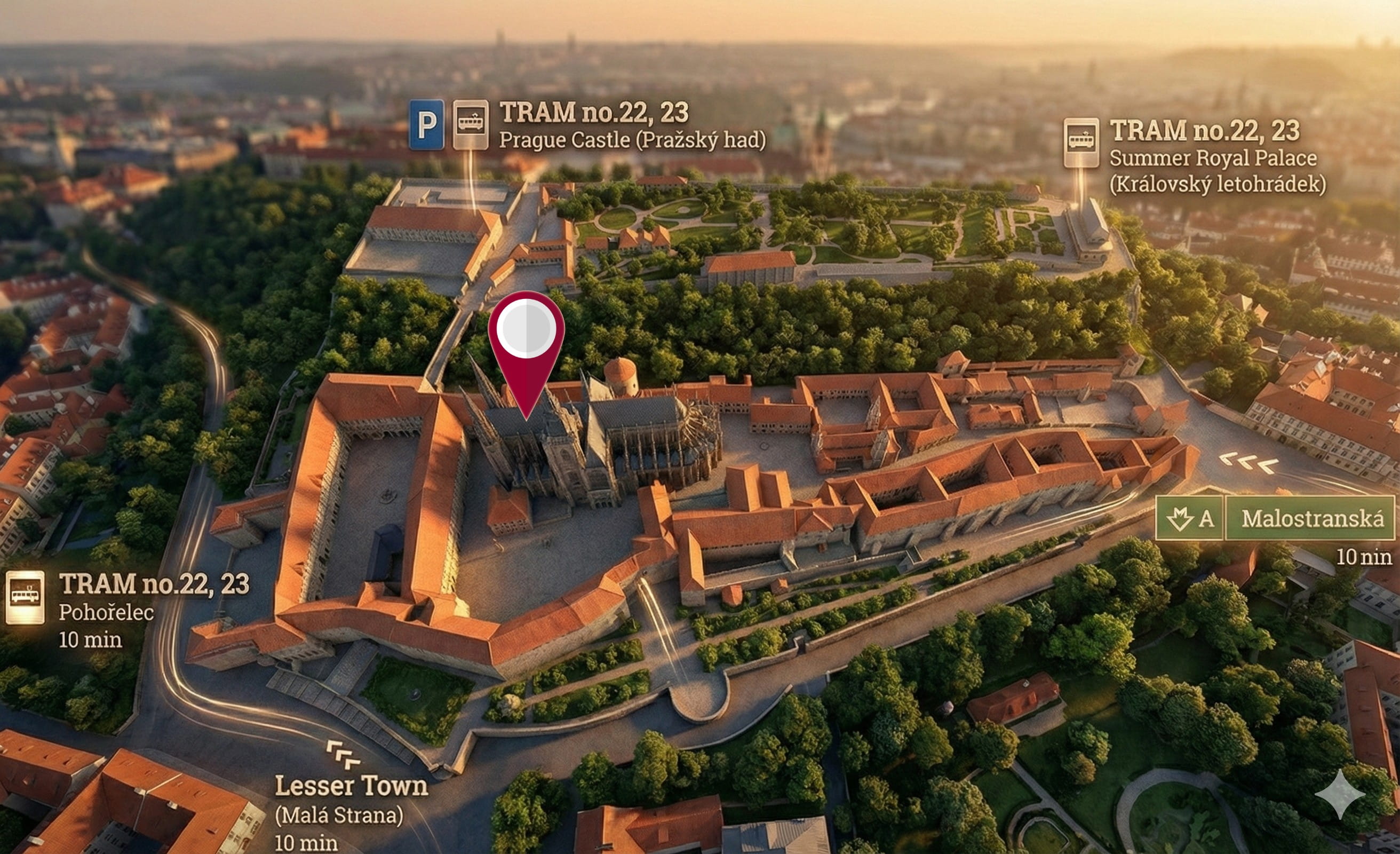
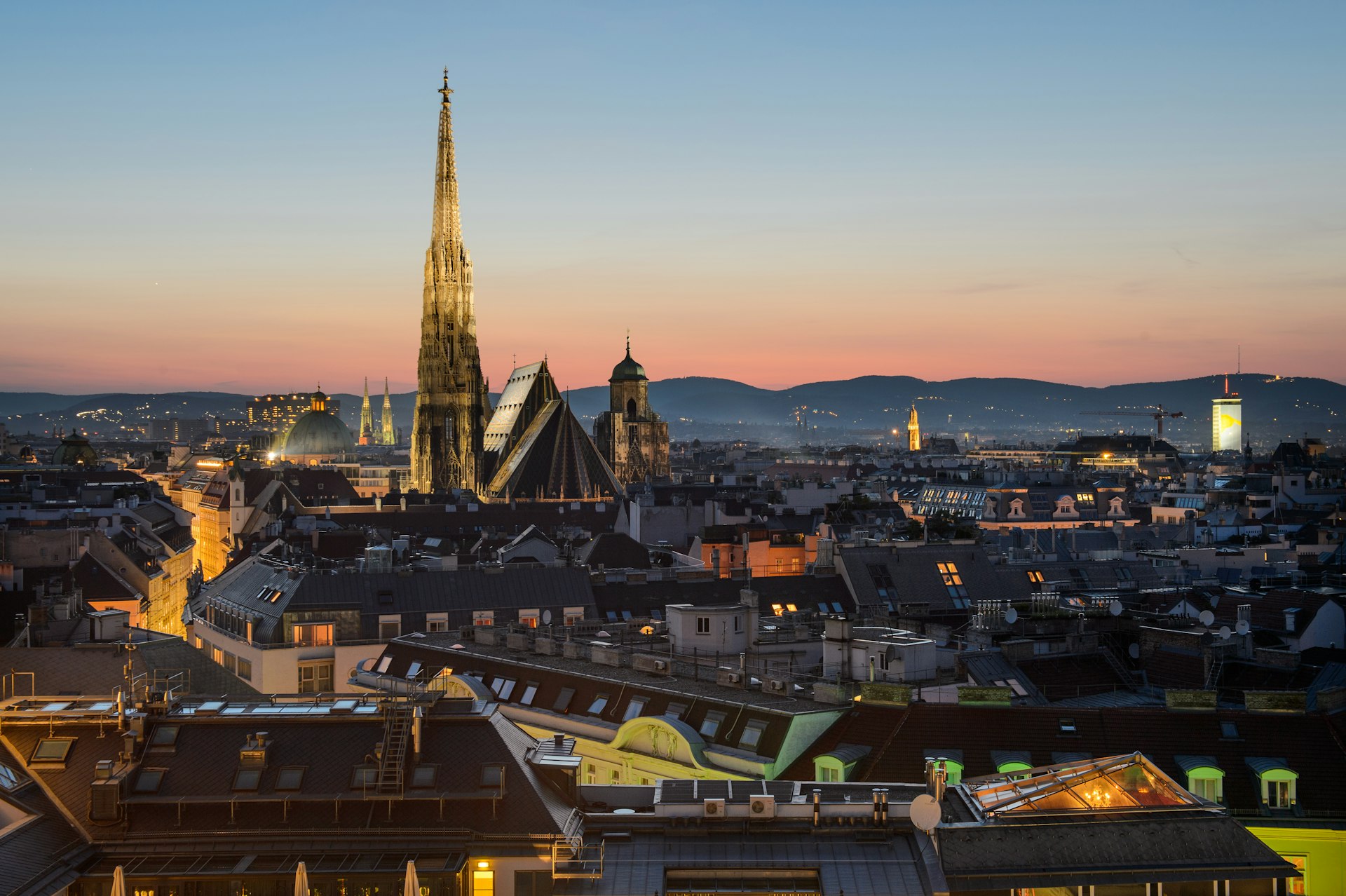
The Metropolitan Cathedral of Saints Vitus, Wenceslaus and Adalbert is the largest and most important church in the Czech Republic. Located within Prague Castle, it is a prominent example of Gothic architecture and the spiritual heart of the country, containing the tombs of many Bohemian kings and Holy Roman Emperors. The cathedral's dimensions are impressive, with a main tower soaring 102.8 meters high.
History & Architecture
Construction began in 1344 when the seat of Prague was elevated to an archbishopric. King John of Bohemia laid the foundation stone, but it was Emperor Charles IV who envisioned it as a coronation church and family crypt. The first master builders, Matthias of Arras and Peter Parler, created a masterpiece of French and Central European Gothic styles. Parler's innovative net-vaults and the Golden Gate with its Last Judgment mosaic are architectural marvels.
Throughout the centuries, construction faced interruptions due to wars and fires. It wasn't until the 19th and 20th centuries that the cathedral was finally completed. The western nave and facade were finished in Neo-Gothic style, and the cathedral was solemnly consecrated in 1929, nearly 600 years after it began. Notable modern additions include the stained glass windows designed by Art Nouveau master Alfons Mucha.
St. Wenceslaus Chapel
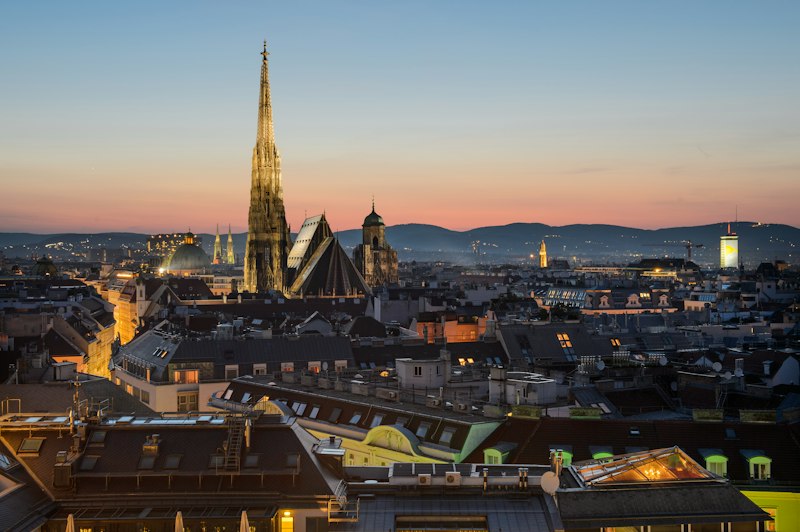
Perhaps the most outstanding place in the cathedral is the Chapel of St. Wenceslaus, built by Peter Parler. Its walls are decorated with over 1,300 semi-precious stones and frescoes depicting the Passion of Christ and the life of St. Wenceslaus. A small door in the chapel leads to the Crown Chamber, keeping the Bohemian Crown Jewels safe under seven locks.
St. Wenceslaus Chapel
The Golden Gate Mosaic
Royal Mausoleum & Crypt
Mucha Stained Glass
Great South Tower
Requires valid circuit ticket (Free part closed)
Enter via Western Facade
St. Wenceslaus Chapel viewable from doorway