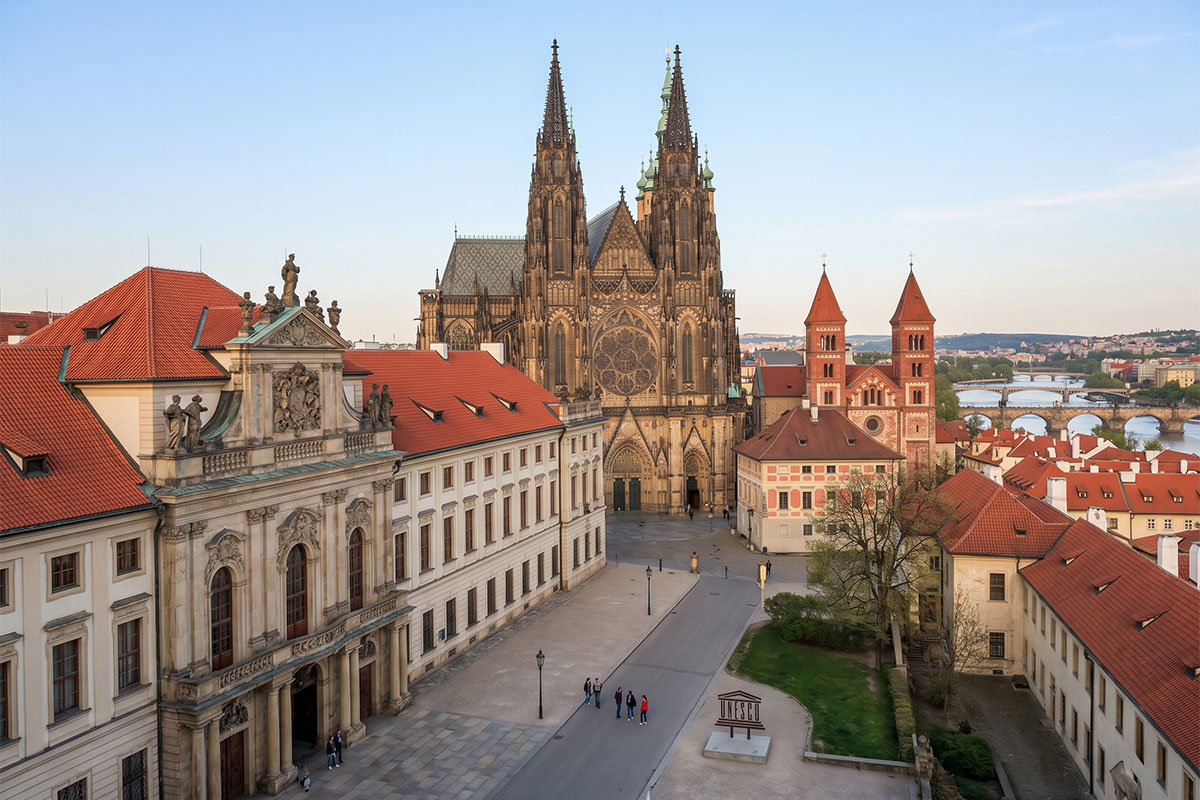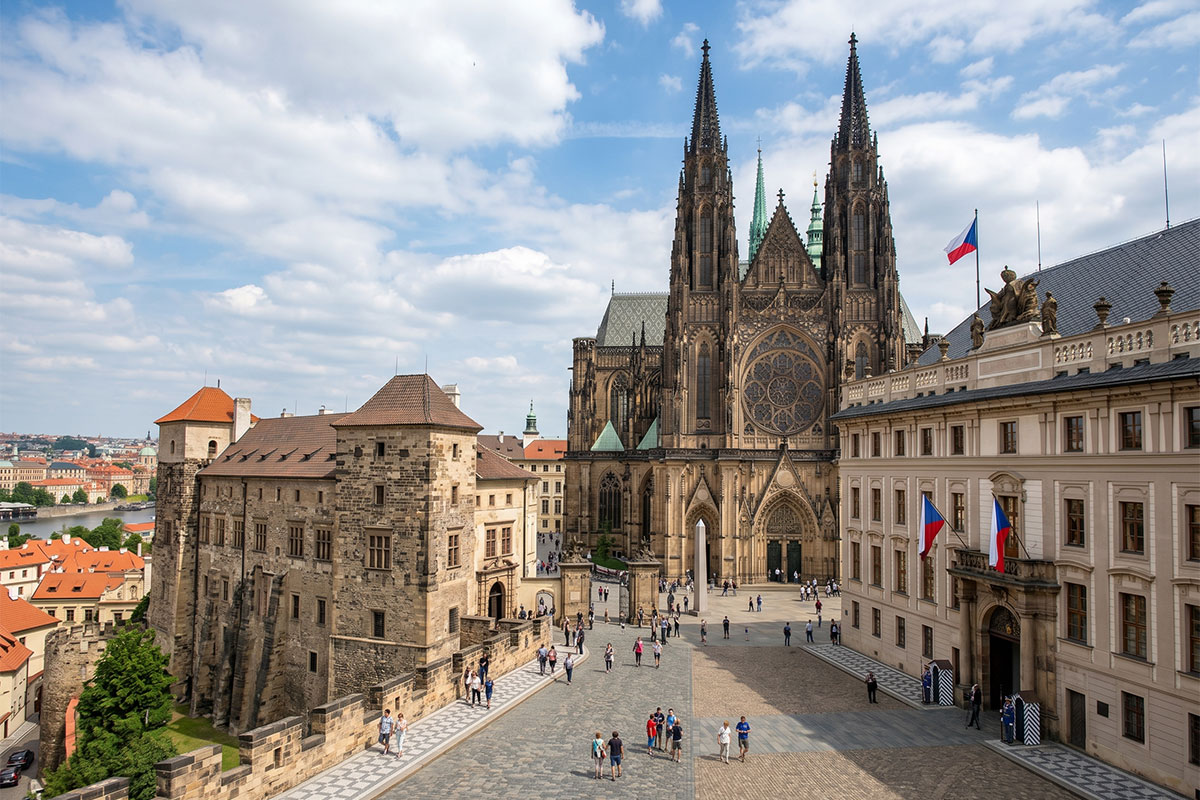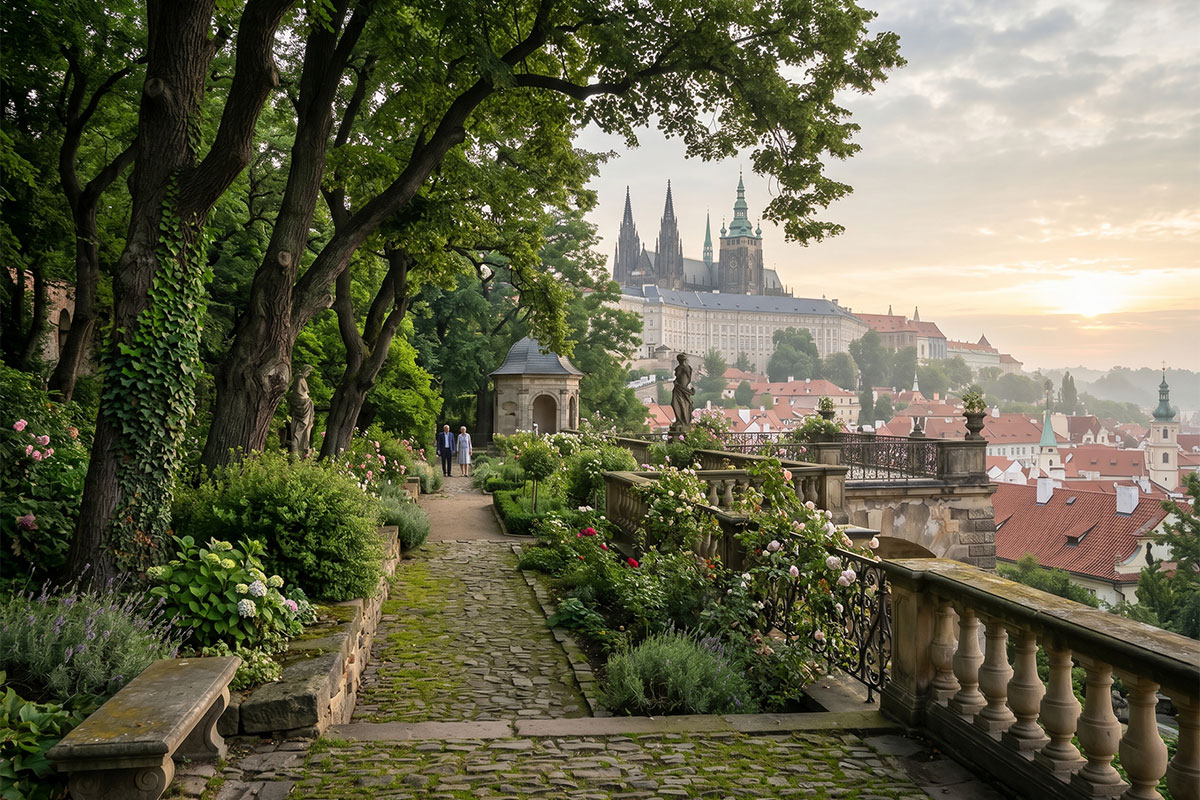
Step beyond the stone walls of Prague Castle to discover its lush, historical gardens. From the Renaissance elegance of the Royal Garden to the panoramic views of the South Gardens, explore the secrets, legends, and architectural beauty that define this green sanctuary.
When travelers imagine Prague Castle, they often visualize the imposing Gothic spires of St. Vitus Cathedral or the ancient stone grandeur of the Old Royal Palace. However, wrapping around this monumental fortress is a living, breathing treasure that often captures the heart more deeply than cold stone ever could. The gardens of Prague Castle are not merely decorative lawns; they are historical narratives written in boxwood, fountains, and exotic blooms. As we move through January 2026, the winter mist clinging to the Stag Moat adds a layer of mystery, reminding us that these grounds have witnessed centuries of royal secrets, alchemical experiments, and quiet moments of respite for emperors and presidents alike.
Exploring these green sanctuaries offers a completely different perspective on the castle complex. While the interiors speak of power and governance, the gardens speak of leisure, art, and the human desire to tame nature. From the manicured Renaissance precision of the north to the sprawling, scenic terraces of the south, each section of the garden ring tells a unique story. Whether you are a history buff intrigued by Habsburg dynasties or a weary traveler seeking silence above the bustling city, these gardens provide a serene escape into a world where time seems to slow down.
The Royal Garden: A Renaissance Masterpiece
The most historically significant and perhaps the most beautiful of all is the Royal Garden (Královská zahrada), situated on the northern side of the castle. Established in 1534 by Ferdinand I of Habsburg, this space was originally a medieval vineyard before being transformed into a Renaissance gem. It was designed not just for strolling, but to showcase the power and reach of the monarchy through rare botanical collections. It is a little-known fact that tulips were cultivated here before they ever became a symbol of the Netherlands; the Austrian ambassador to Turkey sent the first bulbs to Prague, where they bloomed under the watchful eye of royal gardeners.
Walking through the Royal Garden, you are treading the same paths as Emperor Rudolf II, the eccentric ruler obsessed with alchemy and the occult. The layout has evolved over the centuries, blending the original Italian Renaissance style with later English landscape elements. The atmosphere here is distinctively intimate despite its grandeur, filled with the scent of ancient trees and the sound of trickling water. It serves as a bridge between the architectural rigidity of the castle and the organic flow of nature, housing some of the most elegant structures in the entire complex.
The Singing Fountain and the Belvedere
At the eastern end of the Royal Garden stands the Queen Anne’s Summer Palace, also known as the Belvedere. Often cited as the purest example of Renaissance architecture outside of Italy, its delicate arcades and copper roof create a silhouette of incredible grace. Just in front of this architectural marvel sits the famous Singing Fountain. Cast in bronze in the mid-16th century, the fountain requires a bit of patience and silence to appreciate fully. Legend says—and acoustics confirm—that if you crouch beneath the wide bronze bowl and listen closely, the rhythmic falling of water droplets creates a melodious, bell-like ringing sound, a hidden song that has played for nearly 500 years.
The South Gardens: Panoramas and Plečnik’s Vision
While the Royal Garden is enclosed and introspective, the South Gardens (comprising the Paradise Garden, the Garden on the Ramparts, and the Hartig Garden) are all about the view. Stretching along the southern face of the castle, these terraces offer the iconic, sweeping panoramas of the red-tiled roofs of Malá Strana and the winding Vltava River. This is where the sheer scale of the castle becomes apparent, yet the gardens themselves feel surprisingly accessible. In the 1920s, after the formation of the First Czechoslovak Republic, the castle underwent a massive transformation to symbolize democracy rather than monarchy.
This transformation was led by the brilliant Slovenian architect Jože Plečnik, appointed by President Tomáš Garrigue Masaryk. Plečnik’s touch is everywhere in the South Gardens, characterized by:
- The Bull Staircase: A majestic entrance connecting the Third Courtyard to the gardens, blending mythical symbolism with modern functionality.
- Monumental Obelisks and Bowls: Plečnik used large granite monoliths and basins to punctuate the landscape, creating a dialogue between the ancient earth and the sky.
- Architectural Viewing Platforms: Small balconies and cutouts in the walls were designed specifically to frame the city below like a living painting.
Plečnik’s work was respectful of the past but bold in its modernism, creating a space where the public could finally enjoy the royal grounds. The seamless integration of stone, copper, and greenery makes the South Gardens a masterclass in landscape architecture.
The Stag Moat: Nature Untamed
For those who prefer their nature a bit wilder and more mysterious, the Stag Moat (Jelení příkop) offers a dramatic contrast to the manicured lawns above. This deep natural ravine separates the castle proper from the Royal Garden and was originally used for defensive purposes. Its name, however, reveals its later use; during the reign of Emperor Rudolf II, deer were released here for hunting, and later, it even housed bears, a gift to President Masaryk from legionnaires in Russia. Today, the bears are long gone, replaced by a peaceful, verdant valley that feels miles away from the city center.
Descending into the moat involves walking along wooden boardwalks and winding paths shaded by massive trees and lush ferns. A modern tunnel, designed by architect Josef Pleskot, cuts through the embankment of the Powder Bridge, allowing visitors to walk the full length of the moat. The acoustic atmosphere here is profound; the city noise disappears, replaced by the rustling of leaves and the song of birds. It is the shadowy, mystical underbelly of the castle, where the air is cooler and the history feels more primal.
Seasonal Rhythms and What to Expect
The character of the Prague Castle gardens changes drastically with the seasons. While the architecture remains constant, the biological tapestry shifts, offering a new experience every few months. Understanding these seasonal shifts is crucial for planning your visit, especially regarding accessibility, as some areas close during the harsh winter months to protect the delicate landscapes and visitor safety.
| Season | Visual Highlights | Atmosphere |
| Spring (April - May) | Tulips, magnolias, and fruit trees in blossom. | Vibrant, fragrant, and full of new life. The return of color. |
| Summer (June - August) | Full greenery, roses in bloom, active fountains. | Lively and sunny, offering cool shade under ancient trees. |
| Autumn (September - October) | Golden and crimson leaves, late-blooming perennials. | Melancholic and photogenic, perfect for golden hour walks. |
| Winter (November - March) | Snow-dusted statues, structural evergreens. | Quiet and mystical. Note: Most gardens are closed, but the views remain. |
Echoes of the Past
Ultimately, the gardens of Prague Castle are more than just a collection of plants; they are a testament to the people who walked them. We can imagine the anxious pacing of emperors awaiting news of war, the whispered conversations of courtiers plotting in the shadows of the hedges, and the quiet contemplation of presidents building a new nation. The mystery of these gardens lies not in ghost stories, but in the palpable sense of history that permeates every leaf and stone.
Whether you are admiring the Italian influence in the Belvedere or tracing the modernist lines of Plečnik’s granite bowls, you are participating in a story that is centuries old. The gardens invite you to slow down, to look beyond the famous cathedral, and to find the soul of Prague in the quiet rustle of the trees high above the city.
Planning Your Visit
To make the most of your visit to the Prague Castle Gardens, here's some practical information:
- Opening Hours: The gardens generally open in April and close in October. Specific opening hours vary depending on the season and the particular garden. Check the official Prague Castle website for the most up-to-date information.
- Admission Fees: Entry to some gardens is free, while others require a ticket. A combined ticket often provides access to multiple gardens and other castle attractions.
- Accessibility: While some areas are accessible to visitors with mobility issues, certain paths and terraces may be challenging.
- Guided Tours: Consider joining a guided tour to learn more about the history, architecture, and landscaping of the gardens.