Discover the profound historical and cultural significance of Prague Castle. This article explores its status as a UNESCO World Heritage Site, detailing the architectural marvels, selection criteria, and its enduring role as a global symbol of Czech heritage.
When you stand on the banks of the Vltava River and look up toward the hill of Hradčany, the silhouette that dominates the skyline is not merely a palace; it is a thousand-year-old textbook of European architecture. Prague Castle is the undisputed crown jewel of the Czech Republic, serving as a silent witness to the rise and fall of empires, the shifting of religious powers, and the artistic evolution of Central Europe. As of January 2026, it remains one of the most visited cultural landmarks on the continent, yet many travelers walk through its courtyards without fully grasping the global weight of what they are seeing. It is more than just a tourist attraction; it is a vital component of the "Historic Centre of Prague," inscribed on the UNESCO World Heritage List in 1992, representing a masterpiece of human creative genius.
The Anchor of the Historic Centre
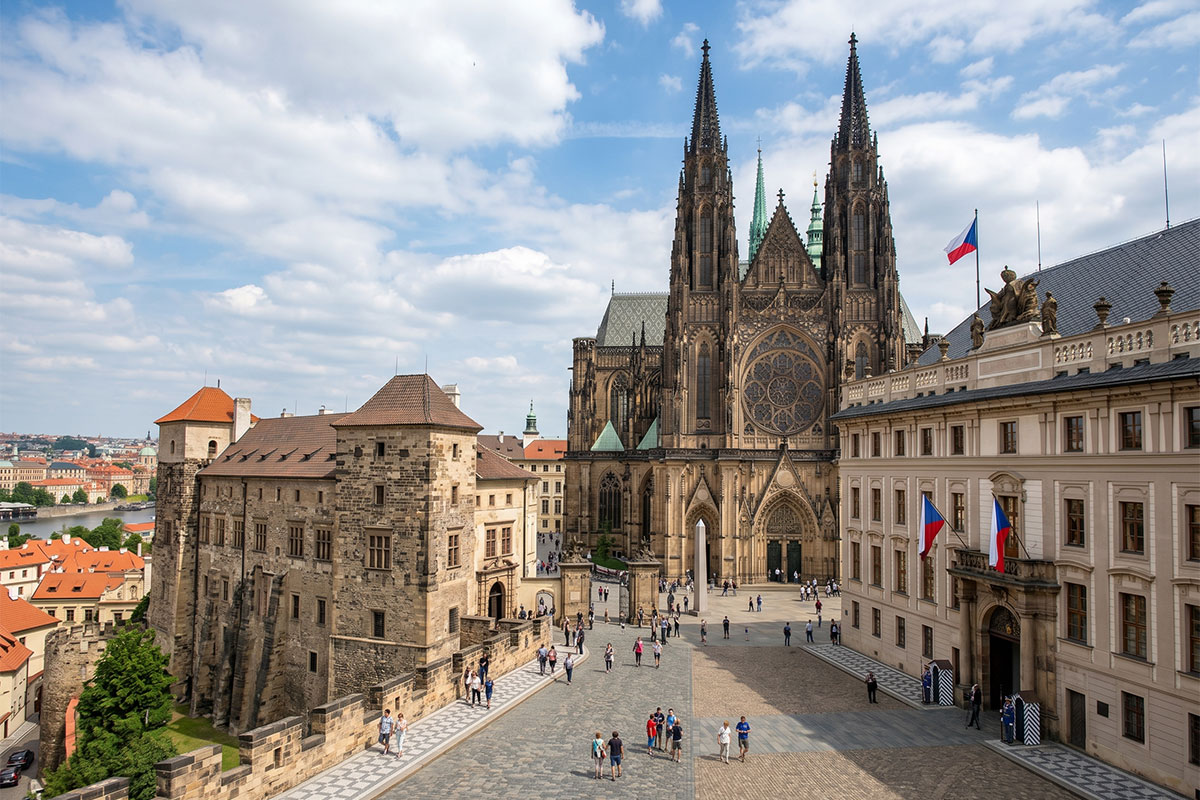
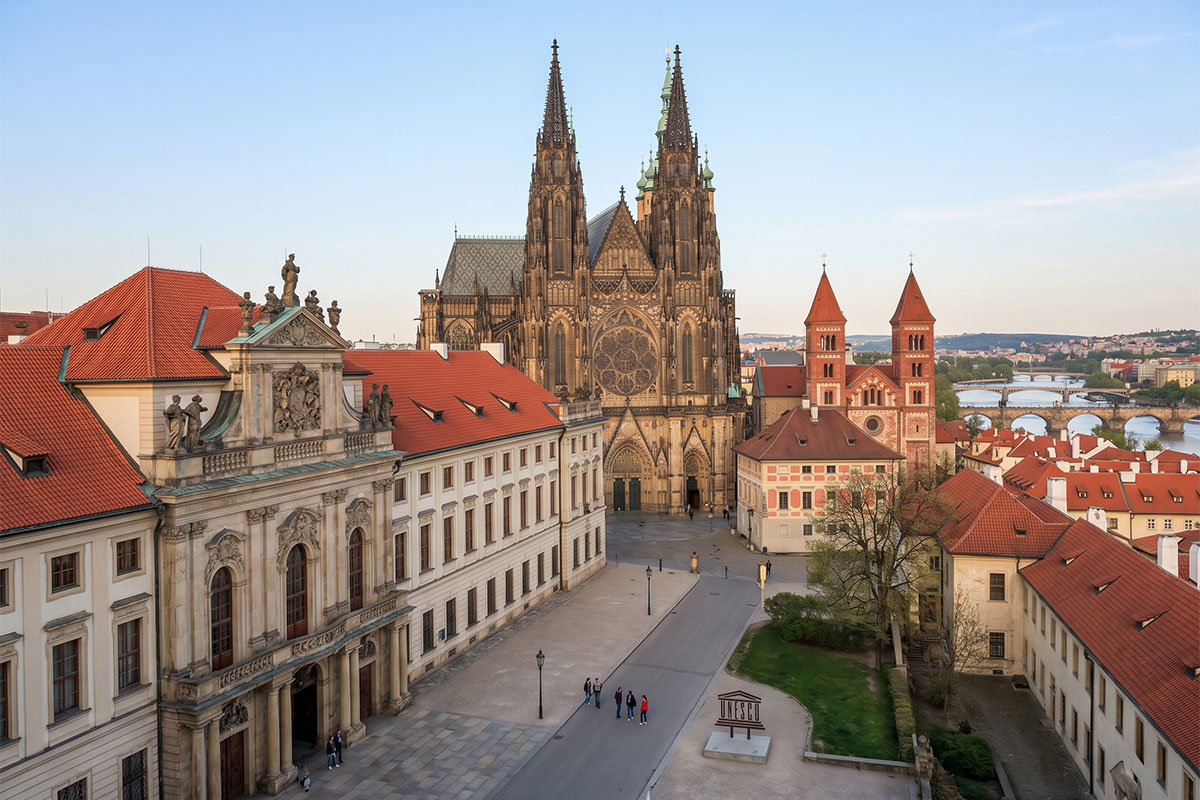
Prague Castle does not stand in isolation regarding its heritage status; it is the focal point of the broader UNESCO World Heritage site known as the Historic Centre of Prague. This designation recognizes the castle not just as a singular monument, but as an integral part of an urban ensemble that includes the Lesser Town (Malá Strana) and the Old Town. However, the castle complex itself is the physical and spiritual heart of this designation. Covering an area of almost 70,000 square meters, it holds the Guinness World Record for the largest coherent castle complex in the world. Its inclusion in the UNESCO list validates its role as a supreme example of architectural development over a millennium, where every stone tells a story of political power and artistic ambition.
The significance of the castle lies in its continuity. Unlike many other historical sites that were abandoned or turned into museums centuries ago, Prague Castle has functioned as a seat of power uninterrupted since the 9th century. From the early Premyslid princes to the Holy Roman Emperors and modern-day presidents, the site has remained alive and operational. This functional continuity is rare on a global scale and contributes heavily to the "outstanding universal value" that UNESCO seeks to protect. Walking through its gates is not just stepping into a museum; it is stepping into the living office of the Czech state.
Understanding the UNESCO Criteria
To truly appreciate why Prague Castle is protected as a World Heritage Site, we must look at the specific criteria set forth by UNESCO. The Historic Centre of Prague, with the castle at its helm, meets three distinct criteria that highlight its global importance. These are not arbitrary labels but are based on rigorous assessments of history, art, and urban planning.
- Criterion (ii) - Interchange of Human Values: The castle demonstrates a profound exchange of human values over a span of time. Throughout the Middle Ages, Prague was a crossroads where Italian, German, and French artistic influences merged. The castle’s architecture reflects this melting pot, influencing town planning and artistic development across Central and Eastern Europe.
- Criterion (iv) - Architectural Ensemble: The complex is an outstanding example of a type of building or architectural ensemble which illustrates significant stages in human history. From the Romanesque fortifications to the Gothic majesty of St. Vitus and the Baroque renovations under the Habsburgs, the castle illustrates the trajectory of European architecture perfectly.
- Criterion (vi) - Association with Events: The site is directly associated with events and living traditions of universal significance. As the seat of the Holy Roman Empire under Charles IV and the site of the Defenestration of Prague which triggered the Thirty Years' War, the castle has been the stage for events that shaped the modern world map.
A Timeline of Architectural Evolution
One of the most compelling reasons for the castle's heritage status is the sheer density of architectural styles present in one location. It is rare to find a single complex where Romanesque, Gothic, Renaissance, and Baroque styles do not clash, but rather harmonize to create a unique aesthetic. This layering is physical proof of the site's longevity and the cultural importance placed upon it by successive rulers. Each era wanted to leave its mark, resulting in a complex that feels organic rather than planned.
The centerpiece, St. Vitus Cathedral, took nearly 600 years to complete, bridging the gap between the high Gothic era and the early 20th century. Its flying buttresses and gargoyles speak to the medieval soul, while the stained glass windows, including those by Alphonse Mucha, introduce a touch of Art Nouveau. Similarly, the Old Royal Palace features the Vladislav Hall, an engineering marvel of the late Gothic period with its complex rib vaulting, which later incorporated Renaissance windows—a clear signal of the changing times.
Key Architectural Highlights
| Structure | Dominant Style | Historical Significance |
| Basilica of St. George | Romanesque | The oldest surviving church building within the castle complex, founded around 920. Its austere interior contrasts with the Baroque facade added later. |
| St. Vitus Cathedral | Gothic | The spiritual symbol of the Czech state, housing the crown jewels and the tombs of saints and kings. A masterpiece of verticality and light. |
| Old Royal Palace | Gothic / Renaissance | Home to the Vladislav Hall, used for coronations and indoor jousting tournaments. It represents the transition from medieval to modern power structures. |
| Queen Anne’s Summer Palace | Renaissance | Located in the Royal Garden, this is considered one of the purest examples of Renaissance architecture outside of Italy. |
Cultural and Historical Importance on a Global Scale
Beyond the bricks and mortar, Prague Castle's designation as a World Heritage Site acknowledges its role as a cultural beacon. During the reign of Emperor Charles IV in the 14th century, Prague became the capital of the Holy Roman Empire. The decisions made within these castle walls rippled out to affect the entirety of Europe. The castle became a magnet for scholars, artists, and astronomers, fostering an environment of intellectual growth that predated the Enlightenment. This legacy of intellectualism and art is a core component of its heritage value.
Furthermore, the castle serves as a powerful symbol of resilience. It has survived great fires, wars, and occupations. For the Czech people, it is the embodiment of their national identity. The preservation of such a site is crucial not just for architectural history, but for the collective memory of the nation. UNESCO's protection ensures that this narrative remains intact for future generations, preventing modern development from encroaching on the visual and historical integrity of the Hradčany skyline.
The Visitor Experience: Walking Through History
Visiting Prague Castle is an immersive journey that engages all the senses. As you wander through the courtyards, the atmosphere shifts palpably from the solemnity of the cathedral to the quaint charm of Golden Lane. This tiny street, with its colorful, miniature houses built into the castle fortifications, offers a glimpse into the lives of the castle's defenders and artisans—and famously, the writer Franz Kafka. It is this juxtaposition of the grand and the humble that makes the castle complex so human and relatable.
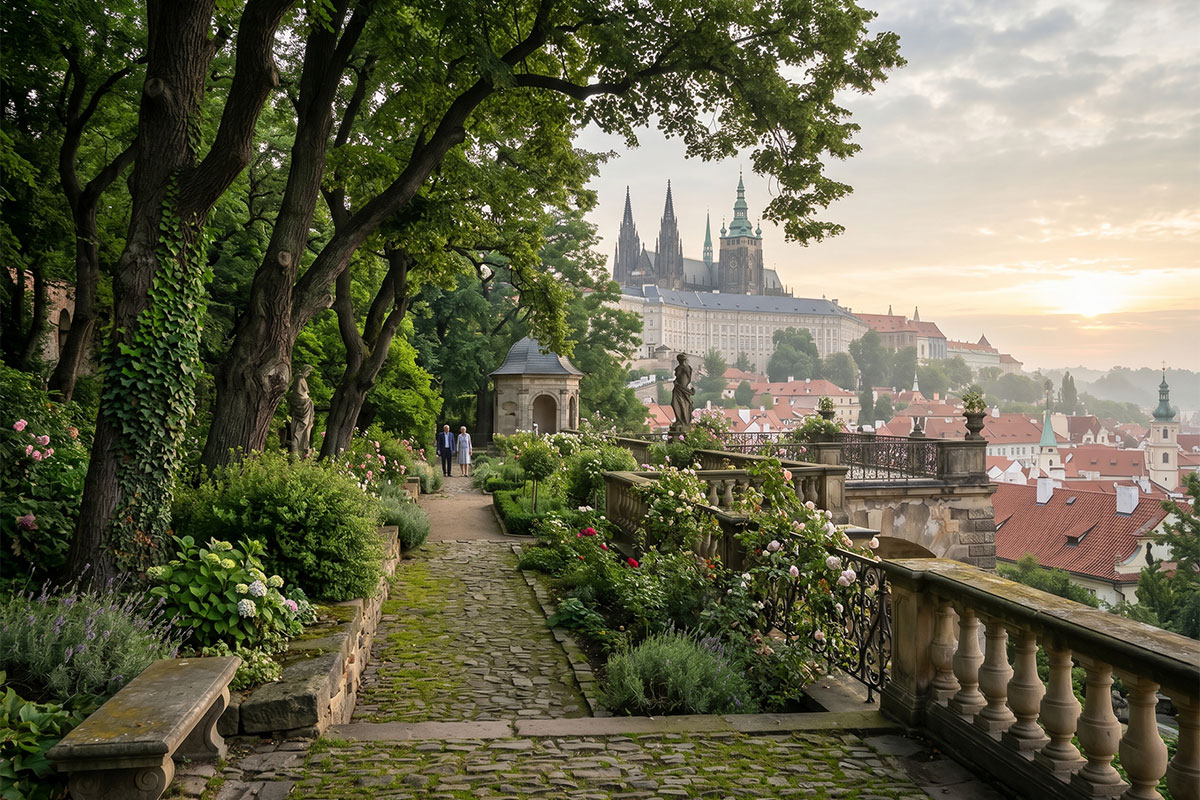
The views from the castle ramparts offer a stunning panorama of the "City of a Hundred Spires," allowing visitors to visually connect the castle with the rest of the UNESCO-protected center. Looking down at the red-tiled roofs of Malá Strana and the winding Vltava River, one understands why this location was chosen over a millennium ago. It is a strategic vantage point that became a canvas for beauty. Today, as we navigate through 2026, the preservation efforts are evident, balancing the heavy influx of tourism with the need to protect the delicate fabric of the structures.
Preserving the Legacy
Being a UNESCO World Heritage Site comes with a heavy responsibility for conservation. The administration of Prague Castle works tirelessly to maintain the authenticity of the site. This involves meticulous restoration using traditional materials and techniques to ensure that the castle does not lose its historical character. It is a constant battle against time and the elements, but it is a necessary one to ensure that the castle remains a testament to European culture.
Prague Castle is far more than a beautiful backdrop for photographs. It is a complex organism of history, art, and politics that has survived for over a thousand years. Its UNESCO status is a recognition of its irreplaceable contribution to world culture. For the traveler, understanding this context transforms a visit from a simple sightseeing tour into a profound encounter with the history of human civilization in Central Europe.