Embark on a visual and historical journey through Prague Castle, exploring how its Gothic, Romanesque, and Renaissance architecture embodies the enduring power of the Czech monarchy.
Standing on the banks of the Vltava River, looking up at the sprawling complex that dominates the Hradčany skyline, it is impossible not to feel a sense of awe. Prague Castle is not merely a fortress or a single palace; it is a textbook of architecture written in stone over the course of a thousand years. As we step into January 2026, the castle remains the largest ancient castle complex in the world, a title it holds not just by size, but by the sheer weight of history pressed into every archway and tower. For the traveler, walking through these courtyards is an exercise in time travel, witnessing how the Czech monarchs utilized masonry and mortar to project their absolute authority and divine right to rule.
The castle’s layout is a deliberate narrative of power. From the sturdy Romanesque fortifications intended to repel invaders to the soaring Gothic spires designed to touch the heavens, every structural decision was a political statement. The evolution of the castle mirrors the evolution of the Czech state itself—from a medieval duchy to a powerful kingdom, and eventually to the seat of Holy Roman Emperors. To understand the soul of Prague, one must decipher the architectural language of its most famous resident.
The Gothic Soul: St. Vitus Cathedral
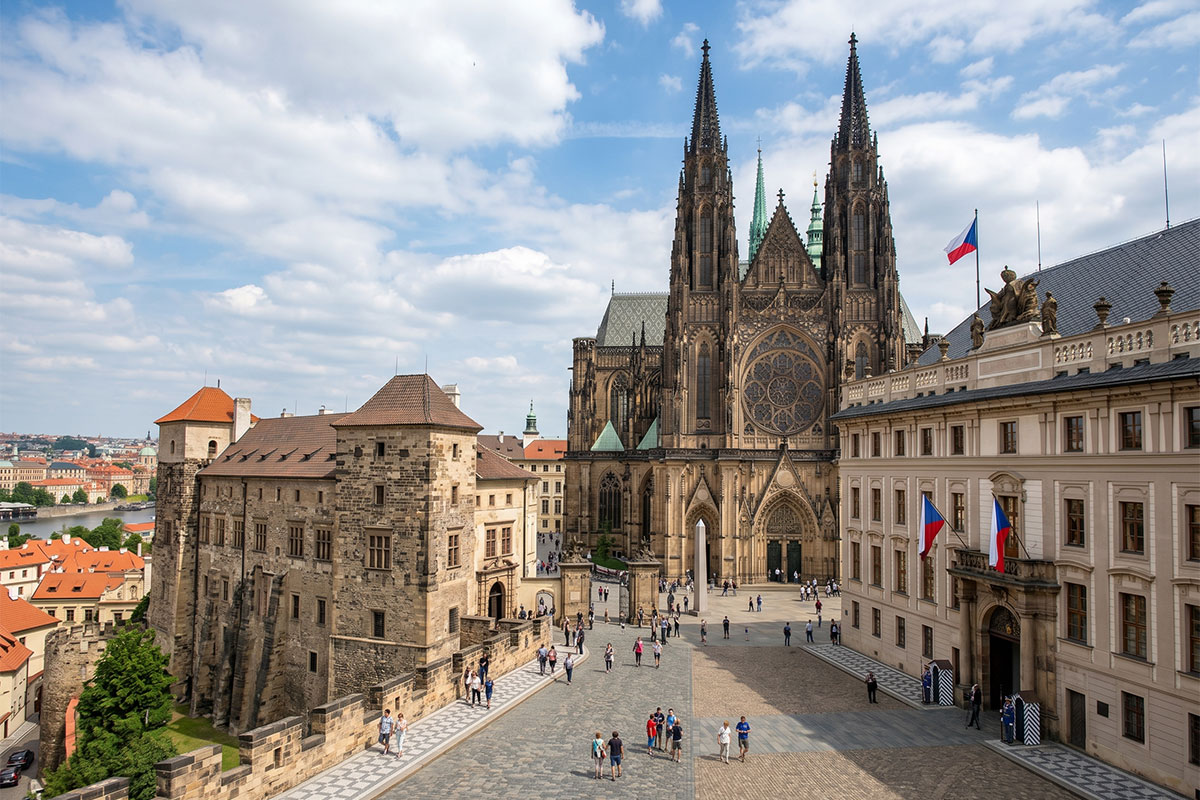
The silhouette of St. Vitus Cathedral is the defining image of Prague, and up close, its dominance is overwhelming. Commissioned by Charles IV in the 14th century, the cathedral was intended to be the spiritual heart of the kingdom and the final resting place of kings. The architecture here serves a dual purpose: to humble the observer and to elevate the monarch. As you stand before the Golden Gate, notice the intricate mosaics depicting the Last Judgment. This wasn't just art; it was a warning and a reminder of the King’s role as the defender of the faith. These mosaics, crafted by Venetian masters, are a testament to the international artistry employed in the castle's construction, reflecting the kingdom's reach and influence.
Inside, the genius of architects Matthias of Arras and Peter Parler comes to life. The nave is a forest of stone, with ribbed vaults that seem to defy gravity, pulling the eye upward toward the heavens. The stained glass windows, including the famous Art Nouveau masterpiece by Alphonse Mucha added centuries later, transform the cold winter light into a kaleidoscope of spiritual color. This interplay of light and shadow was designed to create a mystical atmosphere, reinforcing the sanctity of the coronation ceremonies held here. It is a space where the architecture commands silence and reverence. Consider the triforium, the gallery above the arches; it displays busts of the royal family, saints, and architects, a visual lineage connecting earthly power to divine grace.
The Seat of Kings: The Old Royal Palace
While the cathedral represented divine power, the Old Royal Palace was the epicenter of secular authority. The contrast between the two buildings is striking. Where the cathedral is ornate and vertical, the palace is robust and grounded. However, hidden within its austere walls lies one of the greatest architectural achievements of the late Gothic period: the Vladislav Hall. Built between 1493 and 1502, this vast space was a technological marvel of its time, designed to showcase the wealth and sophistication of the Jagiellonian dynasty.
The Engineering Marvel of Vladislav Hall
Stepping into Vladislav Hall, the first thing that captures your attention is the ceiling. The complex, intertwining rib vaulting looks less like stone and more like dried floral arrangements or lace. It was a daring departure from traditional designs, signaling a transition toward the Renaissance. The sheer scale of the hall is difficult to comprehend until you realize it was designed to host indoor jousting tournaments. The wooden floor you walk on today once thundered under the hooves of knights’ horses, a testament to the grandeur of royal life. The hall also served as a marketplace and a space for coronations, highlighting its versatility and central role in courtly life. Imagine the bustling activity, the merchants hawking their wares, and the solemn processions of royalty, all within this single, magnificent space.
The Defenestration Window
Architecture also bears witness to rebellion. Within the palace complex lies the office of the Bohemian Chancellery, home to the window associated with the Second Defenestration of Prague in 1618. While the window itself is modest compared to the grand halls, its architectural placement high above the castle moat turned a political protest into a catalyst for the Thirty Years' War. It serves as a stark reminder that in these corridors of power, the line between ruling and falling was often perilously thin. The act of throwing the imperial governors from this window was not just a political statement, but a symbolic rejection of Habsburg authority, etched forever into the castle's history.
A Walk Through Time: Romanesque to Renaissance
Prague Castle is often described as a palimpsest, where new styles were written over the old. Nowhere is this more evident than at St. George’s Basilica. Founded in 920, it is the oldest surviving church building within the complex. Its heavy stone walls and small windows are characteristic of the Romanesque style—solid, defensive, and unyielding. However, the facade tells a different story. In the 17th century, a bright red Baroque facade was added, masking the ancient interior with a theatrical display of Counter-Reformation zeal. This juxtaposition of styles highlights the ever-changing religious and political landscape of Bohemia.
Further exploring the grounds brings us to the influence of the Habsburgs, who introduced the Italian Renaissance to Prague. The Royal Garden and the Queen Anne’s Summer Palace (Belvedere) represent a shift in the concept of royal power. No longer just about defense and intimidation, power was now demonstrated through culture, symmetry, and leisure. The Belvedere, with its delicate arcades and copper roof (which sings in the rain, according to local legend), was a space for pleasure, contrasting sharply with the grim fortifications of the earlier eras. The sgraffito decorations on the exterior walls, depicting scenes from mythology and courtly life, further emphasize the Renaissance emphasis on humanism and artistic expression.
The Alchemist’s Corner: Golden Lane
To truly understand the ecosystem of the castle, one must visit the Golden Lane. Tucked against the northern wall, this row of diminutive, colorful houses offers a jarring contrast to the monumental palaces. Originally built in the 16th century to house the castle marksmen (and later, according to legend, alchemists trying to turn lead into gold), these structures highlight the scale of the castle's operation. The architecture here is humble, utilitarian, and intimately human.
Walking down this narrow cobblestone street feels like stepping into a fairy tale, yet it served a practical purpose. The small windows and low doorways remind us that the castle was a functioning city, supported by guards, goldsmiths, and servants. The presence of literary giant Franz Kafka, who lived at number 22, adds a layer of intellectual history to the architectural charm. It suggests that the castle’s power wasn't just in its kings, but in the stories it generated. The uneven floors and cramped spaces of the Golden Lane offer a glimpse into the lives of ordinary people who contributed to the castle's rich tapestry of history.
Architectural Styles and Significance
To help visualize the layers of history, here is a breakdown of the key architectural eras visible within the castle complex:
| Era | Architectural Style | Key Structure | Symbolism of Power |
| 10th Century | Romanesque | St. George's Basilica | Stability, defense, and the early consolidation of Christianity. |
| 14th Century | Gothic | St. Vitus Cathedral | Divine right, vertical aspiration, and connection to God. |
| 15th Century | Late Gothic | Vladislav Hall | Technological superiority, wealth, and chivalric grandeur. |
| 16th Century | Renaissance | Belvedere (Summer Palace) | Cultural refinement, humanism, and leisure. |
| 17th-18th Century | Baroque | Theresian Wing / Facades | Imperial dominance, centralization, and dramatic visual impact. |
Practical Tips for the Architecture Enthusiast
Exploring such a massive complex requires a bit of strategy, especially if you want to appreciate the architectural nuances without the distraction of heavy crowds. Here are a few suggestions for your visit:
- Look Up: Many of the most intricate details, such as the gargoyles on St. Vitus or the heraldic emblems on the palace walls, are located well above eye level.
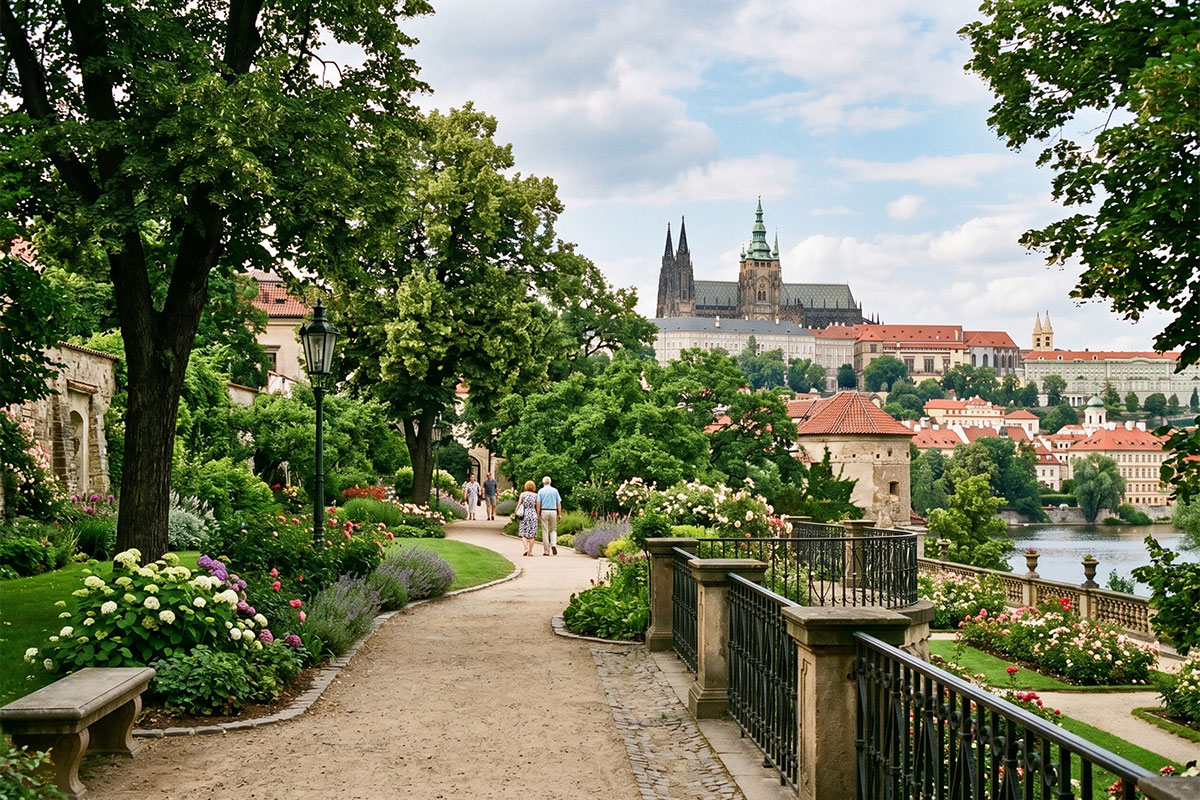
- Visit the South Gardens: From here, you can see the architectural dialogue between the castle walls and the city below. The view of the Lesser Town rooftops provides context to the castle's looming presence.
- Check the Light: The stained glass in the cathedral is best viewed around noon when the sun is highest, casting vibrant colors across the nave. Conversely, the Golden Lane is most atmospheric in the late afternoon as the shadows lengthen.
- Examine the Masonry: In the Old Royal Palace, look closely at the stonework. You can often see the masons' marks—signatures left by the medieval craftsmen who built these structures.
Prague Castle is more than a tourist destination; it is a physical manifestation of the Czech nation's history. From the defensive Romanesque roots to the soaring Gothic ambitions and the refined Renaissance flourishes, every stone tells a story of a monarch trying to leave an indelible mark on the world. As you walk through the courtyards and halls, you aren't just looking at buildings; you are witnessing the architecture of power that has shaped Central Europe for a millennium.