Discover the ethereal beauty and deep symbolism hidden within the stained glass windows of St. Vitus Cathedral at Prague Castle. From Alfons Mucha's Art Nouveau masterpiece to the biblical narratives of the Rose Window, explore how light and color tell the story of a nation.
When you step across the threshold of St. Vitus Cathedral within the sprawling complex of Prague Castle, the first thing that strikes you isn't just the sheer scale of the Gothic architecture, but the living, breathing quality of the light. Unlike the dark, somber interiors of many medieval churches, this space feels alive, illuminated by a kaleidoscope of colors that dance across the limestone pillars. The stained glass windows here are not merely decorative elements; they are silent storytellers, capturing centuries of faith, national identity, and artistic evolution. For any traveler exploring Prague in January 2026, understanding these windows transforms a simple sightseeing visit into a profound journey through Czech history and the human spirit.
The windows of St. Vitus are unique because they defy the timeline of a single era. While the cathedral’s foundation dates back to the 14th century, the nave was not completed until the 20th century. This long pause in construction resulted in a fascinating blend of medieval Gothic traditions and modern artistic sensibilities. As you walk down the aisles, you are essentially walking through a timeline of art history, culminating in some of the most spectacular examples of Art Nouveau glasswork in the world. The interplay of shadow and vibrant color creates an atmosphere that feels both solemn and celebratory, inviting visitors to look up and lose themselves in the details.
The Crown Jewel: Alfons Mucha’s Art Nouveau Masterpiece
Among the many treasures in the cathedral, one window inevitably steals the spotlight and draws the largest crowds. Located in the north nave, the window designed by the legendary Czech artist Alfons Mucha is a startling departure from traditional ecclesiastical art. Created in the early 1930s, this window does not rely on the mosaic style of small glass pieces held together by lead, which is typical of Gothic windows. Instead, Mucha painted directly onto the glass, allowing for a fluidity and emotional depth that is characteristic of his Art Nouveau style. The result is a vibrant, almost dreamlike composition that glows with intense shades of violet, gold, and deep blue.
The symbolism in Mucha’s window is deeply rooted in Slavic nationalism rather than purely biblical scripture. The central theme depicts the lives of Saints Cyril and Methodius, the Byzantine brothers who brought Christianity to the Slavic people. However, Mucha weaves a more complex narrative around them, incorporating allegorical figure representing the Slavic people as a young boy. The emotional expressions on the faces of the figures are hauntingly realistic, staring back at the viewer with a mix of suffering and hope. This window was a gift from the Slavia Bank, and its underlying message is one of national unity and the resilience of the Czech spirit, making it a poignant symbol of the country's identity. To further appreciate the depth of Mucha's vision, consider that he designed this window during a period of growing political tension in Europe, adding another layer of meaning to its themes of unity and resilience.
Symbolism Beyond the Aesthetics
To truly appreciate the Mucha window, one must look closely at the color palette he chose. Unlike the primary reds and blues found in the older parts of the cathedral, Mucha utilized a broader spectrum to evoke mood.
- Golden Hues: These represent the divine light and the spiritual awakening of the Slavic nations. They also symbolize prosperity and the hope for a brighter future for the Czech people.
- Deep Violets and Blues: These cooler tones create a sense of mystery and depth, often associated with the hardships and the solemn history of the region. Violet, in particular, can represent royalty and spiritual wisdom.
- Green Accents: Symbolizing rebirth and the enduring nature of faith and culture despite centuries of suppression. Green also embodies hope and the promise of renewal.
The Rose Window: A Geometric Creation Story
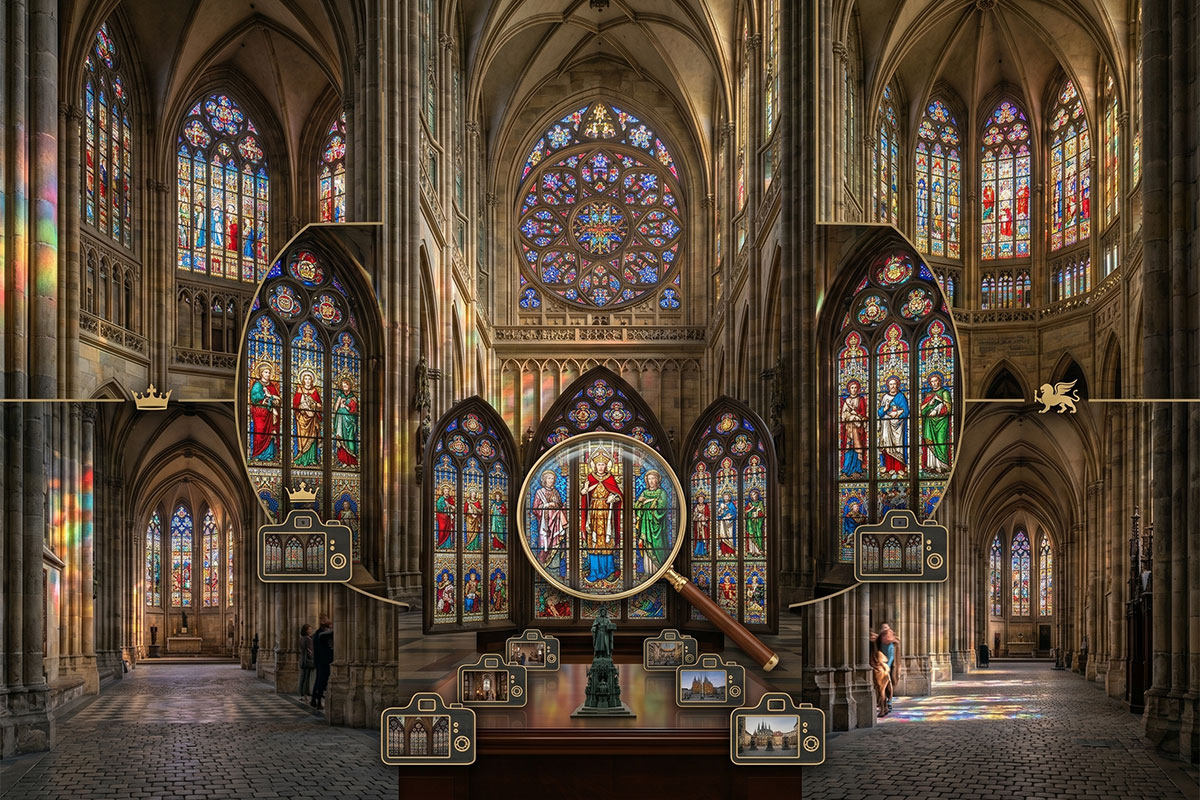
Turning your gaze to the western façade, you will encounter the majestic Rose Window, a masterpiece of geometry and theological storytelling. Designed by František Kysela between 1925 and 1927, this massive circular window is often referred to as "The Creation." It contains over 26,000 pieces of glass, arranged in a mesmerizing radial pattern that mimics the petals of a flower or the rays of the sun. From a distance, it appears as a singular, glowing eye watching over the entrance, but up close, the intricate details reveal a comprehensive narrative of the biblical creation of the world.
The symbolism here is heavily reliant on numbers and colors. The window is divided into specific sections representing the days of creation, moving from the center outward. The use of color is distinct; the center burns with warm yellows and oranges, representing the initial burst of light, while the outer edges transition into cooler blues and purples, symbolizing the separation of the heavens and the earth. It is a visual representation of order emerging from chaos, a theme that resonates deeply within the sacred geometry of Gothic architecture. Viewing this window during the late afternoon, when the setting sun hits the western front, offers a spiritual experience as the entire nave is bathed in a warm, golden glow. For a closer look at the Rose Window's design and symbolism.
Comparing the Masterpieces
With so many windows to admire, it can be overwhelming to distinguish the styles and stories. Below is a breakdown of the most significant windows to help guide your observation:
| Window Name | Artist | Key Style | Primary Symbolism |
| The Mucha Window | Alfons Mucha | Art Nouveau | Slavic Christianity, Cyril & Methodius, National Identity |
| The Rose Window | František Kysela | Modern Gothic | The Creation of the World, Biblical Genesis |
| The Thun-Hohenstein Window | František Kysela | Expressionist | The Good Samaritan, Acts of Mercy |
| The Schwarzenberg Window | Karel Svolinský | Modernist | History of the Schwarzenberg family, Heraldic motifs |
The High Altar and the Gothic Tradition
While the modern windows garner much attention, the windows surrounding the high altar in the chancel return us to the roots of Gothic tradition. These tall, lancet windows are designed to draw the eye upward, reinforcing the connection between the earthly congregation and the divine heavens. The glass here is denser, and the colors are more saturated, dominated by the classic "Chartres Blue" and ruby reds. These windows depict the Holy Trinity and a procession of Czech patron saints, standing guard over the most sacred part of the cathedral.
The symbolism in these older-style windows is less about nationalistic narrative and more about theological dogma. The verticality of the design is intentional; in the Middle Ages, height was associated with holiness. By filtering the sunlight through these dark, rich colors, the architects intended to create a "New Jerusalem," a space that felt distinctly separate from the mundane world outside. Even today, the effect is palpable. The light in the chancel is softer, more mysterious, encouraging silence and reflection among the visitors who walk through the ambulatory.
Why These Windows Matter to the Modern Traveler
In an era of digital screens and fleeting images, the stained glass of Prague Castle offers a rare opportunity to engage with art that demands presence. You cannot simply scroll past these windows; you must stand before them, crane your neck, and let the changing natural light alter your perception of the image. They remind us that storytelling was once a communal, visual experience, designed to educate and inspire populations that may not have been able to read, but could certainly understand the language of light.
Furthermore, these windows serve as a testament to the Czech Republic’s turbulent yet triumphant history. The fact that Art Nouveau masters were invited to contribute to a Gothic cathedral speaks to a culture that honors its past while boldly embracing the new. It is a fusion of eras that makes St. Vitus Cathedral not just a religious site, but a gallery of national evolution. Every shard of glass holds a piece of the collective memory of the people who built, defended, and cherished this castle on the hill.
Practical Tips for the Best Experience
To truly appreciate the artistry of these windows, timing and preparation are key. The experience of the light changes drastically depending on the weather and the time of day. Here is how to make the most of your visit:
- Chase the Sun: For the best view of the East End (the altar), visit in the morning. To see the Rose Window in its full glory, late afternoon is ideal as the sun sets in the west.
- Bring Binoculars: The details in the upper sections of the windows are exquisite but high up. A small pair of binoculars or a camera with a good zoom lens will reveal details invisible to the naked eye.
- Overcast Days are Good: Don't be discouraged by a cloudy Prague day. Overcast weather diffuses the light, preventing harsh glare and allowing the true, saturated colors of the glass to stand out more evenly.
- Look for the Signatures: Many artists, including Mucha, incorporated their signatures or donor logos (like the Slavia Bank insurance logo) into the bottom panels. It’s a fun detail to hunt for.
Visiting Prague Castle is always a highlight, but taking the time to decode the stained glass windows adds a layer of depth that many tourists miss. It transforms the cathedral from a stone monument into a vibrant vessel of light and story, leaving a lasting impression of the beauty and resilience of Czech culture.