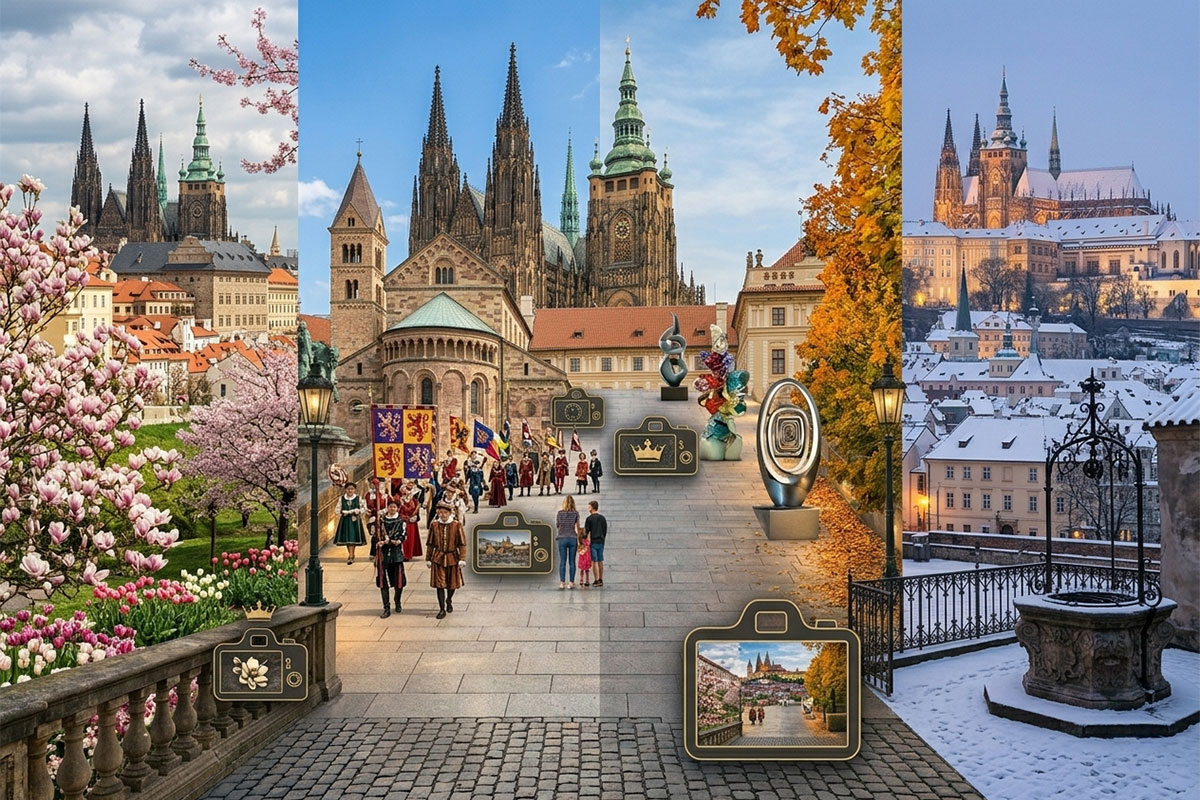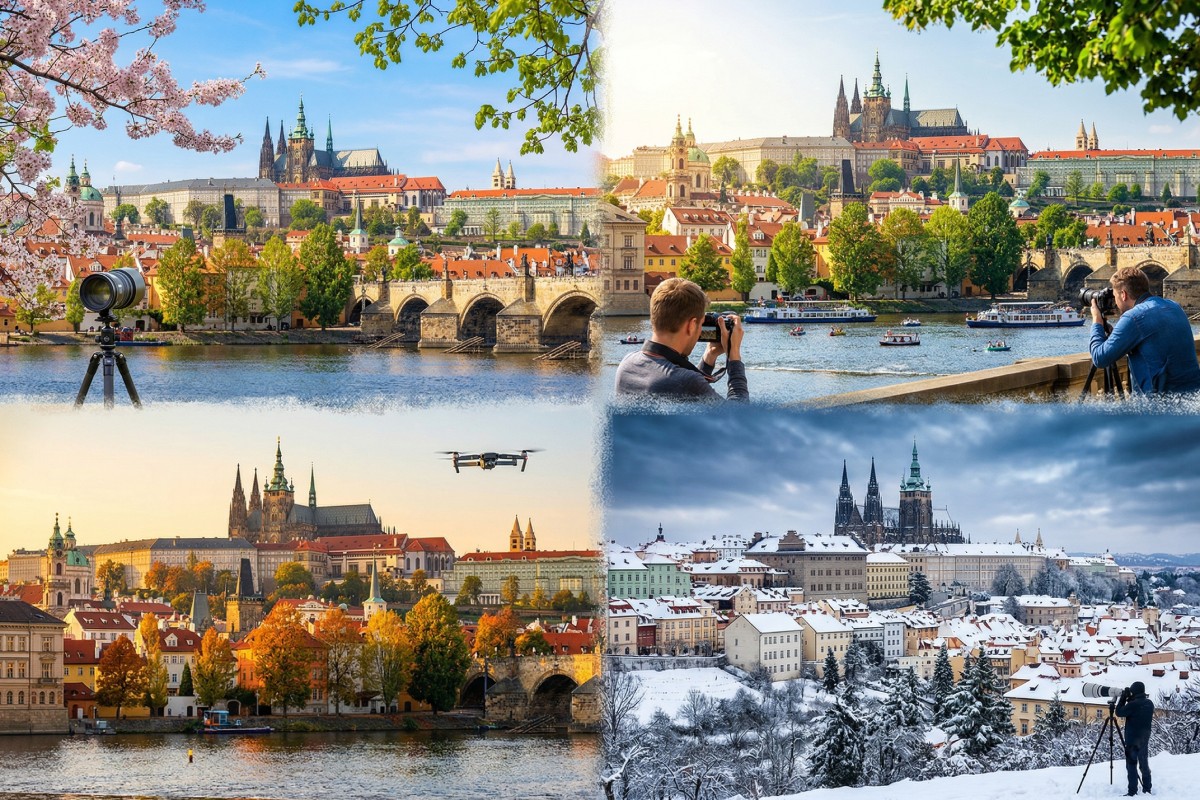
Discover how Prague Castle transforms throughout the year, offering unique photography opportunities from the vibrant blooms of spring to the atmospheric festive lights of winter. This guide covers the best angles, lighting conditions, seasonal highlights, and practical tips for photographers.
Perched high above the winding Vltava River, Prague Castle is more than just a historical monument; it is a living canvas that dramatically shifts its mood and palette with the turning of the calendar. For photographers, this UNESCO World Heritage site offers a distinct narrative in every season, transforming from a fairytale fortress draped in winter mist to a vibrant, sun-drenched citadel in the height of summer. Whether you are a professional carrying a full kit of lenses or an enthusiast with a smartphone, understanding the seasonal nuances of this vast complex is the key to capturing images that resonate with emotion and depth. The interplay of light, weather, and foliage creates a dynamic environment where no two visits yield the exact same photograph.
While the architectural grandeur of St. Vitus Cathedral and the Old Royal Palace remains constant, the atmosphere surrounding them is in a state of perpetual flux. A composition that works perfectly during a crisp January morning might look completely different under the golden glow of a July sunset. Successful photography here requires patience and an appreciation for the elements, as the castle grounds offer specific gifts during each quarter of the year. By timing your visit to match the season, you can witness the transformation of Prague Castle and capture the unique spirit of the Czech capital in its most iconic setting.
Spring: A Rebirth of Color and Soft Light
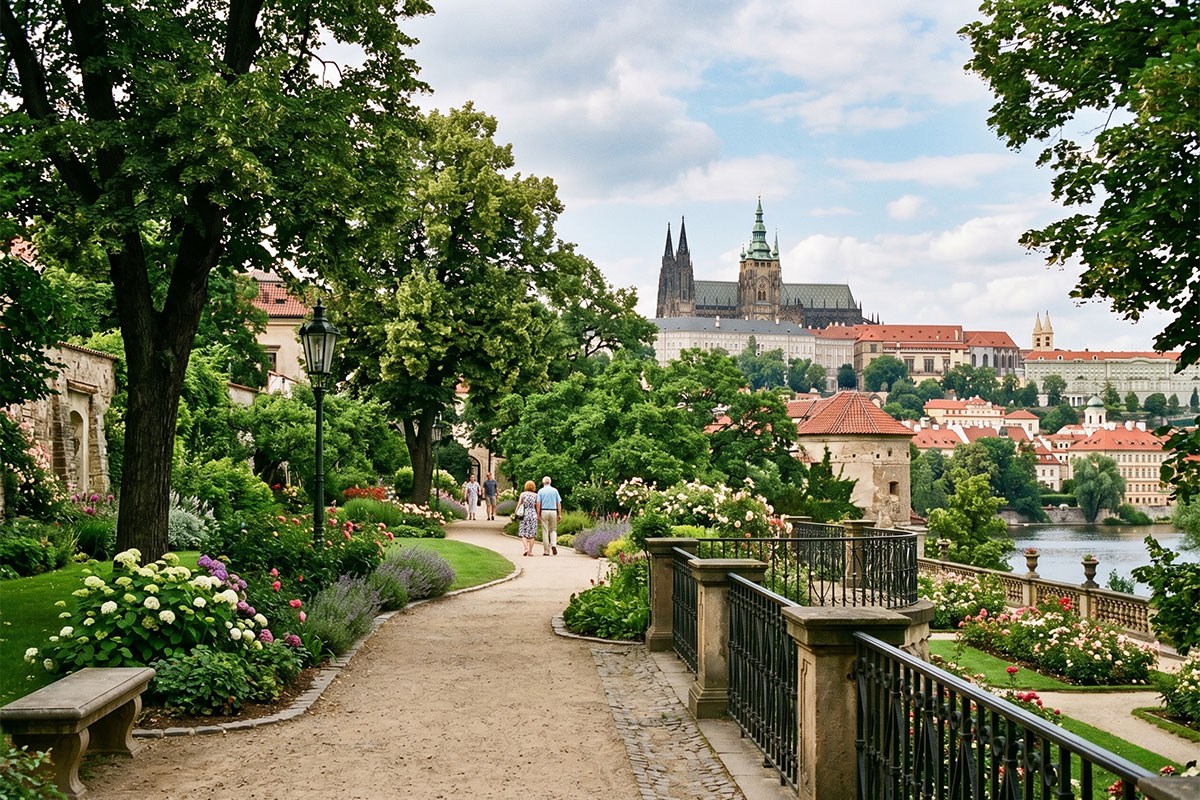
As the harsh gray of winter recedes, Prague Castle bursts into life with a vibrancy that is a dream for landscape and macro photographers alike. The defining feature of this season is undoubtedly the opening of the castle gardens, which typically occurs in April. The Royal Garden, in particular, becomes a focal point, offering a stunning foreground of tulips, magnolias, and ornamental cherry trees against the Renaissance backdrop of Queen Anne’s Summer Palace. The juxtaposition of delicate pink and white petals against the ancient, weathered stone walls creates a romantic and hopeful aesthetic that is unique to this time of year.
Lighting conditions in spring are often the most manageable for photographers, providing a soft, diffused illumination that flatters the complex gothic details of the architecture. The sun is not yet high enough to cast harsh, vertical shadows, allowing for balanced exposures even during the late morning. This is the ideal time to explore the Stag Moat (Jelení příkop), a natural ravine that runs along the castle walls. In spring, the fresh greenery here is electric, and the winding paths offer unique, low-angle perspectives of the fortifications towering above, framed by fresh leaves and dappled sunlight.
Key Spring Subjects
- Magnolias in the Royal Garden: Frame the Singing Fountain through the branches of blooming magnolia trees for a classic composition.
- The South Gardens: Capture the contrast of fresh green lawns against the terracotta rooftops of the Malá Strana district below.
- Soft Morning Mist: Spring mornings often retain a light mist rising from the river, softening the skyline for panoramic shots from Hradčany Square.
Summer: Golden Hours and Deep Blue Skies
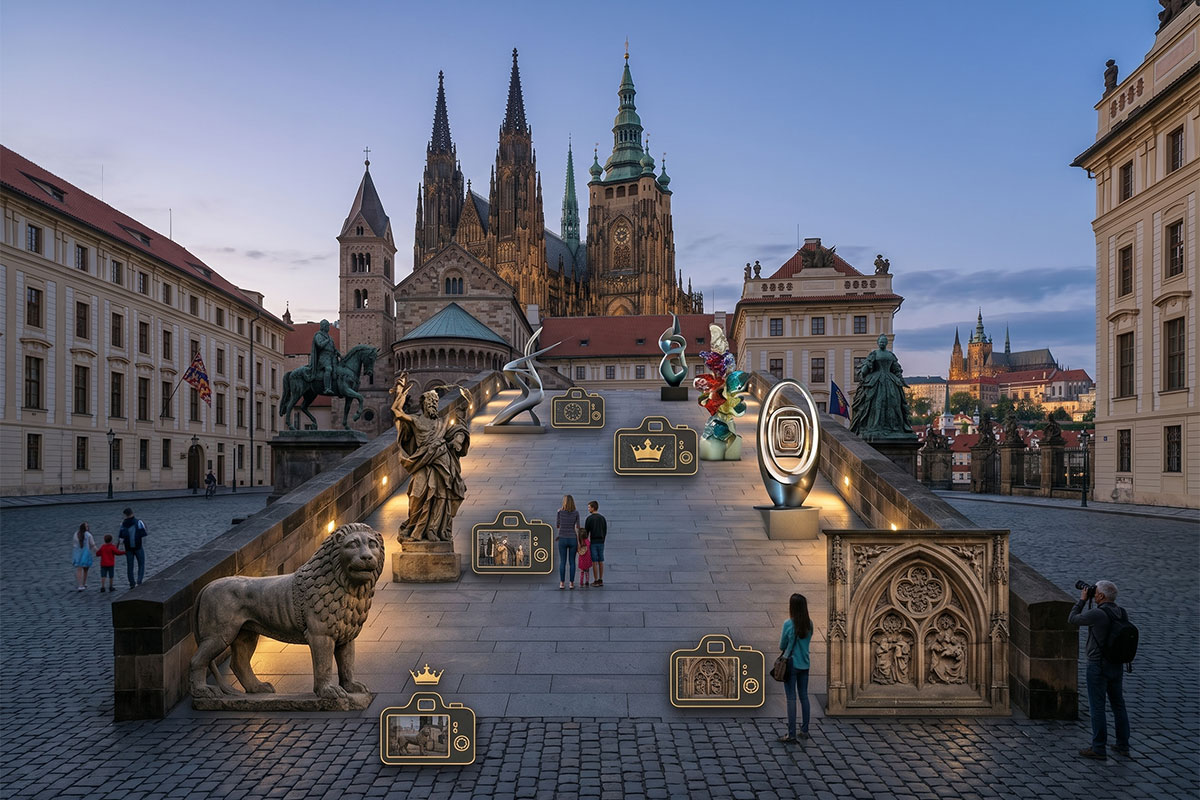
Summer at Prague Castle is characterized by intensity—intense crowds, intense heat, and intense visual contrast. While the high tourist numbers can be a challenge, the season offers the longest days and the most dramatic skies. The key to successful summer photography here is timing; early mornings are non-negotiable. Arriving at the castle gates right as they open allows you to capture the vast courtyards of the Second and Third Courtyards relatively empty, emphasizing the sheer scale of the architecture without the distraction of tour groups. The light at 6:00 AM or 7:00 AM strikes the St. Vitus Cathedral with a warm, golden hue that highlights the golden mosaic of the Last Judgment on the South Gate.
Conversely, the late evenings provide the spectacular "Blue Hour," where the sky turns a deep, rich cobalt just after sunset. This is when the castle's artificial illumination kicks in, creating a majestic contrast between the warm tungsten lights of the cathedral and the cooling sky. From vantage points like the Petřín Hill or the Charles Bridge, the castle silhouette dominates the horizon. Summer is also the only time when the sun sets far enough to the northwest to potentially align with specific architectural elements, allowing for creative silhouette shots that are impossible during the winter months.
Autumn: Melancholy, Texture, and Atmosphere
For many photographers, autumn is the crown jewel of seasons in Prague. The city is often referred to as "Golden Prague," and nowhere is this more evident than on the castle grounds. As the leaves in the Royal Garden and the Stag Moat turn to shades of burnt orange, russet, and gold, the entire complex takes on a moody, nostalgic atmosphere. This season is perfect for capturing texture; the low angle of the autumn sun accentuates the rough surfaces of the gothic stone, the cobblestones of the Golden Lane, and the intricate ironwork of the castle gates.
The weather in autumn adds a layer of drama that is hard to replicate. It is common to encounter days with dramatic, fast-moving clouds that create dynamic backgrounds for wide-angle architectural shots. Furthermore, the early onset of sunset allows photographers to capture the golden hour without waking up at dawn or staying out late. The view from the Black Tower looking east towards the city bridges, framed by yellowing leaves, provides a quintessential image of Central Europe that evokes a sense of timeless history.
Autumn Photography Tips
- Polarizing Filters: Use a polarizer to pop the contrast between the orange leaves and the often deep blue autumn skies.
- Golden Lane Details: The smaller crowds in late autumn make it easier to photograph the colorful, tiny houses of Golden Lane without people blocking the view.
- The Deer Moat: This area is particularly atmospheric in October, where the fallen leaves create a carpet of color along the wooden walkways.
Winter: Festive Magic and Gothic Silhouettes
Winter transforms Prague Castle into a scene from a Dickensian novel, especially when snow blankets the spires and courtyards. Even without snow, the atmosphere is stark and compelling. The bare trees reveal architectural details that are hidden by foliage during the rest of the year, allowing for cleaner lines and unobstructed views of the cathedral's flying buttresses. The air is often crisp and clear, providing excellent visibility for long-distance telephoto shots across the river towards the Old Town.
The highlight of the winter season is undoubtedly the festive decorations. Throughout December and into January, a Christmas market typically occupies the square behind St. Vitus Cathedral. The warm glow of market stalls, combined with the monumental gothic backdrop, offers a unique opportunity to capture candid street photography and night scenes. The steam rising from cups of mulled wine, the sparkle of festive lights, and the bundled-up visitors add a human element to the grandeur of the stone surroundings. It is a time for high-ISO photography and fast prime lenses to capture the ambient magic of the castle after dark.
Seasonal Photography Cheat Sheet
| Feature | Spring | Summer | Autumn | Winter |
| Primary Light | Soft, diffused, pastel | Harsh midday, long twilights | Warm, golden, dramatic | Low angle, cool, moody |
| Best Location | Royal Garden (Queen Anne's) | Hradčany Square (Sunset) | Stag Moat (Jelení příkop) | St. George's Square (Market) |
| Key Element | Blooming flowers | Blue skies & silhouettes | Colorful foliage | Festive lights & snow |
| Crowd Level | Moderate | High | Moderate to Low | Low (except holidays) |
Technical Considerations for Castle Photography
Regardless of the season, photographing Prague Castle requires some technical preparation. Because the complex is a mix of massive structures and tiny details, a versatile zoom lens (such as a 24-70mm) is your best friend. However, to truly capture the immensity of St. Vitus Cathedral from within the courtyards, an ultra-wide-angle lens (14mm or 16mm) is almost mandatory. Without it, you will struggle to fit the soaring spires into a single frame. Conversely, a telephoto lens allows you to compress the perspective, stacking the castle towers against the city skyline from distant viewpoints like Letná Park.
Tripod regulations within the castle grounds can be strict and variable depending on the specific courtyard and security levels. Generally, hand-held shooting is preferred inside the paid areas to avoid obstructing the flow of visitors. However, for night photography from the exterior ramparts or Hradčany Square, a sturdy tripod is essential to keep your ISO low and your images sharp. Always respect the security zones and be mindful that the castle is a functioning government building; some areas may close unexpectedly for state events.
Ultimately, the best photograph of Prague Castle is the one that captures a fleeting moment of light or atmosphere that resonates with you. Whether it is the melancholy fog of November or the triumphant blooms of May, the castle offers an endless array of compositions waiting to be discovered. By observing the seasonal shifts and adapting your technique, you can move beyond the standard postcard snapshot and create images that truly tell the story of this ancient seat of kings.
Practical Tips for Photography at Prague Castle
- Arrive Early: Especially during peak tourist season (summer), arriving before the crowds is crucial for unobstructed shots.
- Check for Events: Prague Castle hosts various events throughout the year. Check the official website for closures or special events that might affect your photography plans.
- Wear Comfortable Shoes: The castle grounds are extensive, and you'll be doing a lot of walking.
- Be Mindful of Security: Respect security personnel and follow their instructions. Avoid pointing cameras at sensitive areas.
- Experiment with Perspectives: Don't be afraid to try different angles and viewpoints to create unique compositions.
- Capture the Details: While the grand architecture is impressive, don't overlook the smaller details, such as gargoyles, stained glass, and intricate carvings.
- Consider a Guided Tour: A photography-focused tour can provide valuable insights into the best locations and techniques.