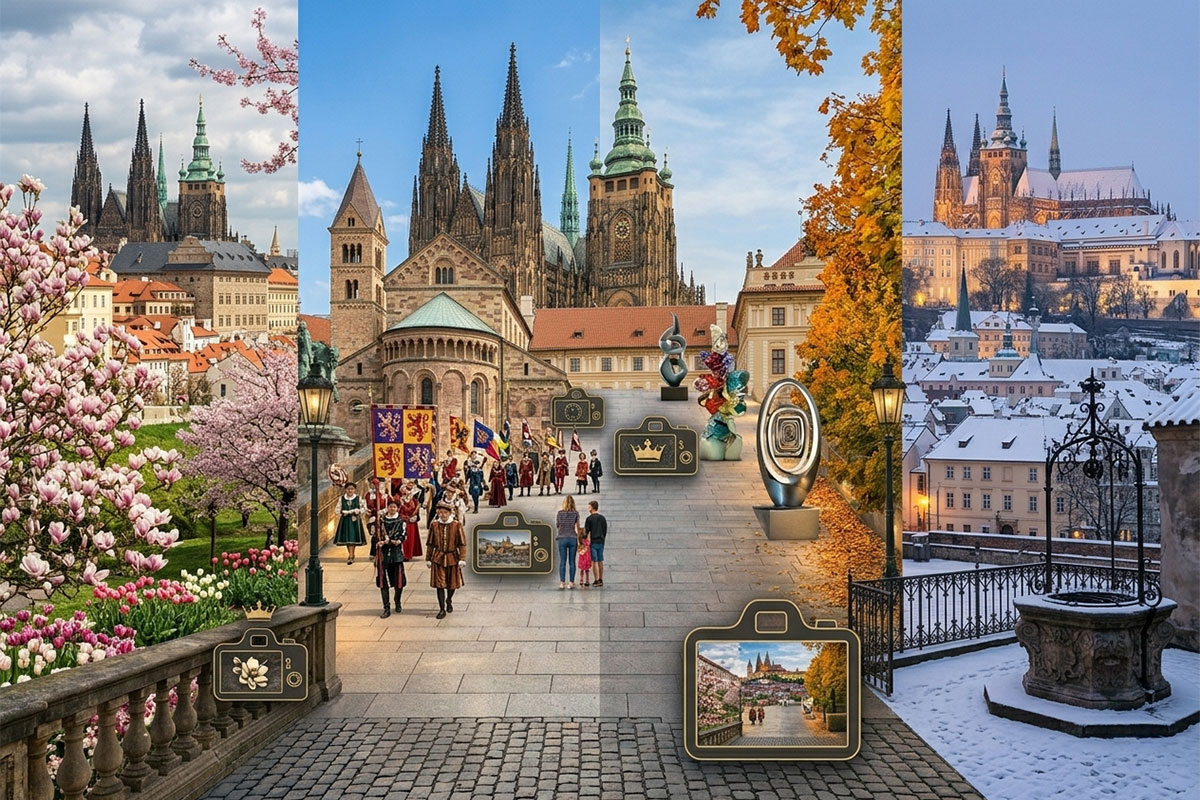
Step back in time to explore the grand royal ceremonies of Prague Castle. From the spiritual solemnity of Bohemian coronations to the opulent festivities of the Habsburg era, discover the traditions that defined this historic landmark.
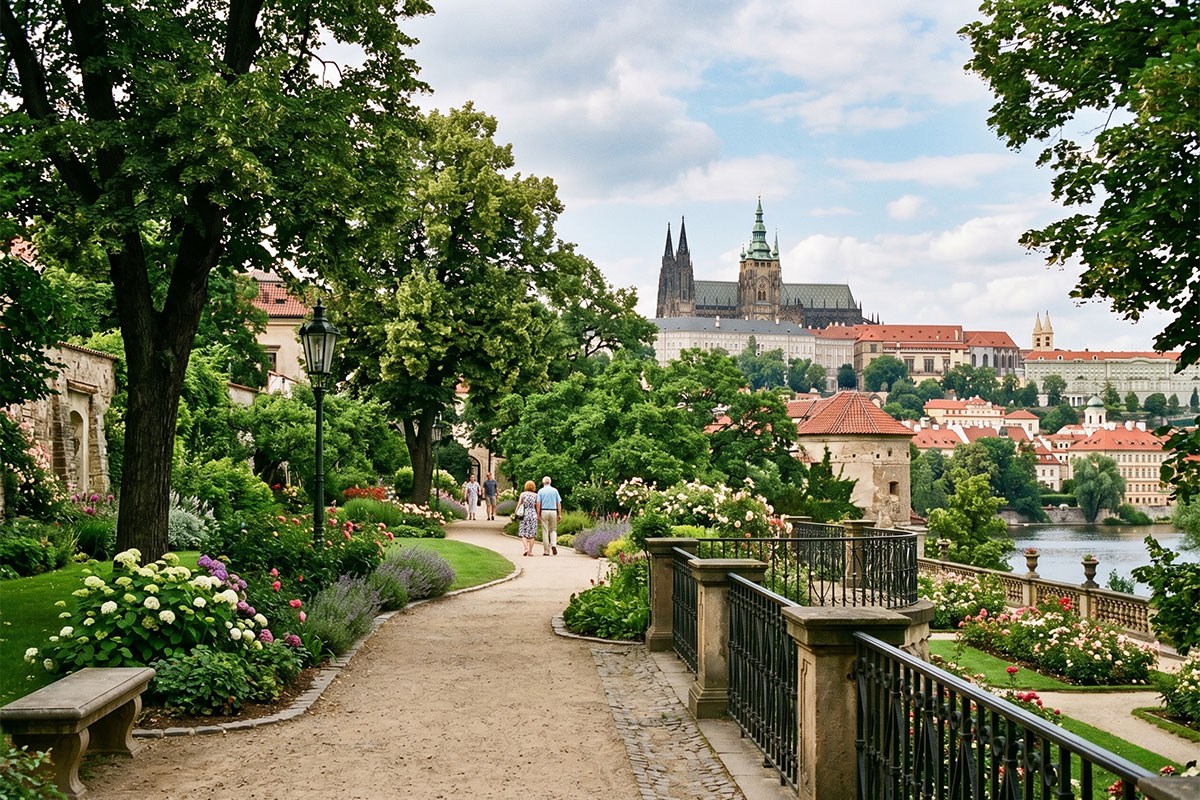
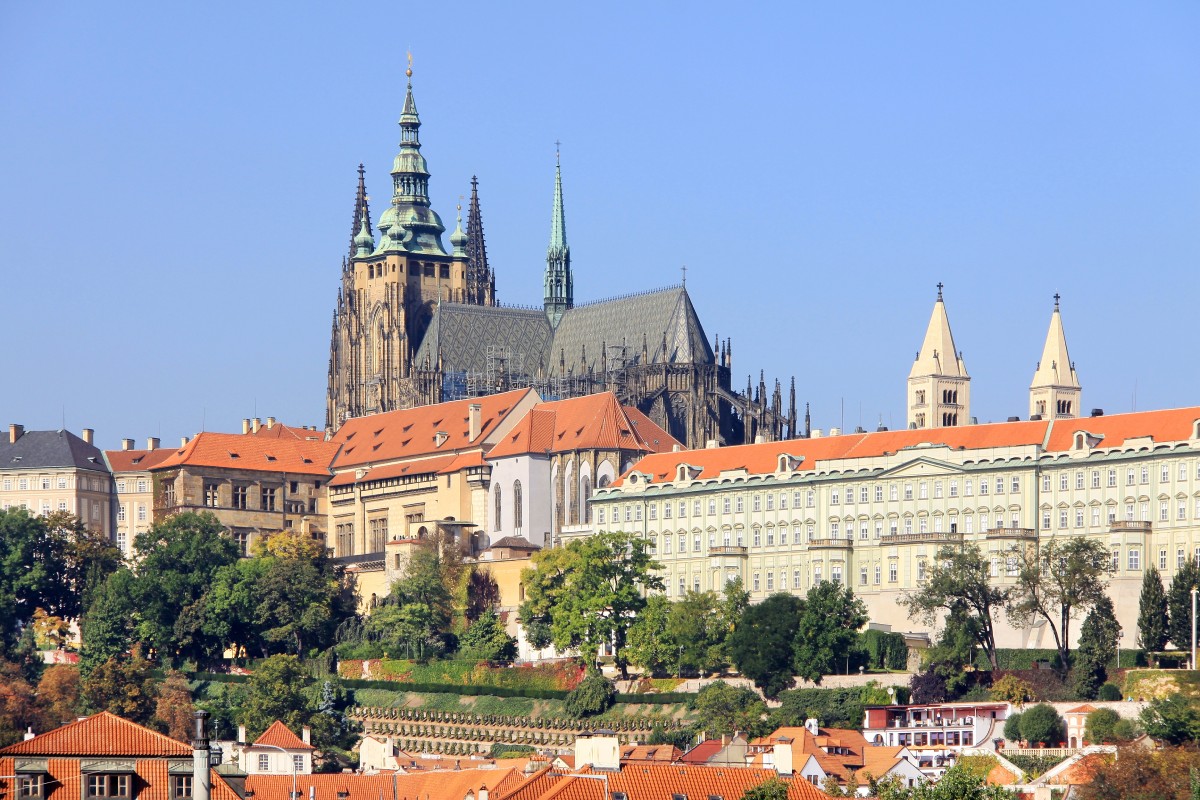
Standing atop the hill in Hradčany, Prague Castle is far more than a collection of palaces and churches; it is a silent witness to a millennium of statehood, power, and pageantry. For centuries, this sprawling complex has served as the ultimate stage for the Kingdom of Bohemia, where history was written not just in ink, but in gold, velvet, and the thunderous applause of the court. Walking through the courtyards today, in January 2026, one can still sense the echoes of the grand processions that once wound their way up from the Old Town, transforming the castle into a theater of royal majesty. To understand the soul of Prague, one must look beyond the stone walls and envision the elaborate ceremonies that breathed life into them.
The Sacred Rite: Coronations at St. Vitus Cathedral
The most significant event in the life of any Bohemian monarch was the coronation, a ceremony deeply rooted in spiritual mysticism and political affirmation. St. Vitus Cathedral, with its soaring Gothic arches and stained glass, served as the sacred venue where kings and queens were anointed. The atmosphere during these events was thick with incense and the chanting of the clergy, creating a transcendent experience designed to legitimize the ruler's divine right. The central element of this ritual was the Crown of Saint Wenceslas, a jewel-encrusted masterpiece ordered by Charles IV, which was never worn for ordinary occasions but reserved strictly for the coronation day. Legend and protocol dictated that the crown returned to its iron-clad chamber immediately after the ceremony, guarding it against unworthiness.
The coronation was not merely a moment inside the cathedral; it was the culmination of the 'Royal Route' procession. The future king would travel from the Royal Court in the Old Town, cross the Charles Bridge, and ascend the hill to the castle, greeted by the cheers of the populace and the ringing of bells from every tower in the city. This journey symbolized the monarch's bond with the city and its people before entering the sanctified grounds of the castle. Inside the cathedral, the liturgy followed the Ordo ad coronandum Regem Boemorum, a script written by Charles IV himself, ensuring that every gesture and prayer adhered to a strict, symbolic tradition that linked the new ruler to his saintly predecessors.
The Vladislav Hall: A Venue for Feasts and Jousts
While the cathedral catered to the soul, the Old Royal Palace, specifically the Vladislav Hall, catered to the court's desire for spectacle and celebration. Completed in the late 15th century, this hall remains one of the most impressive secular Gothic spaces in Central Europe, famous for its intricate vaulted ceiling that resembles intertwined dry branches. During royal festivities, this vast space was transformed into a banquet hall where hundreds of nobles would gather to feast on game, wine, and exotic delicacies. The hall was designed with such grand dimensions that it could accommodate indoor jousting tournaments, a rare architectural feat for its time.
The floor of the Vladislav Hall was built robustly enough to support the weight of heavy warhorses and armored knights. To facilitate this, the famous 'Riders’ Staircase' was constructed with low, wide steps, allowing horses to enter the hall directly from the courtyard without dismounting their riders. These tournaments were not just sport; they were diplomatic displays of strength and chivalry, often held to celebrate coronations, royal weddings, or the birth of an heir. The clash of lances and the roar of the assembled nobility would reverberate against the stone walls, creating a spectacle that solidified the king's prestige among European courts.
Elements of Royal Festivities
- The Royal Banquet: Following the coronation or wedding, feasts could last for days, featuring courses presented with theatrical flair, often accompanied by musicians and jesters.
- Attire and Heraldry: The nobility attended in their finest velvets and silks, displaying family crests and heraldry to assert their status within the court hierarchy.
- Gift Giving: Ceremonies were often marked by the exchange of lavish gifts between the monarch and high-ranking envoys from foreign lands.
- Public Celebrations: While the elite feasted inside, wine fountains were often set up in the courtyards for the common people, ensuring the celebration permeated every social stratum.
The Habsburg Era: Baroque Splendor and Rigid Protocol
With the ascent of the Habsburg dynasty, the nature of ceremonies at Prague Castle shifted from medieval chivalry to the rigid, gilded opulence of the Baroque era. The Habsburgs viewed Prague as a key jewel in their crown, though the court eventually moved to Vienna, making their visits to Prague grand, rare, and meticulously choreographed events. The coronation of Maria Theresa as Queen of Bohemia in 1743 is a prime example of this shift towards absolute grandeur. The ceremonies became more theatrical, influenced by the Italian Baroque style, with opera performances, fireworks over the Vltava River, and balls that utilized the newly renovated palace wings.
During this period, the castle underwent significant architectural changes to match the imperial aesthetic, unifying the eclectic medieval structures into the cohesive facade seen today. Ceremonies were governed by the complex Spanish court protocol, which dictated everything from the distance kept between the monarch and subjects to the specific number of steps taken during a greeting. These events were less about the raw connection between king and people and more about displaying the unshakeable power and wealth of the Austrian Empire. The grandeur was calculated to impress not just the locals, but the entirety of Europe. Can you imagine the sheer scale of such displays?
Timeline of Major Royal Events
To understand the breadth of history witnessed by these walls, it is helpful to look at specific key dates that defined the ceremonial landscape of Prague Castle. The following table highlights pivotal moments where the castle shone in its full ceremonial capacity.
| Year | Monarch / Event | Significance |
| 1347 | Coronation of Charles IV | Established the coronation order and the significance of the St. Wenceslas Crown. |
| 1527 | Coronation of Ferdinand I | Marked the beginning of the Habsburg dynasty's long rule over Bohemia. |
| 1619 | Coronation of Frederick V | Known as the 'Winter King,' his brief reign precipitated the Thirty Years' War. |
| 1723 | Coronation of Charles VI | A massive Baroque spectacle that included the premiere of an opera by Fux holding 4,000 spectators. |
| 1743 | Coronation of Maria Theresa | The only female monarch to be crowned Queen of Bohemia, marking a unique moment in castle history. |
| 1836 | Coronation of Ferdinand V | The final royal coronation to ever take place in Prague, ending a tradition spanning centuries. |
Modern Echoes: The Changing of the Guard
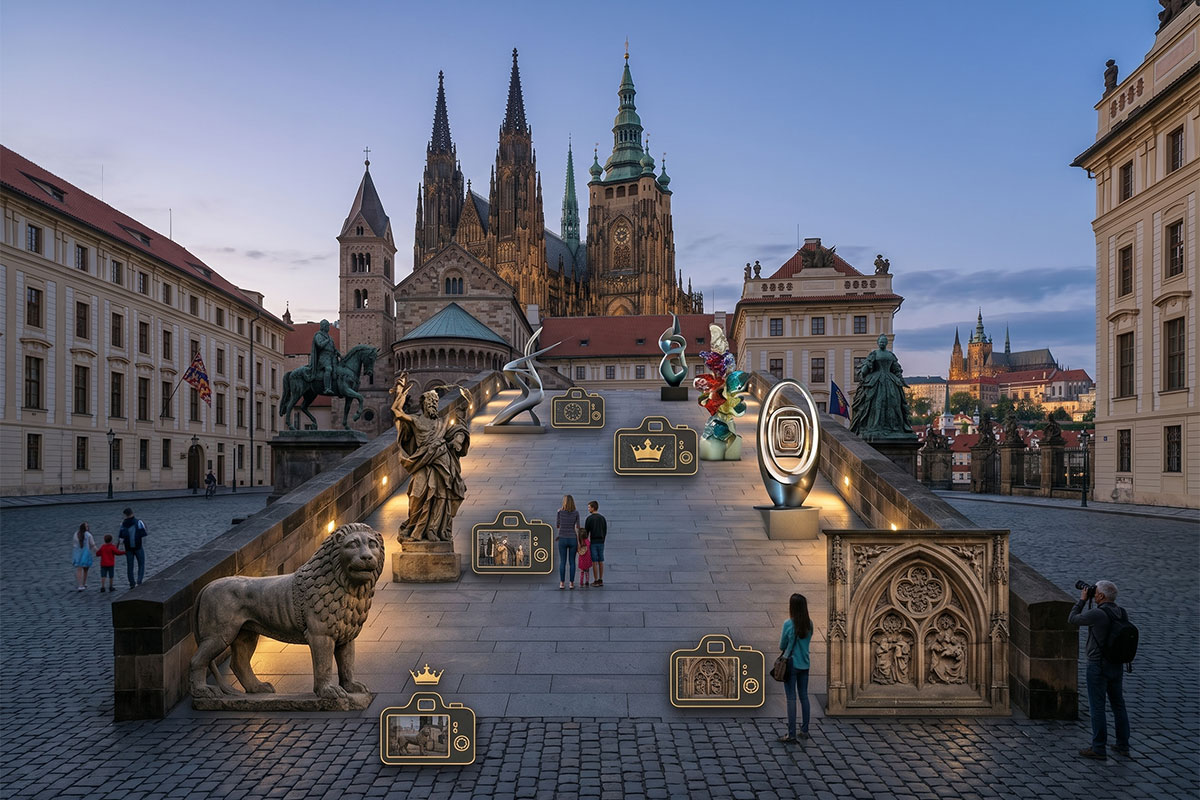
While the era of kings and coronations has passed, the ceremonial spirit of Prague Castle remains alive in the modern Czech Republic. Today, the most visible remnant of this pageantry is the Changing of the Guard. Occurring hourly at the castle gates, with a special fanfare and banner exchange at noon in the First Courtyard, this ritual draws thousands of visitors. The guards, dressed in uniforms designed by Oscar-winning costume designer Theodor Pištěk, represent a bridge between the historical dignity of the castle and its modern function as the seat of the President.
Beyond the daily guard duties, the castle continues to host high-level state visits and diplomatic ceremonies. When foreign heads of state visit Prague, the ancient reception rooms and the Rothmayer Hall are utilized, maintaining the castle's status as a place of high diplomacy. The settings that once hosted knights and emperors now host presidents and prime ministers, proving that while the titles have changed, the gravity and splendor of Prague Castle remain undiminished. Visitors walking through the Third Courtyard or gazing up at the Golden Gate of the cathedral can still feel the weight of history, imagining the fanfare that has echoed against these stones for a thousand years.