A deep dive into the architectural and historical metamorphosis of Prague Castle, tracing its journey from a wooden defensive stronghold to a sprawling royal residence and cultural icon.
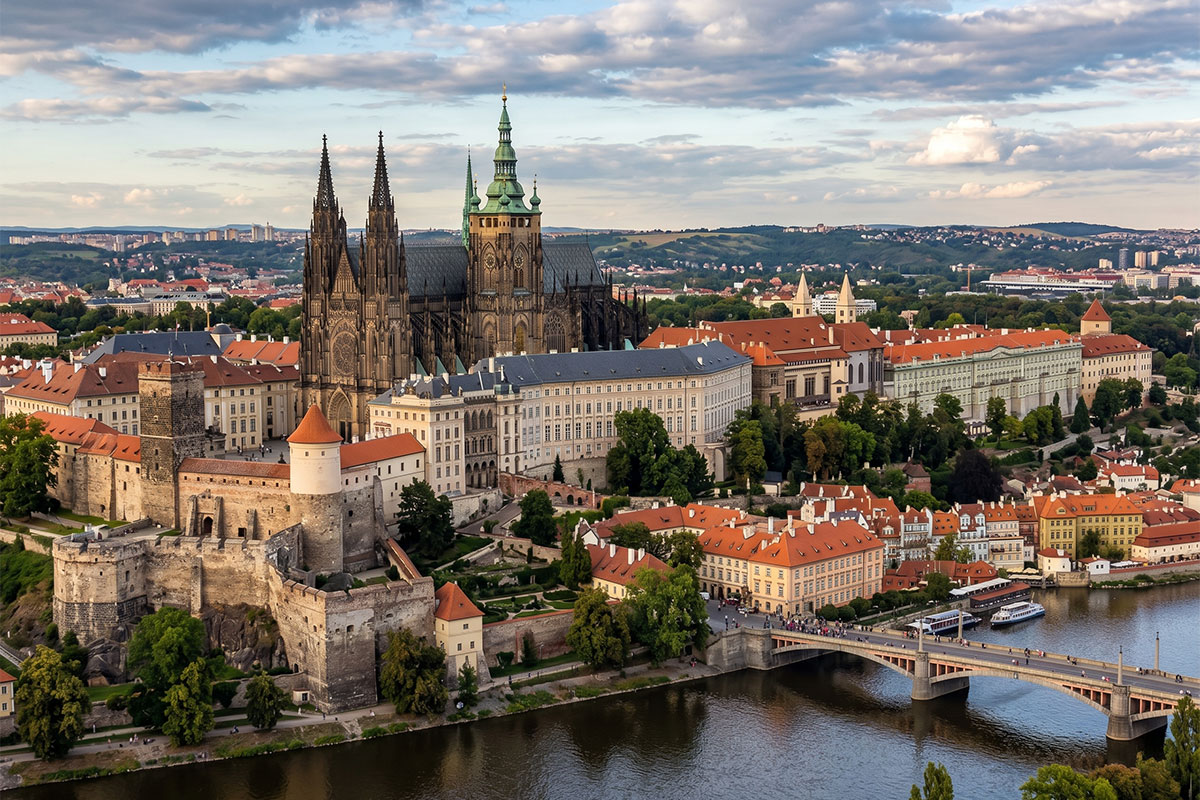
When you stand on the banks of the Vltava River, looking up at the sprawling complex that dominates the skyline, you are not just looking at a building; you are witnessing over a thousand years of European history etched into stone. Prague Castle is more than a tourist attraction; it is a living textbook of architecture that has breathed, expanded, and transformed alongside the city below it. What began as a rough, wooden defensive position in the 9th century has evolved into one of the largest and most coherent castle complexes in the world. Walking through its courtyards in January 2026, the chilly air seems to carry whispers of kings, emperors, and alchemists who once walked these very cobblestones.
The Humble Origins: A Wooden Stronghold
The story begins in the late 9th century with Prince Bořivoj of the Přemyslid dynasty. At this stage, the castle bore little resemblance to the majestic silhouette we recognize today. It was primarily a strategic fortification, a wooden rampart reinforced with earth, situated on a high promontory to command control over the ford across the Vltava River. This era was defined by survival and consolidation of power rather than luxury. Inside these primitive walls, the first stone building was erected—the Church of the Virgin Mary. Although only remnants remain today, this structure marked the pivotal transition from pagan tribalism to Christian governance, setting the spiritual foundation for the site.
Early Defenses and Spiritual Beginnings
As the political importance of the site grew, so did the need for stronger defenses. By the 12th century, under the rule of Prince Soběslav I, the wooden palisades were replaced by robust stone walls, flanked by defensive towers such as the Black Tower, which still stands as a testament to this era. The transformation from a mere hill fort to a Romanesque stone castle was underway. The addition of the Basilica of St. George during this period introduced a level of architectural sophistication that hinted at the site's future grandeur, moving away from purely military utility toward a center of royal administration.
The Golden Age: Charles IV and Gothic Grandeur
If there is one ruler who truly defined the soul of Prague Castle, it was Charles IV. In the 14th century, under his reign as the Holy Roman Emperor, the castle underwent its most dramatic metamorphosis. Charles did not want a mere fortress; he desired a dignified imperial residence that could rival the great courts of Paris and Rome. This ambition sparked a massive reconstruction effort in the Gothic style, replacing the heavy Romanesque features with soaring arches and intricate stonework. The Royal Palace was significantly expanded to accommodate the needs of the imperial court, shifting the focus from defense to diplomacy and prestige.
St. Vitus Cathedral: A Gothic Masterpiece
The crown jewel of this era—and indeed the entire complex—was the commencement of St. Vitus Cathedral. French architect Matthias of Arras and later Peter Parler were commissioned to create a spiritual epicenter that would pierce the sky. The cathedral was not just a place of worship; it was a coronation site and a royal mausoleum, solidifying the divine right of the Bohemian kings. The verticality of the Gothic architecture symbolized a reach towards the heavens, a stark contrast to the squat, grounded nature of the earlier fortress structures. This period firmly established the castle as a palace of European significance.
The Jagiellonian Era: Late Gothic Mastery
Following the Hussite Wars, the castle lay somewhat neglected until the arrival of the Jagiellonian dynasty in the late 15th century. King Vladislav II Jagiello breathed new life into the complex, pushing the boundaries of Late Gothic architecture. The most stunning contribution from this period is the Vladislav Hall. Designed by Benedikt Rejt, its intricate vaulted ceiling was an engineering marvel of its time, featuring intertwining stone ribs that look almost organic, like the branches of a petrified forest. This vast hall was used for banquets, councils, and even indoor jousting tournaments, highlighting a shift towards ceremonial grandeur.
Vladislav Hall: An Engineering Marvel
To understand the layers of history, it is helpful to look at the dominant styles that shaped the castle during different reigns:
| Era | Dominant Style | Key Addition or Change |
| 9th - 10th Century | Pre-Romanesque | Wooden ramparts, Church of Virgin Mary |
| 11th - 12th Century | Romanesque | Stone fortifications, Basilica of St. George |
| 14th Century | High Gothic | St. Vitus Cathedral, Old Royal Palace expansion |
| 15th - 16th Century | Late Gothic / Renaissance | Vladislav Hall, Louis Wing |
| 16th - 17th Century | Renaissance | Royal Garden, Belvedere, Golden Lane |
| 18th Century | Baroque / Classicism | Unification of facades (Maria Theresa) |
The Renaissance and Habsburg Influence
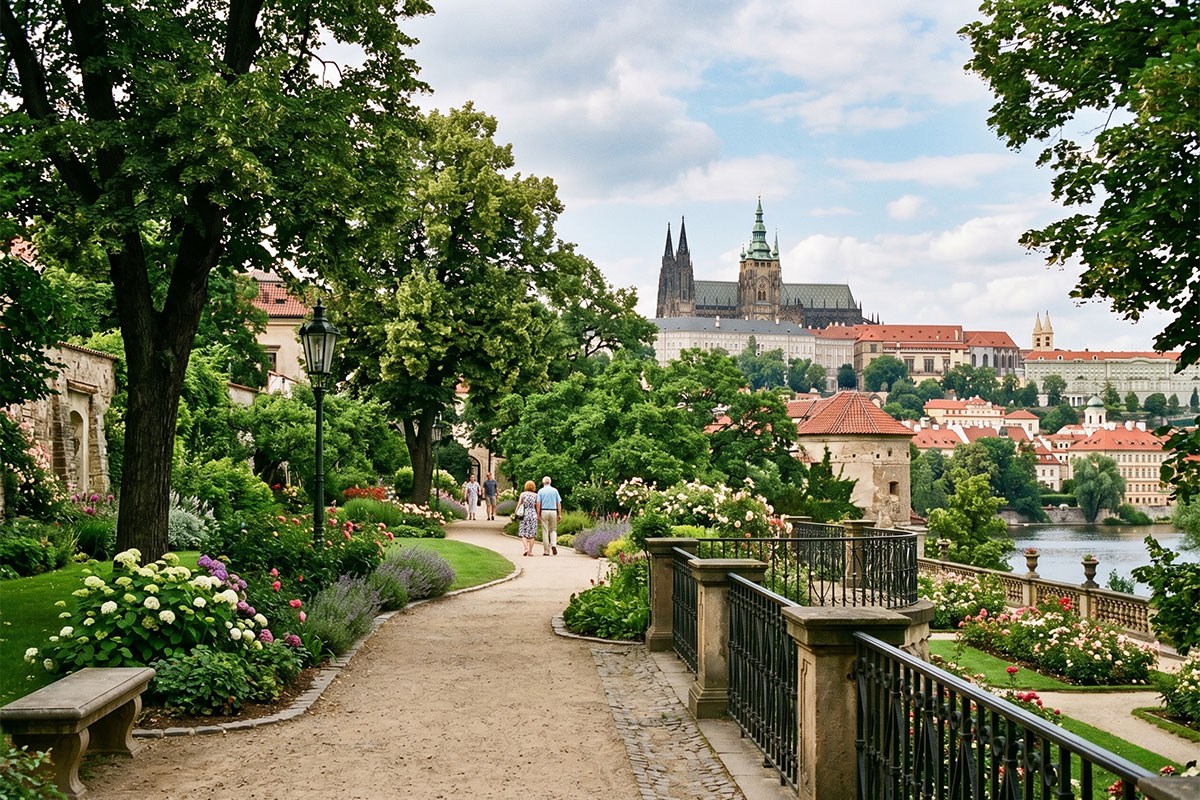
With the ascent of the Habsburgs in the 16th century, the castle's aesthetic began to soften. The grim necessity of medieval defense gave way to the humanist ideals of the Renaissance, which prioritized symmetry, light, and gardens. Ferdinand I and later Rudolf II turned the castle into a center of art and science. The Royal Garden was established to the north of the castle, separated by the Deer Moat, featuring the exquisite Queen Anne’s Summer Palace (Belvedere). This structure, with its singing fountain and delicate arcades, is a pure example of Italian Renaissance architecture transplanted to Bohemian soil.
Royal Garden and Belvedere: A Renaissance Oasis
It was also during this time that the famous Golden Lane took its current form. Originally built to house the castle guards, these tiny, colorful dwellings were later occupied by goldsmiths and, according to legend, alchemists working for Emperor Rudolf II. The transformation here is fascinating: spaces originally designed for military personnel evolved into a vibrant artisan community within the castle walls. This era marked the castle's peak as a cultural hub, housing vast collections of art and curiosities that attracted scholars from across the known world.
Baroque Unification: The Face We See Today
The silhouette of Prague Castle that appears on postcards today is largely the result of the 18th-century reconstruction under Empress Maria Theresa. By this time, the complex was a hodgepodge of styles—Romanesque towers, Gothic spires, and Renaissance palaces clashing in an disorganized manner. To bring a sense of imperial order, the Viennese architect Nicolo Pacassi was hired to unify the facades. He encased the disparate medieval buildings in a cohesive, monumental Baroque-Classical shell. While some historians argue this covered up valuable medieval details, it undeniably gave the castle the majestic, palace-like uniformity befitting a major European power.
Pacassi's Vision: A Unified Facade
- First Courtyard: Created as a grand entrance to impress visiting dignitaries.
- Facade Unification: Standardized heights and window styles to create a continuous visual flow.
- Interiors: Refurbished to reflect the opulent Rococo and Baroque tastes of the Viennese court.
From Imperial Seat to Democratic Symbol
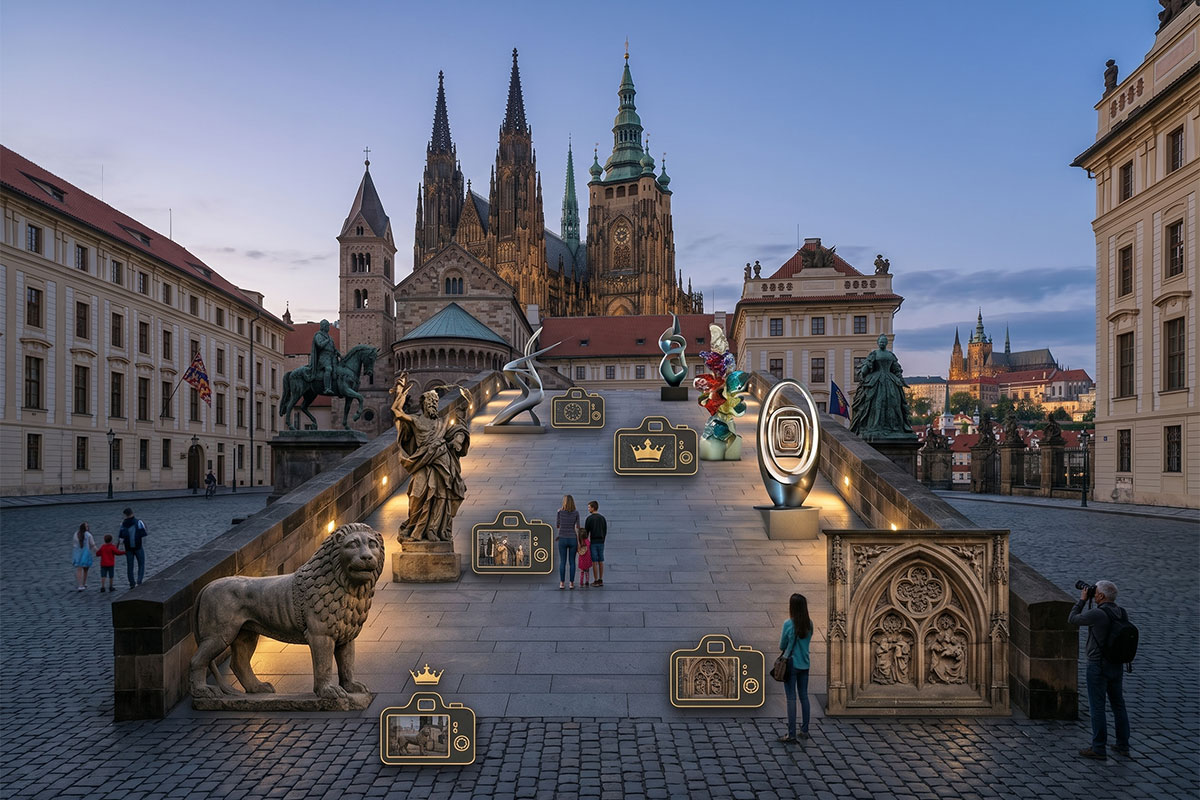
The evolution of Prague Castle did not end with the fall of the monarchy. In 1918, it became the seat of the President of the new Czechoslovak Republic. This transition required a new kind of architecture—one that spoke of democracy rather than divine right. The Slovenian architect Jože Plečnik was commissioned by President Tomáš Garrigue Masaryk to update the castle for the modern era. Plečnik’s interventions were subtle yet profound; he introduced modern monoliths, paved the courtyards, and redesigned the gardens to be accessible to the public, symbolizing the castle's return to the people.
Plečnik's Democratic Touch
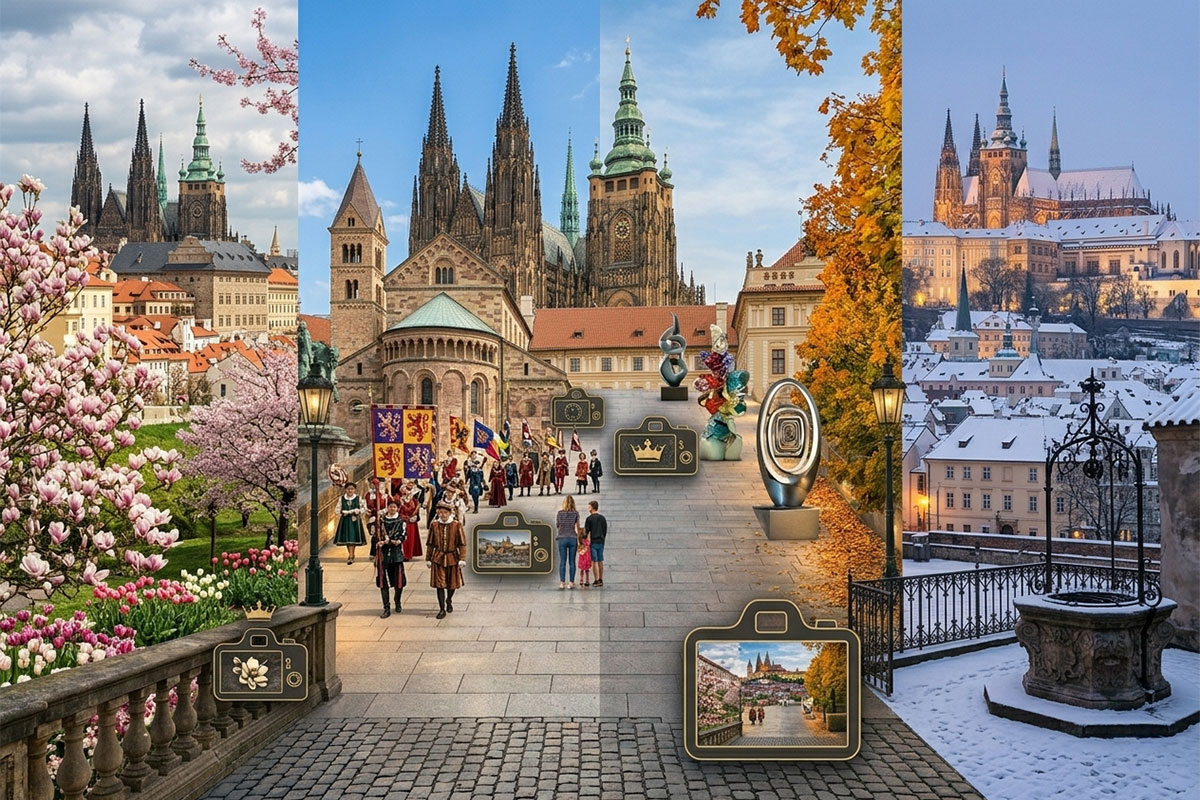
Today, as we explore the castle grounds, we are walking through a timeline that spans over a millennium. From the dark, defensive masonry of the Black Tower to the light-filled, airy spaces of the Orangery, the castle tells the story of a nation that has constantly reinvented itself. It is no longer just a fortress to keep enemies out, nor solely a palace to house a king; it is a cultural monument that invites the world in. The evolution of Prague Castle is a testament to the endurance of Bohemian culture, standing proud as a guardian of history above the winding Vltava.