Discover the secrets to capturing the magical atmosphere of Prague Castle after dark. This guide covers essential gear, camera settings, and the best vantage points for stunning night photography.
When the sun sets over the Vltava River, Prague undergoes a magical transformation that justifies its reputation as one of the most beautiful cities in Europe. The Gothic spires and Baroque facades are bathed in a warm, golden glow, with Prague Castle standing proudly as the centerpiece of this illuminated skyline. For photographers, visiting the castle grounds and surrounding viewpoints after dark offers a unique opportunity to capture dramatic architectural details and moody cityscapes without the overwhelming daytime crowds. Whether you are an amateur enthusiast or a seasoned pro, mastering the art of night photography in this historic setting requires a blend of technical knowledge and creative composition. Understanding how to leverage your gear and camera settings will help you capture the essence of this enchanting location.
Walking through the castle complex in January 2026, you will notice that the winter atmosphere adds a distinct layer of mystery to the scene. The crisp air often keeps the sky clear, allowing for sharp contrasts between the deep blue heavens and the amber streetlights reflecting off the cobblestones. To truly do justice to this UNESCO World Heritage site, you need to move beyond auto mode and understand how light interacts with the ancient stone. This guide delves deep into the techniques required to capture the stunning illuminated architecture and the dramatic night skies that frame the castle.
Essential Gear for Night Shooting in Prague
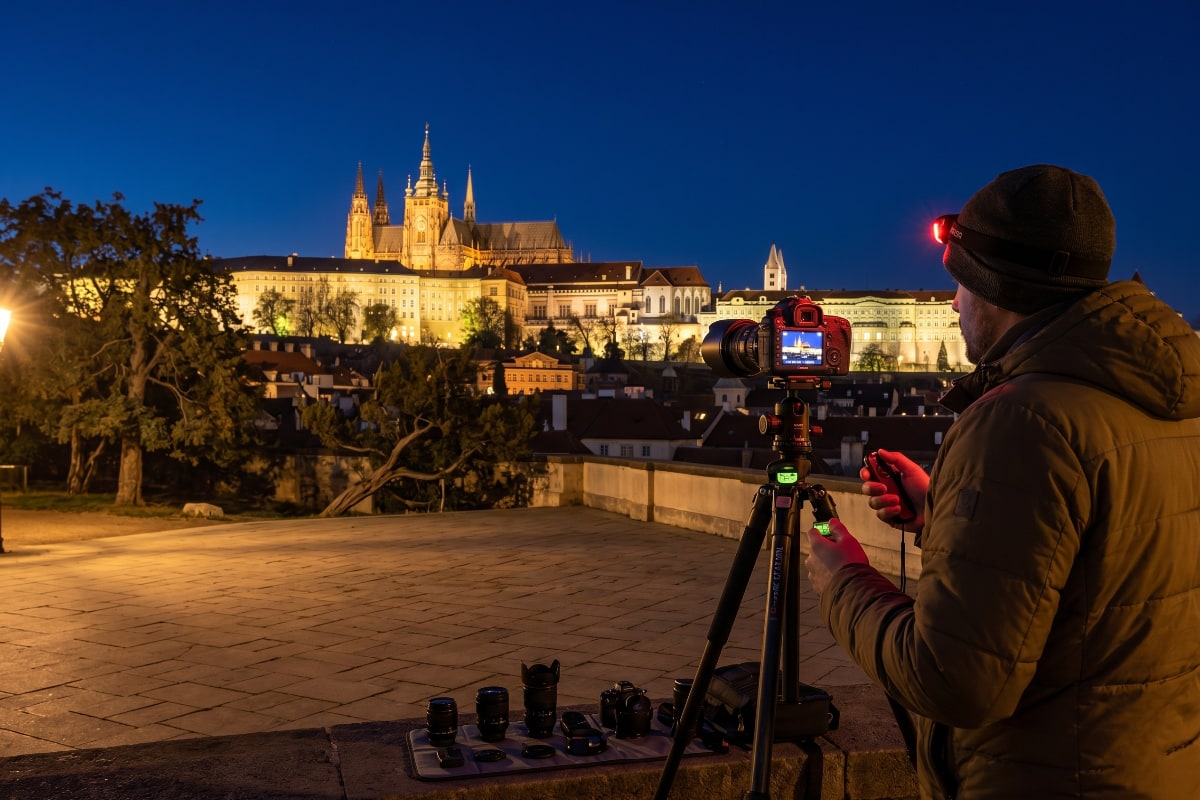
Before you even head out to the castle, ensuring your bag is packed with the right equipment is crucial for success. Handheld shooting is rarely effective for high-quality night images because the low light requires slower shutter speeds, which inevitably leads to camera shake and blurry photos. A sturdy tripod is your most important tool here; the ground around Prague Castle is paved with uneven cobblestones, so you need a tripod with adjustable legs that can find stability on rough terrain. Additionally, a remote shutter release or a cable release is highly recommended to prevent any vibration when you press the shutter button, ensuring your long-exposure shots remain tack sharp.
Lens selection also plays a pivotal role in how you capture the grandeur of the castle. A wide-angle lens (somewhere in the 16mm to 24mm range for full-frame cameras) is indispensable for capturing the massive St. Vitus Cathedral from within the courtyard, as space is limited and the spires tower high above. Conversely, a telephoto lens (70-200mm) allows you to isolate specific architectural details, such as the gargoyles or the illuminated windows of the Royal Palace, from a distance. If you plan to shoot from across the river to get the full panorama, a mid-range zoom lens will give you the flexibility to frame the castle against the city lights perfectly.
Mastering Camera Settings for Illuminated Architecture
Photographing illuminated buildings against a dark sky requires a delicate balance of the exposure triangle. The goal is to capture the intricate details of the architecture without overexposing the highlights—the bright lights illuminating the walls—or losing the details in the deep shadows. Shooting in RAW format is non-negotiable, as it gives you the necessary dynamic range to recover shadows and tone down highlights during post-processing. You should generally aim for a low ISO to minimize digital noise, which is particularly visible in the dark areas of night photographs. Consider using noise reduction software during post-processing for even cleaner results.
Aperture selection is another creative choice that significantly impacts the look of your final image. By using a narrower aperture (higher f-stop number like f/11 or f/16), you can turn the streetlights and floodlights into brilliant "starbursts," adding a dazzling effect to your composition. This also ensures a deep depth of field, keeping everything from the foreground cobblestones to the distant spires in sharp focus. Below is a quick reference guide to help you start with your settings, though you will need to adjust based on the specific ambient light.
| Scenario | Aperture | ISO | Shutter Speed |
| Blue Hour (Just after sunset) | f/8 - f/11 | 100 - 200 | 2 - 10 seconds |
| Deep Night (Stark contrast) | f/8 - f/11 | 100 - 400 | 15 - 30 seconds |
| Starburst Effect on Lights | f/16 | 100 - 200 | 30+ seconds (Bulb mode) |
| Handheld (Not recommended) | f/2.8 (Wide open) | 1600 - 3200 | 1/60 second |
Composition and Best Viewpoints
Finding the right perspective is just as important as dialing in the correct settings. While the view from Charles Bridge is iconic, it is often crowded, even at night. For a more serene experience and a better angle of the castle looming over the city, try heading to the riverbank near the Mánes Bridge or the lesser-known spots on the Legion Bridge. From these lower angles, you can capture the reflection of the castle lights dancing on the surface of the Vltava River, adding a dynamic element to your composition. The contrast between the dark water and the golden castle creates a compelling visual narrative.
Inside the Castle Complex
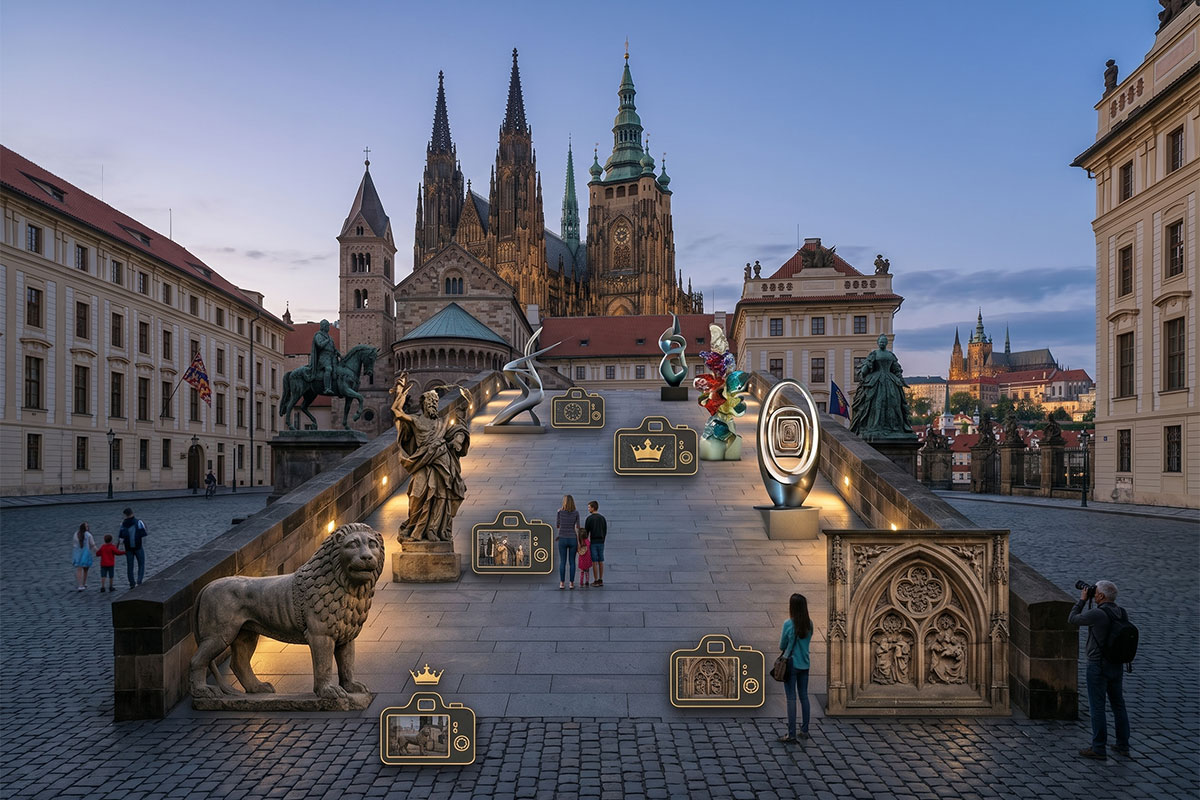
Once you make your way up to the castle grounds, the photographic opportunities shift from grand landscapes to intimate architectural portraits. The Third Courtyard facing St. Vitus Cathedral is breathtaking at night. The sheer scale of the Gothic cathedral is emphasized by the dramatic uplighting that casts long shadows and highlights the intricate stone carvings. Here are a few specific spots within the complex to focus on:
- St. Vitus Cathedral South Tower: Capture the golden mosaic of the Last Judgment which glows beautifully against the dark stone.
- Golden Lane: Often accessible after the shops close, this narrow street of tiny houses looks like a fairy tale set under the streetlamps.
- Old Royal Palace: Focus on the textures of the walls and the geometry of the windows.
- Hradčanské Náměstí: The square right outside the main gate offers a stunning view back towards the city and the castle entrance guards.
Handling White Balance and Color Casts
One of the biggest challenges of night photography in Prague is the mixed lighting conditions. The city utilizes a combination of old sodium-vapor lamps, which cast a strong orange glow, and modern LED lights, which are cooler and whiter. If you leave your camera on Auto White Balance (AWB), the sensor might struggle to interpret the scene correctly, resulting in an image that looks muddy or overly orange. To combat this, you can manually set your Kelvin temperature to around 3200K to 4000K to cool down the warm tones, or simply shoot in RAW and adjust the white balance during post-processing to restore the natural look of the stone. Using a gray card can also help establish a neutral white balance point for more accurate colors.
The dramatic night skies also play a significant role in color balance. During the "Blue Hour"—the period roughly 20 to 40 minutes after sunset—the sky retains a deep, rich blue hue that complements the warm, artificial lights of the castle perfectly. This color contrast is visually striking and is generally considered the prime time for city photography. Once the sky turns pitch black, the contrast becomes harsher, and the focus shifts entirely to the illuminated architecture. Experimenting with different times of the evening will yield a diverse portfolio of images from a single location.
Practical Tips for a Successful Session
Planning your shoot involves more than just camera gear; you must also consider the environment and your physical comfort. Since it is January, the temperatures in Prague can drop significantly at night, often below freezing. Batteries drain much faster in cold weather, so keep spare batteries in an internal pocket close to your body heat until you need them. Consider using rechargeable hand warmers to keep your hands functioning optimally. Wearing gloves that allow you to operate the camera buttons—or fingerless gloves with a mitten cover—is essential for keeping your hands steady and warm during long waiting periods.
Finally, be respectful of the location and other visitors. While the crowds are thinner at night, the castle complex is still a patrolled area. Security checks are often in place at the entrances, so travel light and avoid carrying large bags that might slow you down. Be patient with your exposures and take the time to soak in the atmosphere. Night photography is a slow, meditative process, and standing beneath the towering spires of Prague Castle in the silence of the night is an experience that is just as memorable as the photos you will take home.