Discover the secrets of Prague Castle with our insider guide. Learn the best routes to avoid crowds, uncover hidden entrances, navigate key attractions, and understand peak seasons for optimal timing.
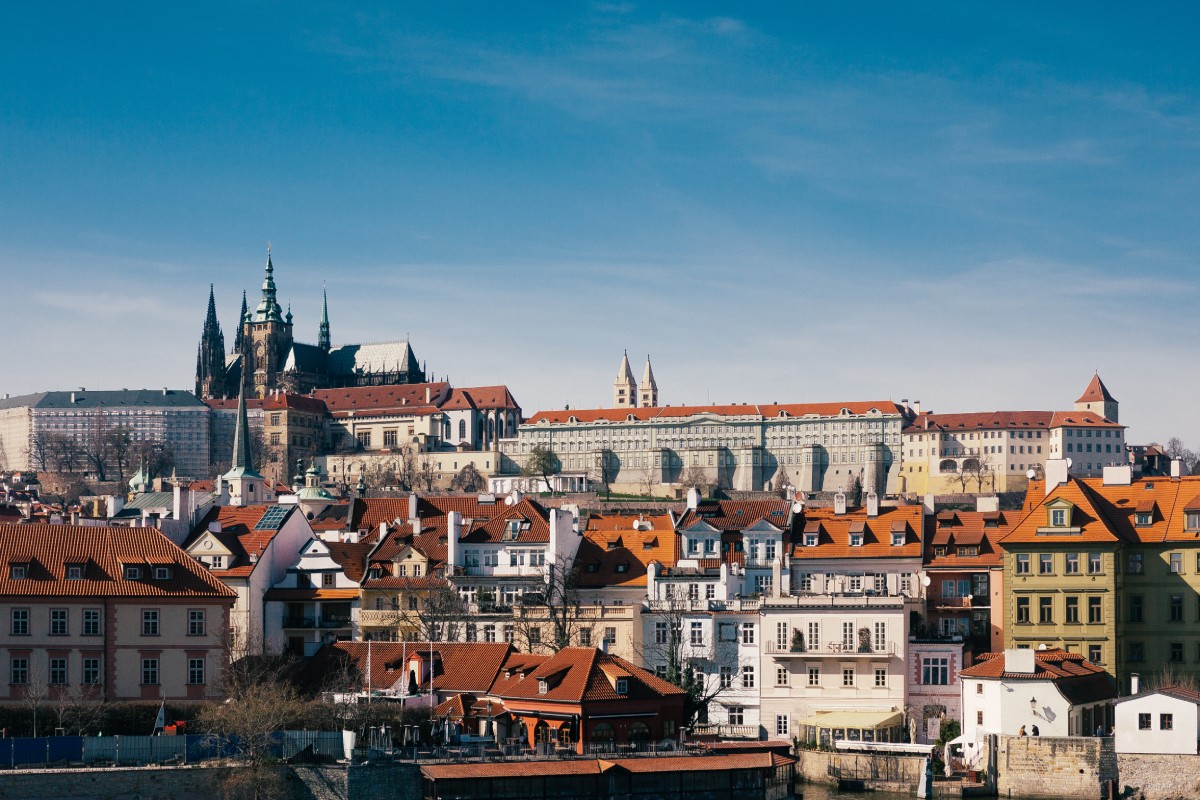
Standing on the banks of the Vltava River and looking up at the sprawling silhouette of Prague Castle, it is easy to feel a mix of awe and intimidation. This is not merely a single building but a massive architectural complex that holds the Guinness World Record for being the largest ancient castle in the world. Covering an area of almost 70,000 square meters, the castle grounds are a labyrinth of palaces, ecclesiastical buildings, fortifications, and gardens that represent virtually every architectural style of the last millennium. Without a plan, visitors often find themselves caught in bottlenecks or missing the most atmospheric corners of this UNESCO World Heritage site.
To truly appreciate the history and grandeur without succumbing to fatigue, you need more than just a ticket; you need a strategy. Navigating this city-within-a-city requires understanding the flow of the courtyards and knowing which gates offer the path of least resistance. Whether you are hunting for the stunning stained glass of St. Vitus Cathedral or the diminutive charm of the Golden Lane, this insider’s map is designed to help you optimize your route, save your energy for the sights, and experience the castle like a seasoned traveler.
Understanding the Layout: The Three Courtyards
Before diving into specific buildings, it is essential to visualize the castle as a linear progression of three main courtyards, stretching from west to east. Most guidebooks suggest starting at the main gate in Hradčany Square, but this is often where the congestion is thickest. The complex is effectively a long strip atop a hill, and understanding this linear layout allows you to make strategic decisions about where to enter and exit to maximize gravity—literally walking downhill—and minimize uphill struggles.
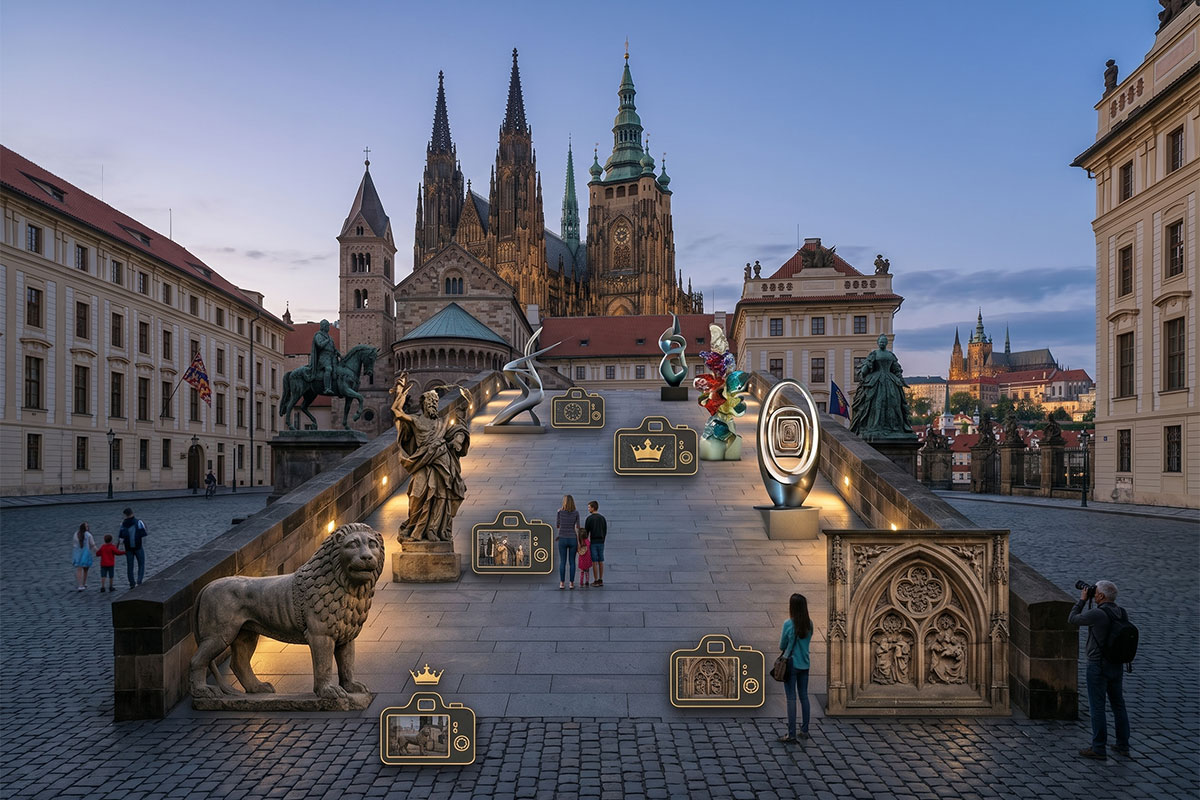
The First Courtyard is the ceremonial entrance, guarded by the famous Titans statues and the Castle Guard. While impressive, it is primarily a pass-through zone leading to the Matthias Gate. The Second Courtyard houses the Castle Picture Gallery and a baroque fountain, serving as a central hub. The Third Courtyard is the heart of the complex, dominated by the overwhelming verticality of St. Vitus Cathedral, the Old Royal Palace, and the entrance to the deeper historical fortifications.
Choosing Your Entry Point: The Strategic Approach
Most tourists instinctively head to the main entrance at Hradčany Square, resulting in long lines for security checks, especially during peak hours. If you want to start your visit with a sense of calm rather than chaos, you should consider alternative entry points that locals and savvy travelers prefer. Choosing the right gate can save you anywhere from twenty minutes to an hour of waiting time.
- The Tram 22 Route (Pražský hrad stop): This is the most efficient method for saving your legs. By taking the tram to the Pražský hrad stop, you enter from the north via the Powder Bridge. This route allows you to walk through the complex slightly downhill, ending your tour at the Old Castle Stairs with a stunning view over the city.
- The Old Castle Stairs (Staré zámecké schody): Located near the Malostranská metro station, this entrance offers arguably the best views of the Prague rooftops. However, it requires a steep uphill climb. It is best used as an exit unless you are looking for a vigorous workout to start your day.
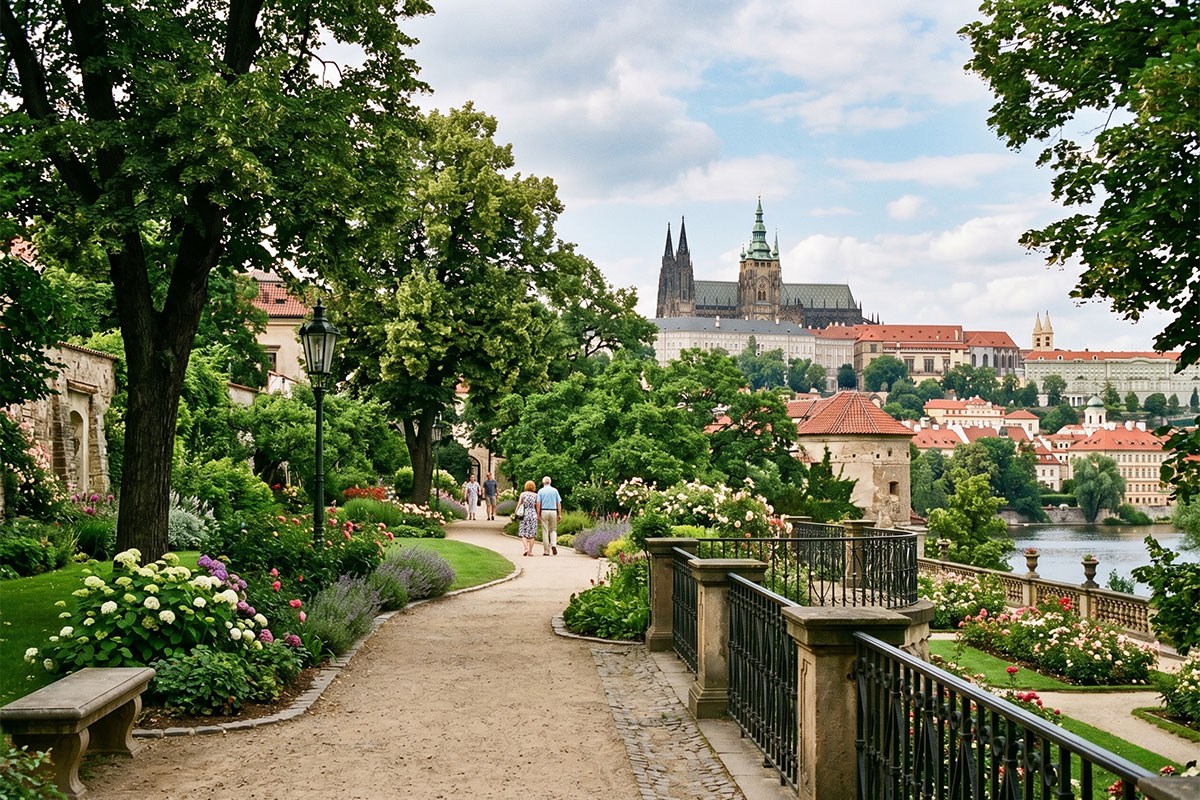
- The Summer Palace (Royal Garden): If you are visiting during the warmer months when the gardens are open, entering through the Royal Garden (Královský letohrádek) offers a serene, green approach that completely bypasses the bustle of the main square.
Key Attractions and How to Prioritize Them
Once inside, the sheer volume of sights can be paralyzed. To navigate effectively, prioritize the ticketed interiors that close earlier than the grounds. Your primary focus should be the structures included in the main circuit ticket, as these hold the most significant historical value. Here is a breakdown of the essential stops you must include in your itinerary.
St. Vitus Cathedral
This Gothic masterpiece is the skyline of Prague. While you can step into the neo-Gothic entrance for free, the true treasures lie deeper within the paid area. Look for the stained glass window designed by Alfons Mucha in the north nave; its vibrant blues and oranges differ sharply from the traditional medieval glass. Do not miss the St. Wenceslas Chapel, encrusted with semi-precious stones and housing the door to the Crown Jewels chamber.
The Old Royal Palace
The austere exterior belies the architectural marvel inside: the Vladislav Hall. Built in the late Gothic period, its intricate vaulted ceiling was an engineering miracle of its time. The hall is massive enough that knights used to hold indoor jousting tournaments here—you can even see the 'Rider’s Staircase' designed with shallow steps specifically to allow horses to enter and exit the hall comfortably.
The Golden Lane
This picturesque street of tiny, colorful houses built into the castle fortifications is a crowd favorite. Originally built for castle guards, it later housed goldsmiths and, famously, writer Franz Kafka at number 22. To truly enjoy the Golden Lane, visit it either immediately upon opening or late in the afternoon. The houses are narrow, and tour groups can easily block the flow of traffic, making the experience claustrophobic during midday.
Beating the Crowds: Timing and Tactics
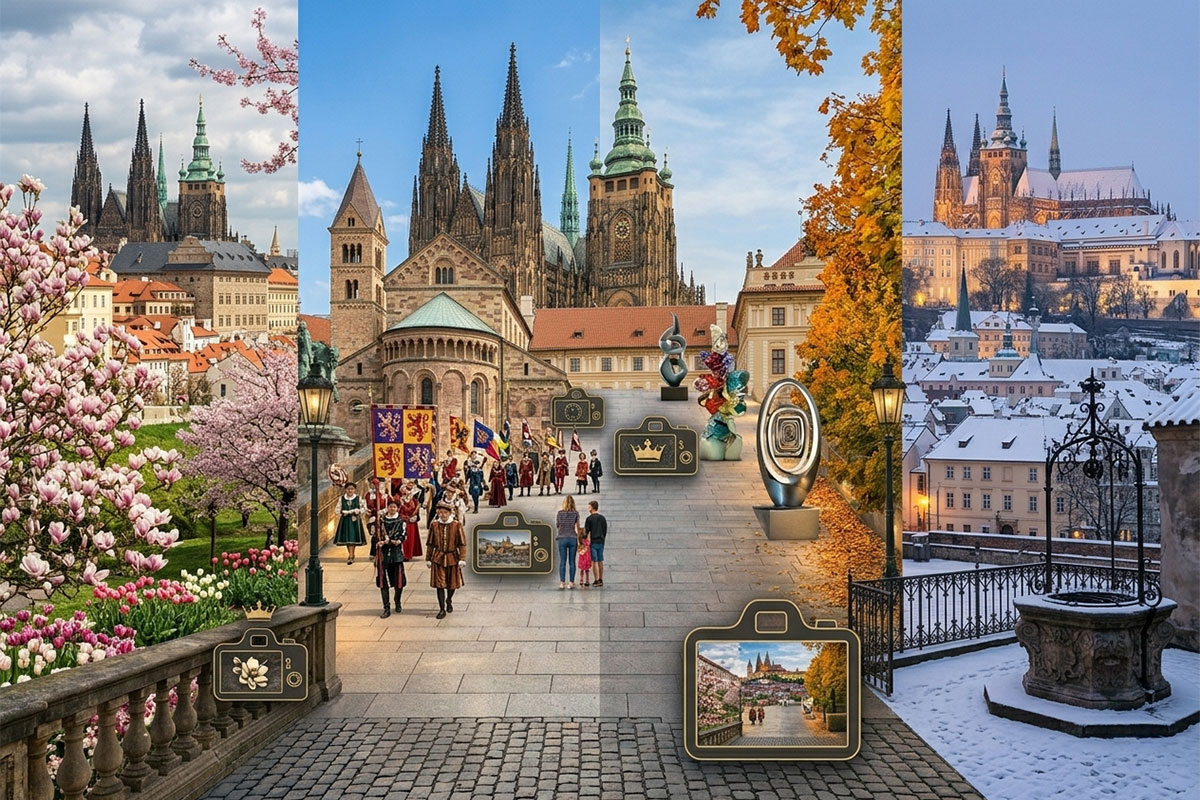
Prague Castle attracts millions of visitors annually, and silence is a luxury here. However, with precise timing, you can carve out moments of tranquility. The castle grounds are generally open from early morning until late evening, but the historical buildings operate on shorter hours (usually 9:00 to 16:00 or 17:00 depending on the season). The peak season runs from April to October, with the highest crowds typically occurring between June and August. Weekends and public holidays are also significantly busier. The secret is that most bus tours arrive between 10:00 AM and 2:00 PM.
For the best experience, arrive at the security checkpoint 15 minutes before the buildings open. Head straight to St. Vitus Cathedral first, as the line there grows the fastest. Alternatively, purchase your ticket in the afternoon around 2:30 PM. The crowds begin to thin out, and the light in the cathedral is often spectacular as the sun lowers. Remember that your ticket is typically valid for two days, allowing you to split your visit if you prefer a slower pace.
Quick Reference: Entrance Guide
To help you decide where to start your journey, consult the table below for a comparison of the main entry points.
| Entrance Name | Crowd Level | Physical Effort | Best For |
| Hradčany Square (Main Gate) | High | Low | Ceremonial photos, First Courtyard access |
| Pražský hrad (Tram 22) | Low to Medium | Very Low (Downhill) | Smart travelers, avoiding uphill walks |
| Old Castle Stairs (East) | Medium | High (Steep Climb) | Panoramic views, exiting the castle |
| Royal Garden (North) | Low | Low | Nature lovers, summer visits |
Practical Tips for the Modern Explorer
Navigating the castle requires practical preparation beyond just a map. The terrain is dominated by cobblestones, some of which are uneven and slippery when wet. High heels are notoriously dangerous here; sturdy walking shoes with good grip are non-negotiable for a comfortable visit. Furthermore, while there are cafes within the complex, they can be pricey and crowded. Carrying a water bottle and a small snack is advisable, especially if you plan to explore the extensive gardens.
Photography is generally allowed, but flash and tripods are forbidden inside the historical interiors. In certain areas, you may need to purchase a photo license, although this policy frequently changes, so keep an eye on signage at the ticket office. Finally, always keep your ticket handy. You will need to scan it at the entrance of every individual monument within the complex, not just at the main gate.
Exploring Prague Castle is a journey through time, from the Romanesque foundations of St. George's Basilica to the Gothic soaring of the cathedral. By entering through the side gates, timing your visit to miss the peak rush, and prioritizing the interiors, you transform a potentially exhausting day into an unforgettable walk through history. Let the crowds congregate at the front gate while you slip through the side, ready to discover the imperial grandeur of Prague on your own terms.