Discover expert photography tips for capturing stunning family memories at Prague Castle. From the best photo spots to lighting advice and posing tricks for children, this guide helps you document your January 2026 trip perfectly.
Visiting Prague Castle with your family is akin to stepping into a living storybook, where every cobblestone and spire tells a tale of centuries past. For parents and travelers, the desire to freeze these moments in time is overwhelming, yet capturing the perfect family photo amidst the grandeur of one of the world's largest castle complexes can be surprisingly challenging. Whether you are navigating the winter atmosphere of January 2026 or simply trying to coordinate energetic children against a backdrop of Gothic architecture, the key lies in preparation and perspective. It is not just about taking a picture of a building; it is about documenting the joy of discovery and the shared experience of exploring a new culture together.
Photography at such a monumental site requires a blend of technical know-how and emotional intelligence, especially when family dynamics are involved. You want to avoid the stiffness of forced smiles and instead capture the genuine wonder in your children's eyes as they look up at the towering St. Vitus Cathedral. By focusing on storytelling rather than perfection, you transform simple snapshots into heirlooms that will adorn your walls for decades. This guide is designed to help you navigate the crowds, utilize the unique light, and frame your loved ones beautifully within this UNESCO World Heritage site.
Scouting the Perfect Locations Within the Castle Complex
Prague Castle is not a single building but a sprawling network of palaces, churches, and fortifications, offering a diverse range of photographic opportunities. To make the most of your visit, you need to identify spots that offer both architectural beauty and enough space for your family to interact naturally. The sheer scale of the complex means you have endless backdrops, but some locations are undeniably more photogenic than others, particularly for family portraits.
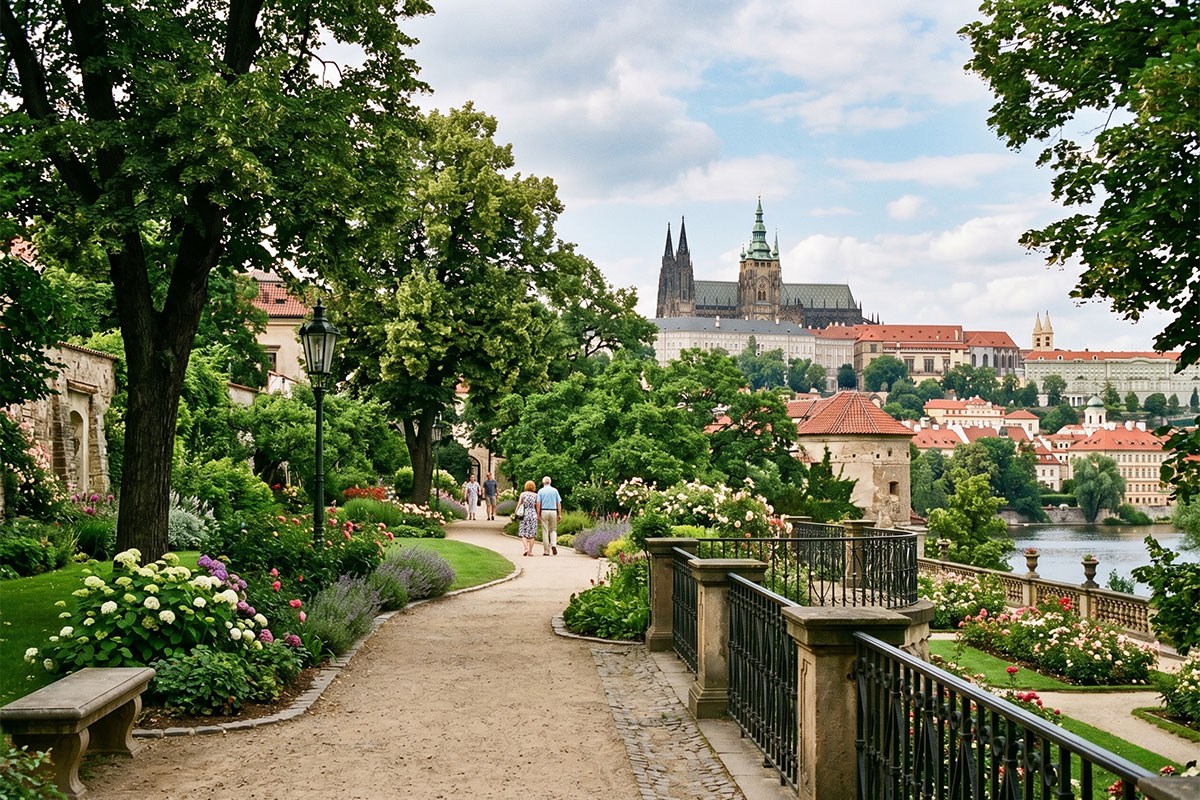
One of the most iconic spots is the area immediately facing the southern facade of St. Vitus Cathedral, where the intricate Golden Gate provides a stunning, gold-flecked background. However, do not overlook the quieter corners found in the courtyards. The Second Courtyard, with its Baroque fountain and ample open space, allows you to step back and use a zoom lens to compress the background, making your subjects pop against the creamy stone walls. Additionally, the viewing ramp near the Black Tower offers a panoramic sweep of the city's red rooftops, providing a context-heavy shot that screams "we were in Prague."
- St. Vitus Cathedral West Facade: Best for wide-angle shots to capture the full height of the spires.
- The Golden Lane: Ideal for colorful, intimate portraits near the tiny historic houses.
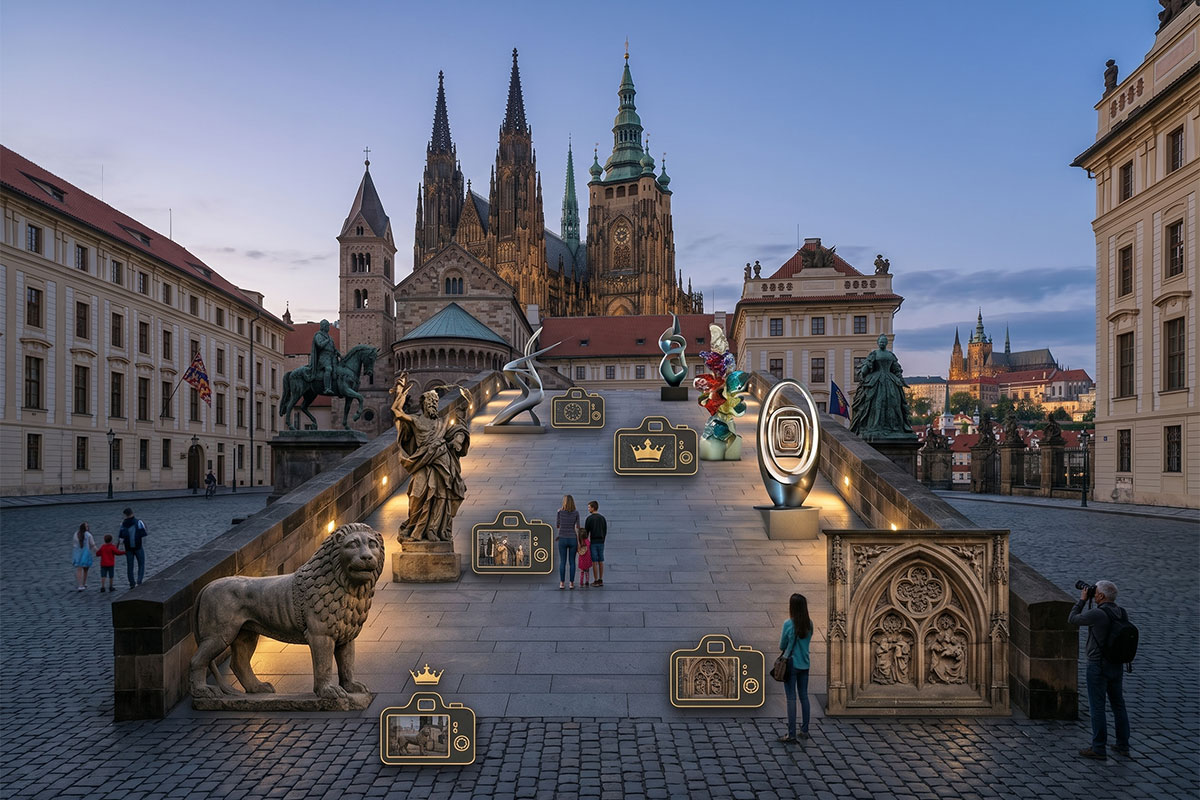
- The Old Royal Palace Stairs: Perfect for staggering family members at different heights for a balanced group composition.
- Castle Ramparts: Offers the best cityscape background with the Charles Bridge in the distance.
- Lobkowicz Palace Terrace: Provides a unique elevated view of the castle complex itself, perfect for capturing the scale of the area.
- The Deer Moat (Jelení příkop): Offers a more natural, green setting with the castle walls as a backdrop, ideal for candid shots.
Mastering Light and Timing in Winter
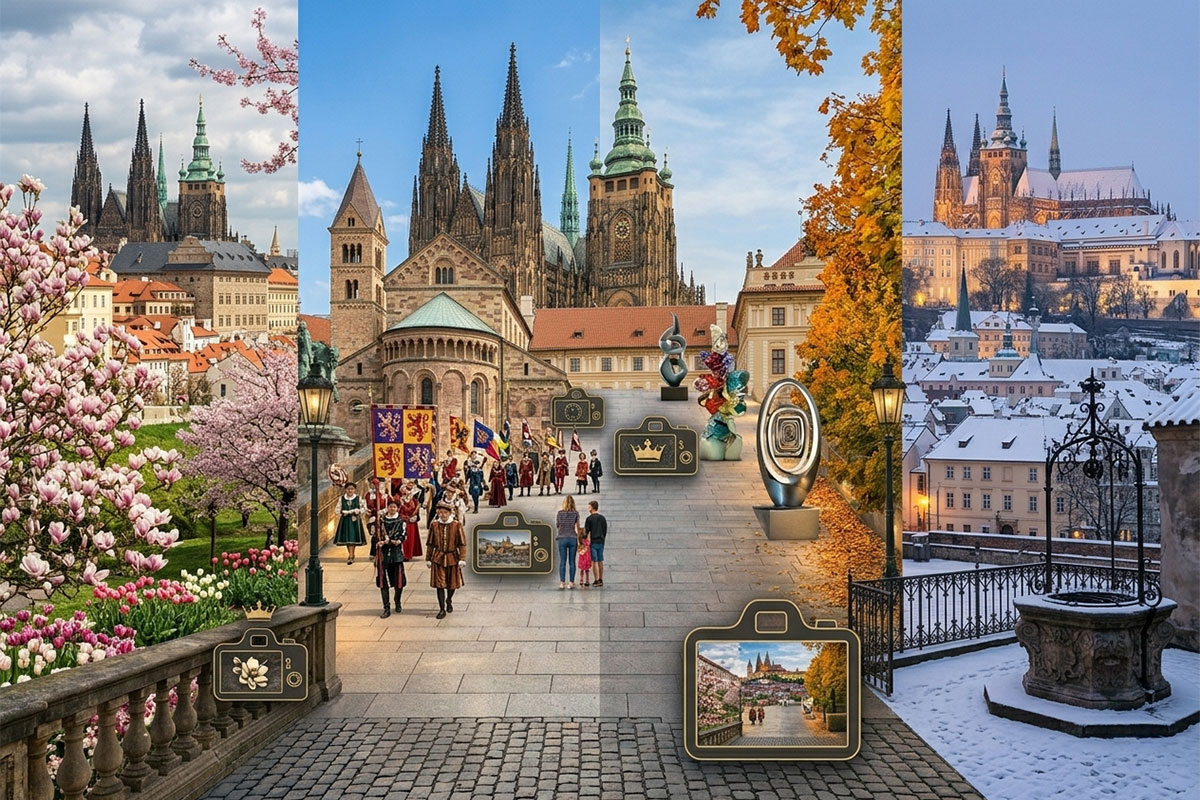
Since you are visiting in January 2026, understanding the winter lighting conditions is crucial for high-quality images. Winter in Prague offers a unique, soft diffusion of light that is actually very flattering for skin tones, avoiding the harsh shadows often found in summer high noon. The sun sits lower in the sky throughout the day, effectively extending the "Golden Hour"—that magical time shortly after sunrise and before sunset when the light is warm and dimensional.
However, winter also means shorter days, so your window of opportunity is condensed. Aim to arrive early in the morning, right as the complex opens. Not only does this help you avoid the densest crowds, but the morning mist that often clings to the castle hill adds an ethereal, dreamlike quality to your photos. If the sky is overcast, which is common in January, do not despair; the clouds act as a giant softbox, ensuring that faces are evenly lit without squinting.
Lighting Strategy for Family Photos
When shooting outdoors, always try to position your family so the main source of light (the sun) is behind you or to your side, illuminating their faces. If you are shooting with the sun behind your subjects to catch a rim-light effect on their hair, you will need to adjust your exposure to ensure their faces aren't silhouetted. In the darker corners of the Golden Lane or narrow alleyways, ask your family to look toward the open sky or a street lamp to catch the available light in their eyes, creating a lively sparkle.
Candid Moments vs. Posed Portraits
While a classic "everyone look at the camera and smile" photo is necessary, the images that truly resonate emotionally are often the candid ones. These are the shots that capture the essence of your family's relationship and the genuine reaction to the environment. To achieve this, you need to stop directing every micro-movement and start observing. Let your children run their hands along the ancient stone walls or watch your partner reading the guidebook intently.
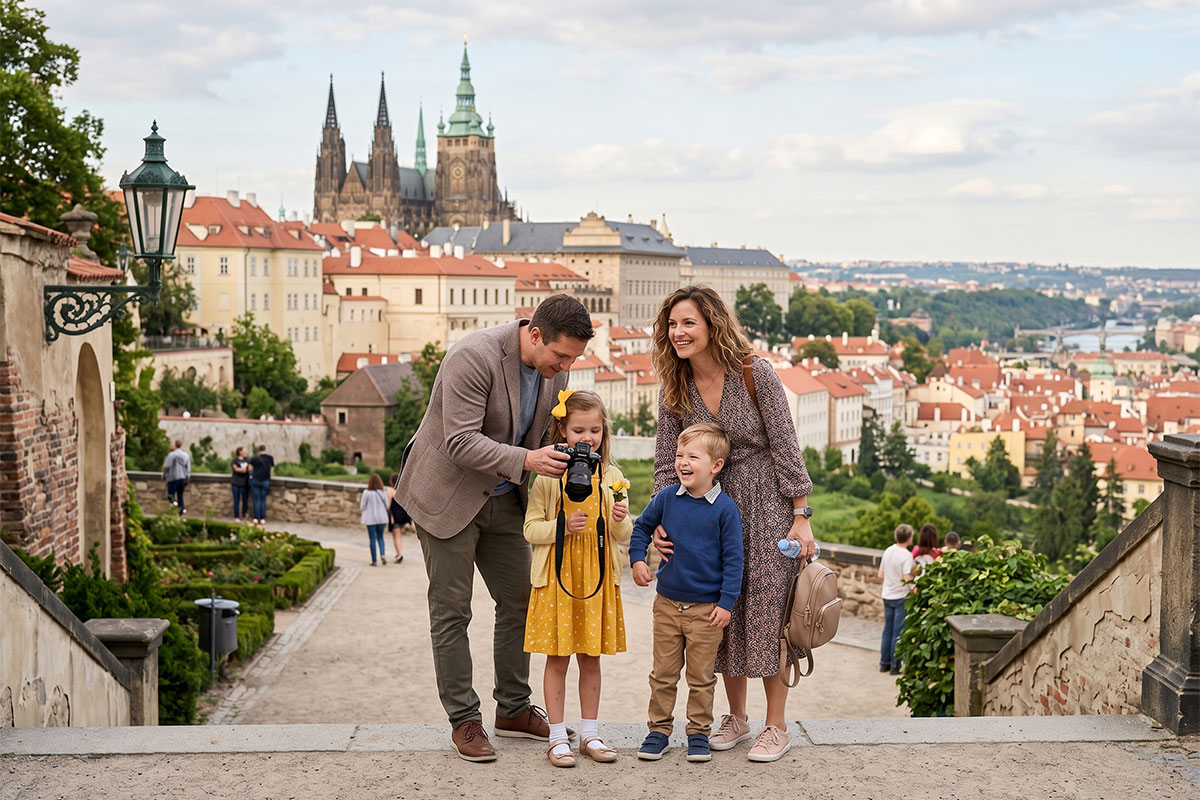
Encourage interaction rather than posing. Ask your kids to count the gargoyles on the cathedral or to point out the funniest looking statue they can find. As they engage with the surroundings and each other, keep your shutter clicking. These unscripted moments reveal personality and connection. For example, a photo of a father lifting his child to see a view over a wall often tells a much sweeter story than the child standing stiffly next to it.
Composition Techniques for Grand Architecture
Balancing human subjects with massive monumental architecture is a common struggle in travel photography. If you stand too close to the building, you lose the top of the spires; if you stand too far back, your family becomes unrecognizable specks. The solution lies in perspective and creative framing. One effective technique is to get low to the ground and shoot upwards. This angle emphasizes the grandeur of the castle while keeping your subjects dominant in the foreground.
Another powerful compositional tool is the use of "leading lines." The cobblestone paths, the long walls of the palaces, and the rows of trees in the Royal Garden (even in winter) can be used to draw the viewer's eye directly to your family. Place your subjects at the intersection of these lines to create a dynamic and visually pleasing image. Furthermore, utilize the natural frames provided by the architecture itself; shooting your family through an archway or a gate adds depth and layers to the photograph.
| Scenario | Camera Mode/Setting | Focus Tip | Composition Idea |
|---|---|---|---|
| Wide Cathedral Shot | Landscape Mode / f/8 or higher | Focus on the building, let family be part of the scene | Place family in the bottom third center |
| Portrait in Golden Lane | Portrait Mode / f/2.8 - f/4 | Focus strictly on the eyes | Fill the frame with faces, blurred colorful background |
| Action/Walking Shot | Sports Mode / Fast Shutter Speed | Continuous Auto-Focus (AI Servo) | Capture movement from the side or 45-degree angle |
| Night/Dusk Shot | Night Mode / Tripod or Stable Surface | Focus on illuminated features | Silhouette family against the lit castle or city lights |
Engaging Children for Natural Smiles
Let’s be honest: children can quickly suffer from "museum fatigue," and their patience for photos is often shorter than the line for the Crown Jewels. To keep the energy high and the smiles natural, turn the photoshoot into a game. Avoid the dreaded command to "say cheese," which almost universally results in a grimace rather than a smile. Instead, ask them questions that provoke laughter or surprise, or play a game of "Red Light, Green Light" where the prize is a funny pose.
Here are some more specific posing ideas for children at Prague Castle:
- The Explorer: Have them pretend to discover a hidden passage or a secret symbol on a wall. Capture their curious expression as they investigate.
- The Royal Guard: Let them stand guard outside a doorway with a serious (or silly) expression.
- The Storyteller: Encourage them to make up a story about the castle and act it out. Capture their imaginative play.
- The Statue Imitator: Find a statue and have them try to mimic its pose. This can lead to some hilarious and memorable photos.
In the context of January weather, keeping them warm is also part of the photography strategy. Cold kids are unhappy kids. Plan for short bursts of photography followed by a break in a warm café or a visit to an indoor exhibit. Use props to your advantage; a colorful winter scarf, a warm hat, or even a traditional trdelník (chimney cake) can add a pop of color and a fun element to the photos, giving their hands something to do and their faces a focal point of enjoyment.
Respecting the Environment and Other Visitors
While capturing your memories is important, maintaining awareness of your surroundings ensures a pleasant experience for everyone. Prague Castle is a functioning religious and political center as well as a tourist attraction. Be mindful not to block narrow pathways in the Golden Lane for extended periods or to obstruct the view for others while setting up a tripod. Being polite and quick often results in better karma and sometimes, other tourists might even offer to take a full group photo for you so the photographer parent can finally be in the picture.
Finally, remember that the best camera is the one you have with you. Whether you are using a high-end DSLR or the latest smartphone, the principles of light, composition, and emotion remain the same. Don't get so caught up in the settings that you forget to look at the castle with your own eyes. The goal is to take home memories of a wonderful family trip, with the photographs serving as beautiful triggers for those cherished moments in the years to come.