Unlock the secrets of photographing the world's largest ancient castle complex. From the Gothic spires of St. Vitus to the colorful charm of Golden Lane, this guide offers technical tips, artistic advice, and practical information for capturing Prague Castle's timeless beauty.
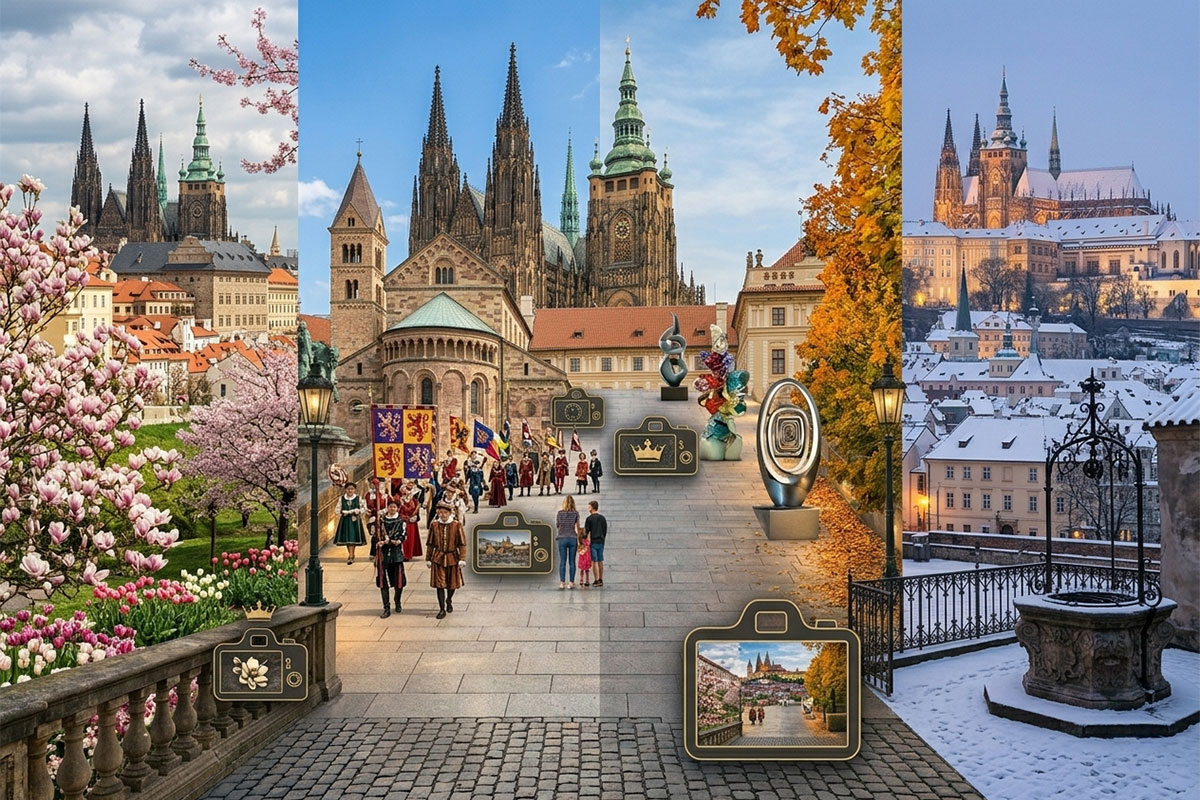
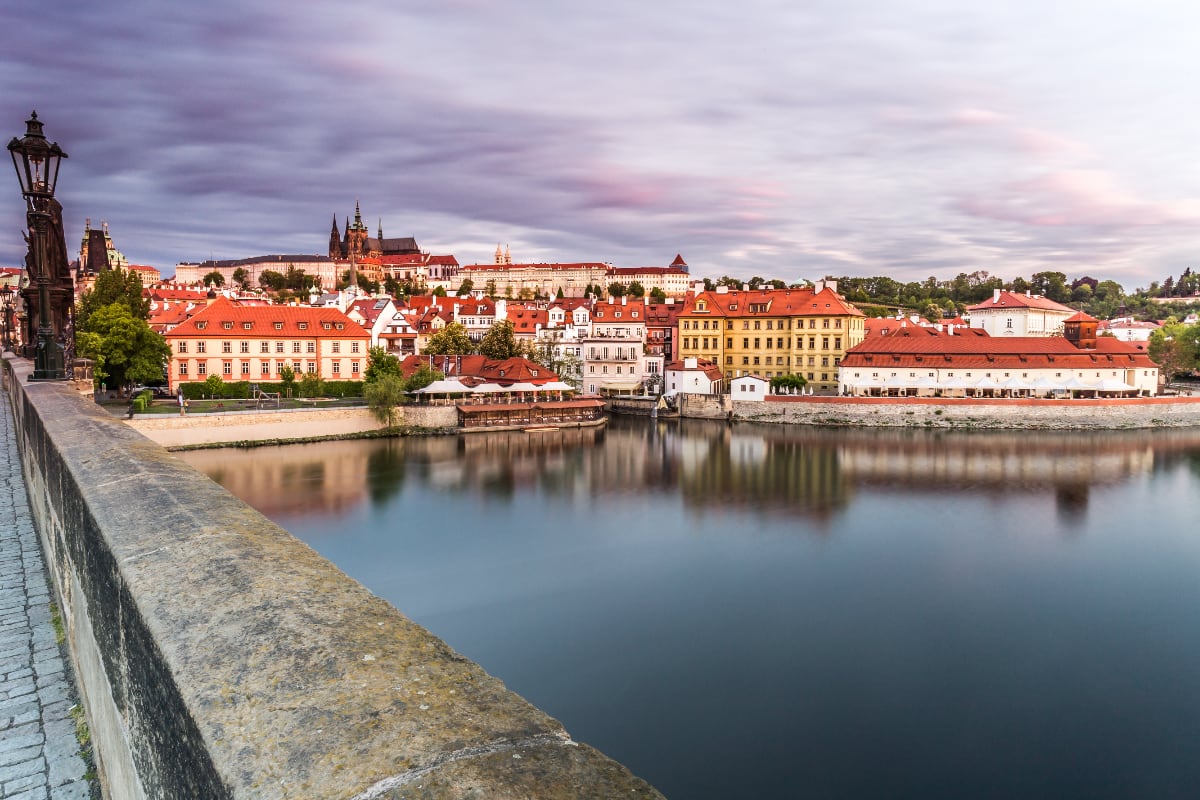
Standing on the banks of the Vltava River, looking up at the imposing silhouette that dominates the skyline, every photographer feels a distinct pull toward Hradčany. Prague Castle is not merely a single building but a sprawling complex of palaces, ecclesiastical structures, and fortifications that have stood the test of time for over a thousand years. For a visual storyteller, this location offers an endless canvas of textures, light, and architectural grandeur that shifts dramatically with the changing seasons. As we navigate through January 2026, the crisp winter air and the soft, diffused light provide a moody atmosphere that is particularly striking for capturing the castle's ancient soul.
Approaching the castle requires more than just a camera; it requires a strategy to navigate its vastness and uncover angles that go beyond the standard postcard snapshot. The interplay of Gothic sharpness, Renaissance symmetry, and Baroque flamboyance creates a visual rhythm that demands careful composition. Whether you are a seasoned professional carrying a heavy kit or an enthusiast with a mirrorless system, understanding the light and the layout is crucial. This guide aims to walk you through the most photogenic corners of the complex, ensuring you leave with images that truly resonate with the history and beauty of this UNESCO World Heritage site.
Mastering the Light: Timing and Preparation
Lighting is the brush with which you paint your images of Prague Castle, and the timing of your visit dictates the mood of your final portfolio. In the winter months, such as now in January, the sun stays relatively low in the sky, offering softer shadows and a longer duration of 'usable' light compared to the harsh overhead sun of summer. However, the days are short, meaning you must be efficient with your schedule to capture both the exterior grandeur and the interior details.
The 'Golden Hour' shortly after sunrise is arguably the most magical time to shoot the castle exterior, as the warm light hits the sandstone walls, making them glow against the often blue-grey morning sky. Conversely, the 'Blue Hour' just after sunset offers a dramatic contrast where the castle’s artificial illumination balances perfectly with the fading ambient light. To help you plan your shoot effectively, consider the following equipment essentials to handle these varying conditions:
- Wide-Angle Lens (16-35mm): Essential for capturing the massive facade of St. Vitus Cathedral and the sweeping courtyards where space is limited.
- Mid-Range Zoom (24-70mm): The workhorse lens for street scenes within the castle complex and environmental portraits.
- Telephoto Lens (70-200mm): Perfect for isolating architectural details, gargoyles, and compressing the view of the city from the ramparts.
- Sturdy Tripod: Crucial for low-light interior shots (where permitted) and night photography, especially to keep ISO low and details sharp.
The Gothic Giant: St. Vitus Cathedral
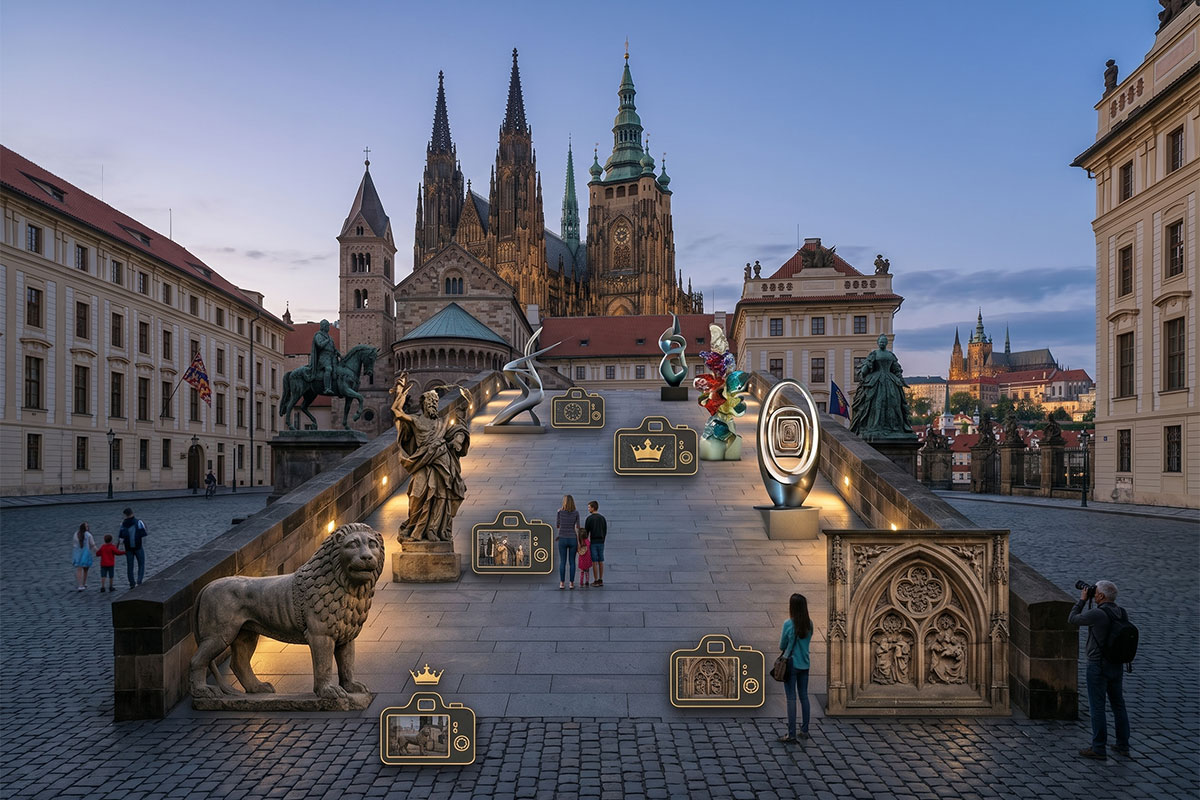
St. Vitus Cathedral is the spiritual and geographic heart of the castle complex, and its sheer scale can be overwhelming for a photographer standing at its base. The challenge here is to convey its magnitude without losing the intricate details that make it a masterpiece of Gothic architecture. When shooting the exterior, try to find unique foreground elements, such as the wrought-iron gates or the archways of the surrounding buildings, to frame the cathedral and add depth to your composition. Low-angle shots are particularly effective here, emphasizing the soaring vertical lines that seem to reach for the heavens.
Stepping inside, the atmosphere changes completely as the kaleidoscope of light filtering through the stained-glass windows paints the stone floor. The famous window designed by Alfons Mucha is a highlight, characterized by its vibrant colors and Art Nouveau style, distinct from the traditional Gothic glass. Capturing the interior requires a steady hand and high ISO capabilities if you are shooting handheld, as tripods are often restricted during peak hours. Focus on the interplay between the dark, shadowy nave and the brilliant shafts of light piercing through the clerestory windows.
Pro Tip: When photographing the stained-glass windows, try using spot metering to expose specifically for the bright light coming through the glass. This will help retain the vibrant colors and details in the window, even if the surrounding areas are darker. Consider bracketing your shots (taking multiple photos with slightly different exposures) to ensure you capture the full dynamic range of the scene, especially in high-contrast situations.
Technical Settings for Cathedral Interiors
| Parameter | Recommended Setting | Reasoning |
| Aperture | f/2.8 - f/4 | Allows maximum light entry while keeping the ISO manageable. |
| ISO | 1600 - 3200 | Necessary for proper exposure in dim lighting without motion blur. |
| Shutter Speed | 1/60s minimum | Prevents camera shake if shooting handheld; go slower only with stabilization. |
| White Balance | Kelvin 3200-4000K | Compensates for the warm artificial lights and cool daylight mix. |
Golden Lane: A Study in Color and Perspective
Golden Lane (Zlatá ulička) offers a completely different photographic experience, shifting from the monumental to the intimate. This narrow street, lined with tiny, vibrant houses built into the castle fortifications, looks like something out of a fairy tale. Historically home to castle guards and later goldsmiths, these structures are rich in texture and color. The key to photographing Golden Lane is to arrive as early as possible or wait until late afternoon, as the narrow path fills quickly with visitors, making clean compositions difficult.
Focus on the details here: the small windows, the uneven cobblestones, and the colorful facades contrasting with one another. A polarizing filter can be very useful to reduce glare on the windows and saturate the colors of the painted walls. Don't forget to look for the house at number 22, where Franz Kafka once wrote; photographing the doorway with a shallow depth of field can evoke a sense of literary history. Vertical compositions work exceptionally well in this lane to capture the quaint chimneys against the castle walls towering above.
Composition Tip: Use leading lines created by the cobblestone path or the lines of the houses to draw the viewer's eye through the scene. Experiment with different perspectives by crouching low or shooting from a slightly elevated position to add visual interest.
Panoramic Views from the Ramparts
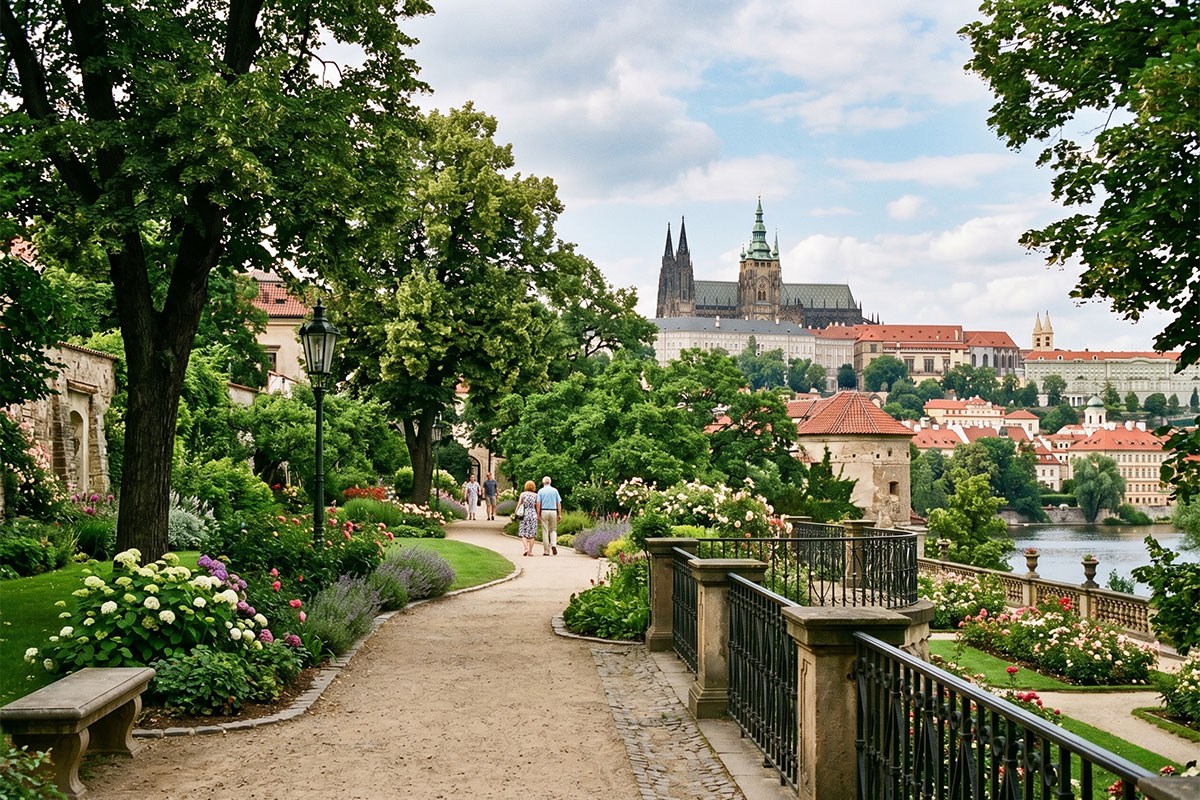
One of the greatest rewards of visiting Prague Castle is the view it affords over the city of Prague, often called the "City of a Hundred Spires." The castle ramparts, particularly the area near the Black Tower and the Garden on the Ramparts, serve as excellent vantage points. From here, you can capture the terracotta rooftops of Malá Strana (Lesser Town) cascading down towards the river, with the iconic Charles Bridge cutting across the water. In January, the winter mist often hangs over the Vltava River in the morning, creating a dreamy, ethereal layer that separates the city planes.
When shooting these panoramas, try to use a telephoto lens to compress the distance between the foreground rooftops and the distant towers of the Old Town. This compression creates a dense, layered look that emphasizes the architectural richness of the city. Additionally, look for framing opportunities using the castle's own battlements or trees in the foreground to lead the viewer’s eye into the sprawling cityscape below. The contrast between the rigid stone of the castle walls and the organic flow of the river and city creates a compelling narrative of resilience and beauty.
Technical Tip: For the best panoramic results, use a tripod and a panoramic head to ensure smooth, overlapping images. Shoot in manual mode to maintain consistent exposure across all frames. Stitch the images together using software like Adobe Photoshop or PTGui.
Capturing the Details and Atmosphere
While the grand structures are the main attraction, the true essence of Prague Castle often lies in the overlooked details. The changing of the guard, for instance, provides a dynamic human element to your architectural shots. Capture the precision of their movement, the texture of their uniforms, and the stoic expressions against the backdrop of the castle gates. The courtyards are adorned with fountains, statues, and intricate ironwork that deserve close-up attention. Macro photography can reveal the weathering on the stone and the craftsmanship of centuries past.
Furthermore, do not ignore the Stag Moat (Jelení příkop) if accessible, as it offers a nature-filled perspective of the castle fortifications from below. The blend of natural greenery (or bare winter branches) with the imposing masonry creates a juxtaposition of nature and human engineering. Photography at Prague Castle is ultimately about patience; waiting for a cloud to move, a crowd to disperse, or the light to hit a specific gargoyle just right. It is these moments of observation that transform a standard photo into a piece of art that tells a story.
Planning Your Visit: Practical Information
To make the most of your photographic journey to Prague Castle, consider these practical details:
- Opening Hours: The castle complex is generally open daily, but specific buildings and exhibitions have varying hours. Check the official Prague Castle website for the most up-to-date schedule.
- Entry Fees: There are different ticketing options depending on which parts of the castle you wish to visit. A combined ticket is often the most economical choice if you plan to see multiple attractions.
- Security: Be prepared for security checks upon entry. Large bags and tripods may be subject to inspection.
- Best Time to Visit: To avoid crowds, aim to arrive early in the morning or later in the afternoon, especially during peak tourist season. Weekdays are generally less crowded than weekends.
- Getting There: The castle is easily accessible by tram (lines 22 and 23) or by walking up from Malostranská metro station.
Final Thoughts for the Traveler
Exploring Prague Castle with a camera is a journey through time, light, and history. It challenges you to look up, look down, and look closer at the world around you. Whether you are capturing the grand silhouette against a winter sunset or the minute details of a door handle in Golden Lane, the castle offers infinite possibilities for creativity. Remember to respect the site, move slowly, and let the atmosphere of this ancient kings' seat guide your lens. Your images will be the timeless souvenirs of a truly majestic experience.