Step into the world of professional travel photography with our exclusive interview featuring a renowned Prague specialist. Discover secret vantage points, gear recommendations, advanced techniques, and the artistic philosophy behind capturing the world's largest ancient castle complex.
Prague is often described as a city of a hundred spires, a place where every cobblestone whispers a legend and every sunset paints a new masterpiece across the Vltava River. For travelers, standing before the imposing silhouette of Prague Castle is a moment of pure awe, but for a photographer, it presents a complex and thrilling challenge. Capturing the essence of this UNESCO World Heritage site requires more than just a high-quality camera; it demands an understanding of light, history, and the rhythm of the city. To help you navigate this visual wonderland, we sat down with Marek Dvořák, a celebrated local photographer whose portfolio of the castle complex has been featured in international travel journals. As we embrace the fresh start of January 2026, Marek shares his creative process and invaluable advice for freezing the magic of Prague in time.
The Man Who Chases Shadows and Spire Lights
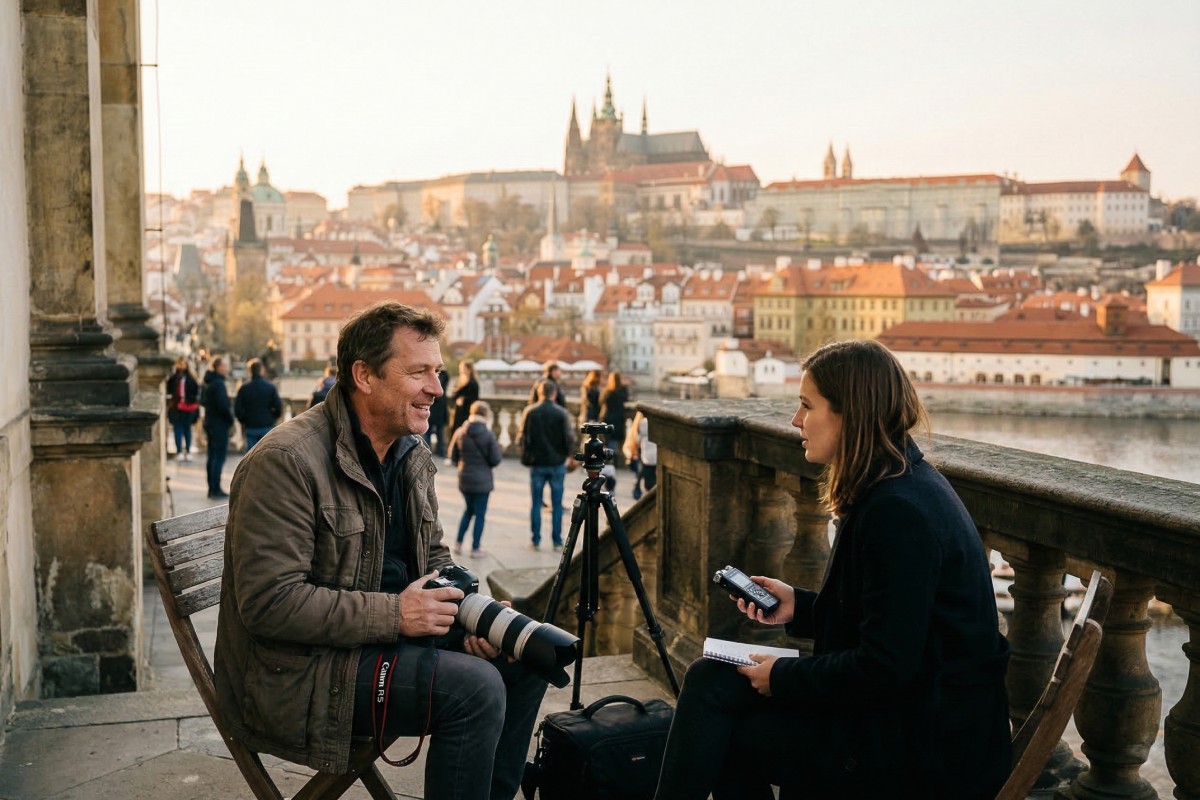
Marek Dvořák has spent the last decade documenting the changing faces of Prague Castle, from the misty mornings of autumn to the stark, beautiful contrasts of winter. His work is characterized not just by technical perfection, but by a deep emotional connection to the architecture that defines the Bohemian skyline. During our conversation in a quiet café in Malá Strana, just beneath the castle walls, Marek explained that his journey began not with a camera, but with a sketchbook. He believes that understanding the lines and geometry of the Gothic and Baroque structures is essential before one even thinks about aperture or shutter speed. For him, the castle is not a static monument; it is a living entity that breathes differently depending on the time of day and the season.
When asked about his creative philosophy, Marek emphasizes patience above all else, noting that the perfect shot is often a waiting game. "You cannot force the castle to reveal its secrets," he says with a smile, sipping his coffee. "You have to wait for the exact moment when the streetlamps flicker on during the blue hour, or when a sudden break in the clouds illuminates the St. Vitus mosaic. My process involves scouting locations days in advance, understanding the trajectory of the sun, and anticipating how the shadows will fall across the intricate stone carvings. It is about listening to the building rather than just looking at it."
Top Tips for Capturing the Castle in All Its Glory
Many visitors struggle to capture images that do justice to the sheer scale and beauty of the complex, often ending up with flat or overcrowded photos. Marek suggests that the biggest mistake travelers make is trying to fit everything into a single frame without a focal point. Instead of just shooting wide, he encourages photographers to look for the details that tell a story—the gargoyles, the texture of the ancient walls, or the play of light through a stained-glass window. He was kind enough to break down his top actionable tips for our readers who want to elevate their travel photography game.
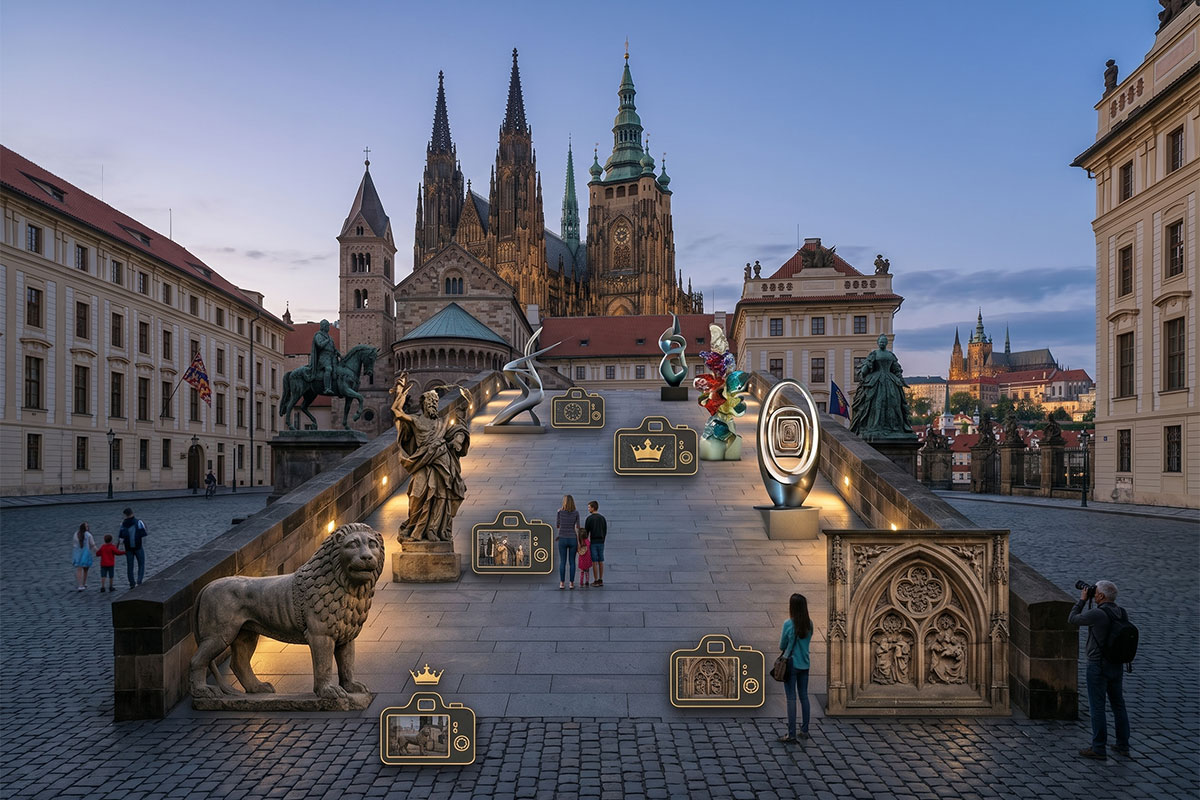
- Embrace the Early Morning: The castle complex opens early, and arriving right at dawn offers two distinct advantages: soft, golden light and an absence of crowds. This is the only time you can capture the grandeur of the Third Courtyard without hundreds of tourists in your frame.
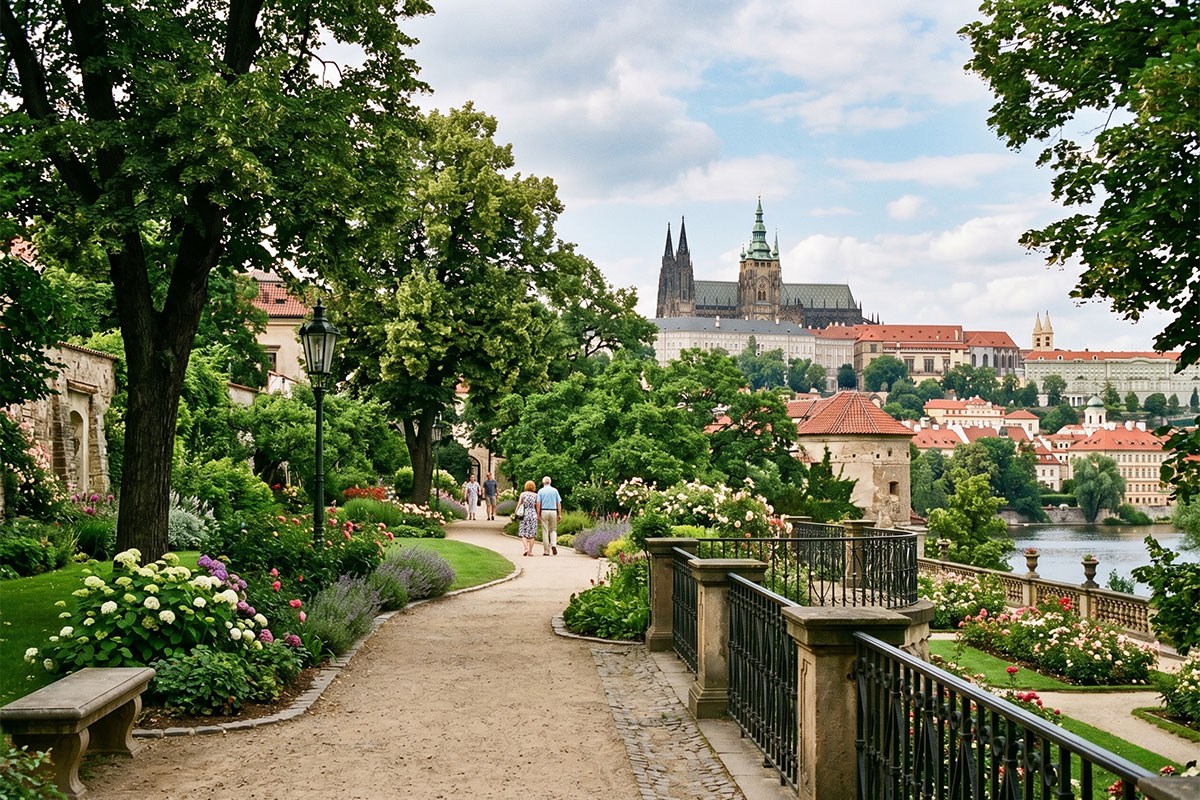
- Find Unique Angles: Don't just shoot from the Charles Bridge; explore the Royal Garden or the Deer Moat (Jelení příkop) for a perspective that incorporates nature. The view from the Hanavský Pavilion offers that classic postcard shot with the bridges lined up behind the castle.
- Utilize the Golden Lane Late in the Day: While usually packed, the Golden Lane clears out towards the evening. The colorful, tiny houses look magical under the warm glow of dusk, and you can capture the atmosphere of medieval alchemy that permeates this street.
- Play with Reflections: After a rain shower—common in the spring and autumn—look for puddles on the cobblestones. Capturing the reflection of the St. Vitus Cathedral spires in a puddle creates a symmetrical and artistic composition that stands out on social media.
Mastering the Light: Golden Hour vs. Blue Hour
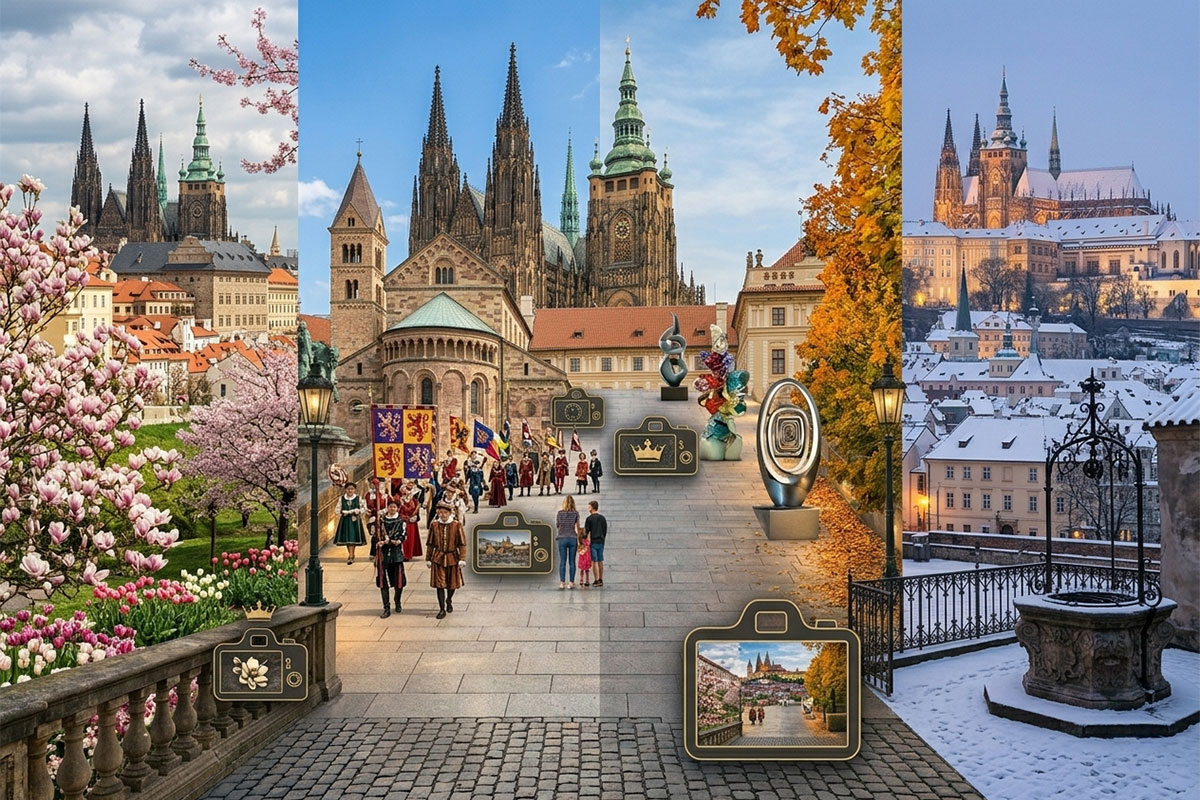
Lighting is the paintbrush of photography, and Prague Castle offers a diverse canvas depending on when you choose to shoot. Marek is particularly fond of the "Blue Hour," the period of twilight each morning and evening when the sun is below the horizon and the residual, indirect sunlight takes on a predominantly blue shade. "The castle is illuminated by artificial warm lights, and the sky is a deep, royal blue," Marek explains. "This color contrast creates a dramatic and romantic effect that is quintessential to Prague. It is far more evocative than a standard mid-day shot where the harsh sun can flatten the architectural details."
Essential Gear for Architecture Photography
While a great eye is more important than expensive equipment, having the right tools can certainly help in a location as demanding as Prague Castle. The sheer height of the cathedral and the tightness of the courtyards require specific lens choices. We asked Marek to outline what is currently in his camera bag for a typical shoot in January 2026.
| Gear Item | Why It is Essential | Best Application at the Castle |
| Wide-Angle Lens (16-35mm) | Necessary for capturing tall structures in tight spaces. | Shooting the entire facade of St. Vitus Cathedral from the courtyard. |
| Telephoto Lens (70-200mm) | Compresses perspective and isolates details. | Capturing distant spires from the riverbanks or specific gargoyles. |
| Sturdy Tripod | Crucial for low-light and long exposure shots. | Night photography to capture light trails and sharp architecture. |
| Circular Polarizer | Reduces glare and enhances sky contrast. | Deepening the blue of the sky and removing reflections from windows. |
Seasonal Considerations: The Winter Atmosphere
Since we are currently in January, it is impossible to ignore the unique opportunities that winter brings to Prague Castle photography. Marek speaks passionately about the "moodiness" of the winter months, describing how the fog often rolls off the Vltava River and wraps the castle hill in a mysterious embrace. "Snow is the ultimate diffuser," he notes. "When the castle roofs are dusted with white, the scene transforms into a monochromatic fairytale. The contrast between the dark Gothic stone and the bright snow is visually striking and simplifies the image, removing distractions."
However, winter shooting comes with practical challenges that every photographer must respect. Batteries drain significantly faster in the cold, so Marek advises carrying spares and keeping them warm in an inside pocket. Furthermore, the light fades very quickly in the afternoon, meaning your shooting window is shorter. He recommends planning your route meticulously to ensure you are at your primary location—perhaps the view from the Lesser Town Bridge Tower—before the sun dips below the horizon.
The Human Element
Finally, Marek touches upon a crucial aspect often overlooked in architectural photography: the human element. While empty streets are a photographer's dream, sometimes including a solitary figure can add scale and emotion to the grandeur of the castle. "A guard standing stoically at the gates, a monk walking through the courtyard, or a couple sharing a moment on the castle ramparts—these elements breathe life into the stone," he reflects. It reminds the viewer that Prague Castle is not just a museum, but a functional, living part of the city's history and present.
Beyond the Basics: Advanced Techniques and Tips
For those looking to push their photography even further, Marek suggests experimenting with a few advanced techniques:
- HDR (High Dynamic Range) Photography: Capture multiple exposures of the same scene and blend them together to create an image with a wider dynamic range, revealing details in both the highlights and shadows. This is especially useful for capturing the interiors of St. Vitus Cathedral where the light can be challenging.
- Long Exposure Photography: Use a neutral density filter to lengthen your exposure time, blurring moving elements like clouds or crowds. This can create a sense of ethereal beauty and emphasize the static nature of the architecture. A tripod is essential for this technique.
- Focus Stacking: When shooting macro details, use focus stacking to combine multiple images with different focal points into a single image with increased depth of field. This is great for capturing the intricate details of the gargoyles or stained-glass windows.
Visual Storytelling: Composing Your Shots
Marek also emphasizes the importance of visual storytelling. Consider these composition tips to create more compelling images:
- Leading Lines: Use architectural elements like walls, pathways, or the Vltava River to guide the viewer's eye towards the castle.
- Rule of Thirds: Position key elements of your composition along the lines or at the intersections of a 3x3 grid to create a more balanced and visually appealing image.
- Framing: Use natural elements like trees, arches, or windows to frame the castle and create a sense of depth.
The Importance of Post-Processing
Marek acknowledges the role of post-processing in modern photography. While he believes in capturing as much detail as possible in-camera, he also uses software like Adobe Lightroom or Capture One to fine-tune his images. He recommends focusing on:
- Color Correction: Adjusting the white balance and color tones to create a consistent and pleasing look.
- Sharpening: Enhancing the details and textures of the architecture.
- Noise Reduction: Reducing unwanted noise in low-light images.
- Perspective Correction: Correcting any distortion caused by wide-angle lenses.
Final Thoughts for the Aspiring Photographer
Concluding our interview, Marek's advice to aspiring photographers visiting Prague is simple: put the camera down occasionally. It might sound counterintuitive, but he believes that you must first feel the atmosphere of the place before you can capture it. Walk the grounds, touch the walls, watch how the light moves, and let the history seep into your consciousness. Only then should you lift the viewfinder to your eye. Whether you are a professional with a full kit or a traveler with a smartphone, the castle offers endless inspiration if you are willing to look beyond the obvious.
Prague Castle remains one of the most photogenic locations on Earth, offering a blend of history, art, and atmosphere that is unrivaled. Armed with these insights from a local professional, you are now ready to capture images that go beyond the standard tourist snapshots. So, charge your batteries, wake up early, and prepare to capture the soul of the City of Spires through your own unique lens.