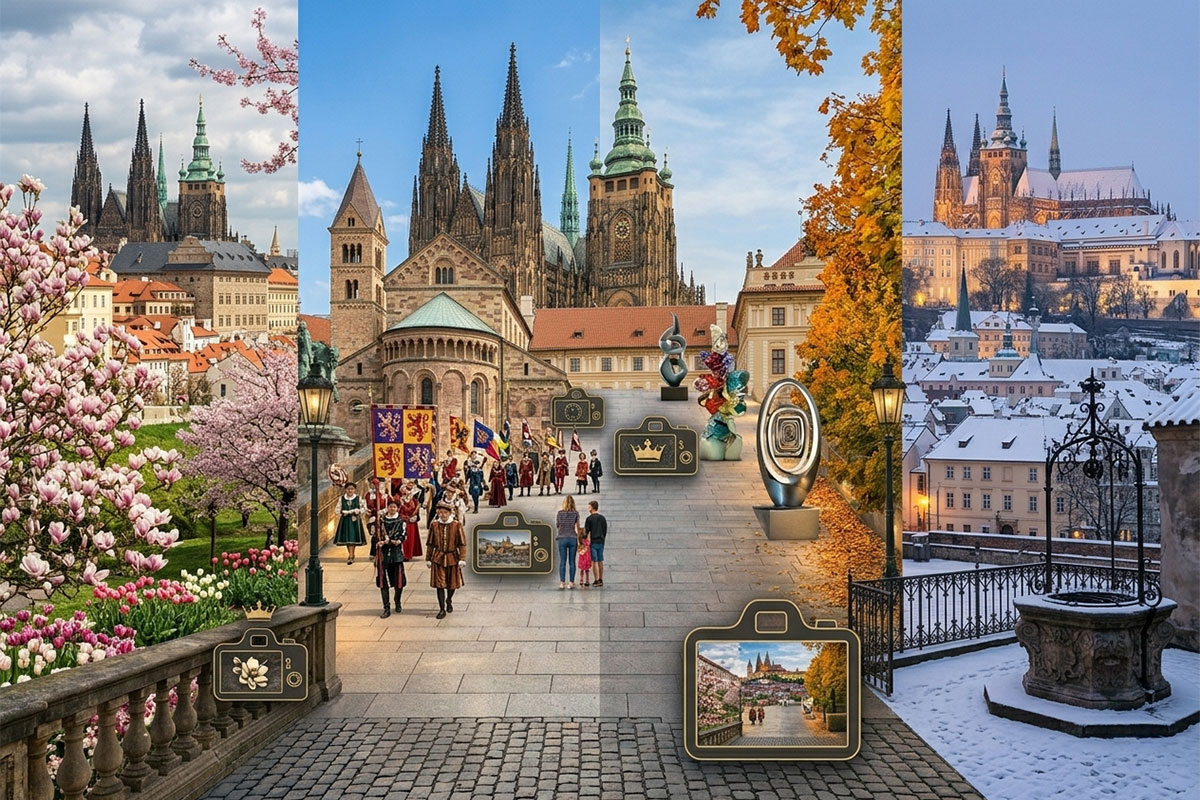
Explore the fascinating architectural evolution of Prague Castle, the largest ancient castle complex in the world. This article takes you on a journey through history, examining the distinct Romanesque, Gothic, Renaissance, Baroque, Rococo, Neoclassical and Modern styles that define this iconic Czech landmark.
Architectural Styles of Prague Castle: A Journey Through Time
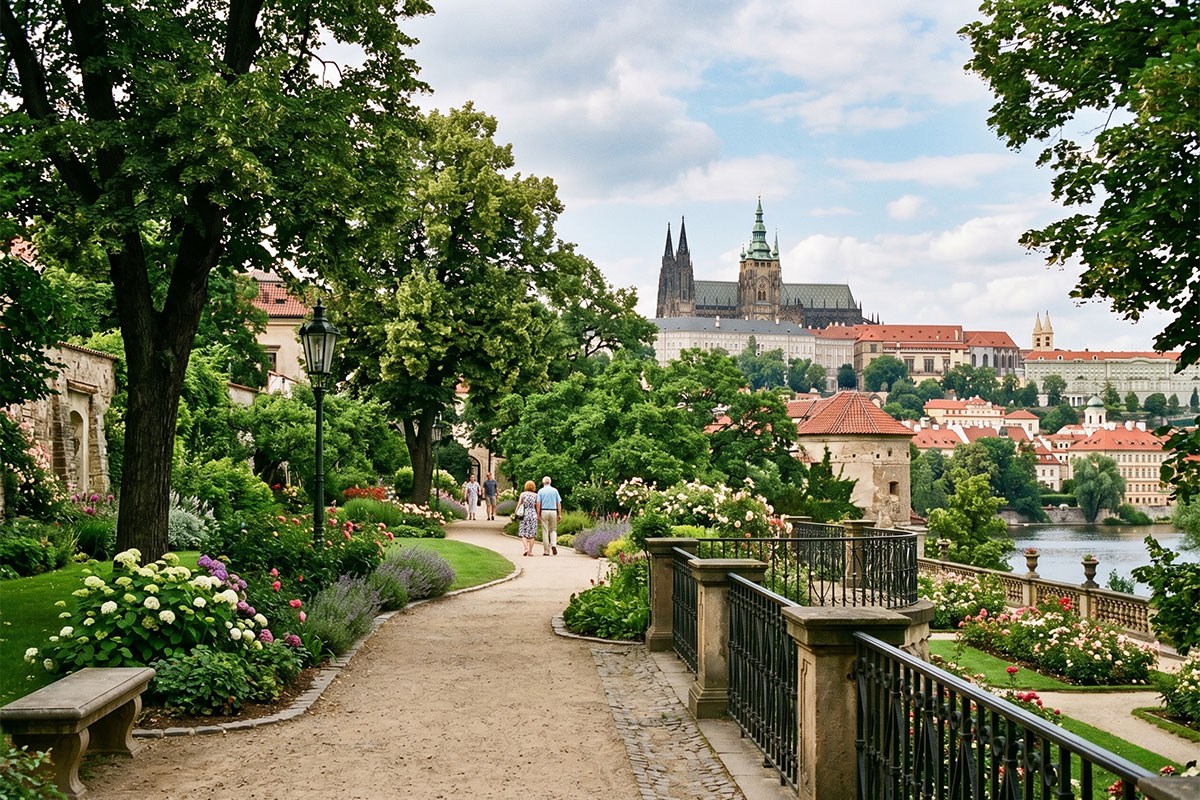
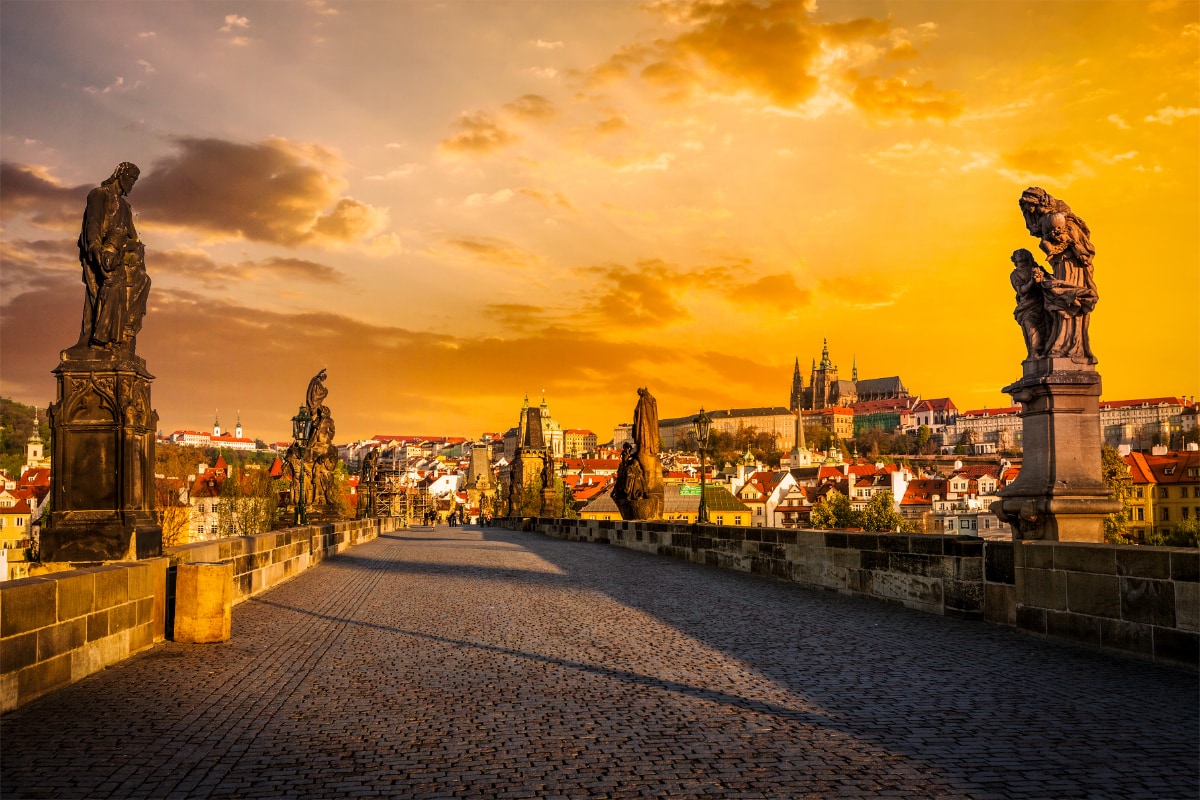
When you stand on the Charles Bridge and look up toward the hill of Hradčany, the silhouette you see is not just a single building, but a sprawling architectural textbook written over the course of a thousand years. Prague Castle does not belong to a single era; it is a living, breathing organism that has grown, shifted, and evolved with every king, emperor, and president who has called it home. Walking through its courtyards is less like visiting a museum and more like stepping into a time machine where the boundaries between centuries blur. From the heavy stone of the Romanesque period to the soaring spires of the Gothic age and the symmetrical grandeur of the Baroque, every stone tells a story of ambition, art, and political power.
The Romanesque Roots: Strength in Stone
To find the oldest surviving heart of the castle, you must look past the grand facades and seek out the Basilica of St. George. Founded in the 10th century, this structure represents the Romanesque era, a time when architecture was synonymous with defense and spiritual fortitude. Although the striking red Baroque façade added later might fool the casual observer, stepping inside reveals the true ancient character of the building. The interior is stark, solemn, and incredibly atmospheric, defined by massive limestone blocks and small, rounded windows that filter the light into a mystical gloom.
The basilica features a classic heavy nave and two white marlstone towers, affectionately named Adam and Eve. Adam, the wider southern tower, represents the strength of the family, while the slender northern tower, Eve, leans slightly, symbolizing the fragility of the feminine. This architectural style relies on thick walls and rounded arches, creating a sense of permanence and grounding that contrasts sharply with the airy styles that would follow centuries later.
Reaching for the Heavens: The Gothic Masterpiece
If the Romanesque style was about grounding, the Gothic era was about flight. Dominating the skyline is the St. Vitus Cathedral, a masterpiece that took nearly 600 years to complete but finds its soul in the Gothic vision of Charles IV. Standing at the base of the cathedral, you are forced to crane your neck upward, following the vertical lines that seem to stretch infinitely toward the sky. This was the intention of the Gothic architects: to draw the eye and the spirit toward the heavens, using light and height as their primary tools.
The cathedral is a complex tapestry of flying buttresses, pointed arches, and intricate gargoyles that serve both functional and decorative purposes. The Golden Gate, with its shimmering mosaic of the Last Judgment, served as the coronation entrance for Czech kings, bridging the gap between the earthly and the divine. Inside, the play of light through the stained glass creates a kaleidoscope of colors that changes with the passing of the day, transforming the cold stone into a warm, ethereal space.
The Vladislav Hall: A Gothic Swan Song
Another stunning example of this era, though bordering on the transition to the Renaissance, is the Vladislav Hall in the Old Royal Palace. When it was built, it was the largest secular vaulted hall in Europe. The intricate rib vaulting on the ceiling looks less like stone and more like dried flowers or intertwining branches. It is a marvel of late Gothic engineering, designed not just to hold a roof, but to dazzle the spectator with the impossible lightness of its construction.
The Italian Influence: Renaissance Elegance
As the Middle Ages waned, the dark mysticism of the Gothic style gave way to the humanism and symmetry of the Renaissance. The Habsburgs brought Italian architects to Prague, who introduced light, proportion, and a connection to nature. This shift is most visible in the Royal Garden, particularly at Queen Anne’s Summer Palace (the Belvedere). Unlike the fortress-like structures of the past, the Belvedere is an airy, rectangular building surrounded by delicate arcades and topped with a unique inverted copper hull roof.
The Renaissance influence at Prague Castle is characterized by:
- Sgraffito Decoration: The Ball Game Hall is covered in intricate black-and-white sgraffito, depicting allegorical sciences and virtues, a technique that scratches through a top layer of plaster to reveal a darker layer beneath.
- Horizontal Emphasis: Unlike the vertical Gothic urge, Renaissance buildings hug the ground, emphasizing earthly balance and human scale.
- Integration with Gardens: Architecture began to flow into nature, with manicured gardens becoming an extension of the living space.
Grandeur and Symmetry: The Baroque Transformation
The face of Prague Castle as we see it today—the uniform, majestic complex of palaces—is largely the result of the Baroque era, specifically the reconstruction ordered by Empress Maria Theresa in the 18th century. The architect Nicolo Pacassi was tasked with unifying the disparate collection of medieval buildings into a cohesive, imperial residence. He achieved this by creating a continuous façade that wraps around the courtyards, giving the castle a sense of monumental order and symmetry.
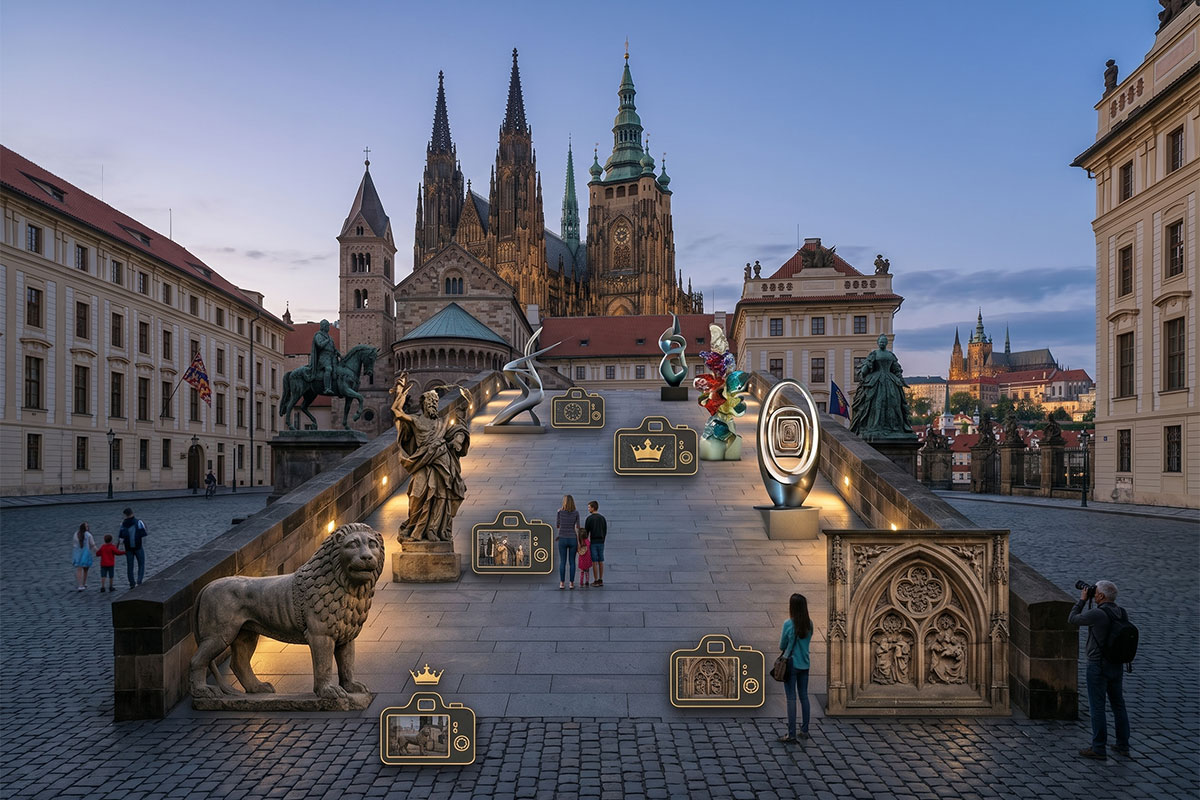
While some critics argue that the Theresian reconstruction covered up too much of the castle's medieval charm, it undeniably gave the complex its grand, palace-like atmosphere. The First Courtyard, with its massive wrestling Titans statues at the gates, is a prime example of Baroque theatricality. It is designed to impress, to overwhelm the visitor with the power and stability of the monarchy. The interiors from this period, such as the Spanish Hall, are dripping with gold stucco, crystal chandeliers, and expansive mirrors, showcasing the era's love for light and illusion.
A Modern Twist: The 20th Century
The architectural journey of Prague Castle did not end in the 18th century. After the formation of Czechoslovakia in 1918, the castle became the seat of a democratic president, Tomáš Garrigue Masaryk. He appointed the Slovenian architect Jože Plečnik to update the castle for a modern era. Plečnik’s work is subtle yet profound; he respected the history but introduced modern lines, obelisks, and the famous Bull Staircase connecting the courtyards to the gardens. His interventions were about opening the castle to the public, transforming it from a symbol of imperial oppression into a symbol of democratic openness.
Other Notable Styles and Influences
While the Romanesque, Gothic, Renaissance, Baroque, and Modernist styles are the most prominent, Prague Castle also bears traces of other architectural influences, reflecting its long and complex history:
- Rococo: Evident in some interior decorations and smaller details, Rococo adds a touch of playful elegance to certain spaces within the castle. Look for delicate ornamentation, asymmetrical designs, and a light, airy feel.
- Neoclassical: A reaction against the excesses of the Baroque and Rococo, Neoclassical elements can be found in some later additions and renovations. These features emphasize symmetry, order, and a return to classical forms.
Comparing the Eras
To help visualize the distinct layers of history present within the castle walls, here is a breakdown of the key styles and where to find them:
| Architectural Style | Key Characteristics | Defining Landmark |
| Romanesque (10th-12th Century) | Thick walls, small windows, rounded arches, heavy masonry. | Basilica of St. George |
| Gothic (14th-15th Century) | Pointed arches, flying buttresses, verticality, rib vaults. | St. Vitus Cathedral, Vladislav Hall |
| Renaissance (16th Century) | Symmetry, arcades, sgraffito, horizontal lines, airy interiors. | Queen Anne’s Summer Palace, Ball Game Hall |
| Baroque (17th-18th Century) | Grandeur, uniform facades, theatricality, gold and stucco details. | First Courtyard, Theresian Facades |
| Modernism (20th Century) | Geometric clarity, symbolic obelisks, integration of public spaces. | Plečnik’s Staircase, Third Courtyard monolith |
| Rococo (18th Century) | Delicate ornamentation, asymmetrical designs, light and airy feel. | Interior decorations in select halls |
| Neoclassical (18th-19th Century) | Symmetry, order, return to classical forms. | Later additions and renovations |
A Timeless Legacy
Visiting Prague Castle is not merely a sightseeing trip; it is an immersion into the flow of Central European history. Each courtyard you cross and every doorway you enter represents a different chapter in the story of humanity's desire to build, protect, and beautify. From the defensive necessity of the Romanesque walls to the spiritual aspirations of the Gothic spires and the imperial confidence of the Baroque facades, the castle stands as a testament to the enduring power of architecture. As you walk down the castle steps back toward the city, you carry with you the memory of a place where time stands still, captured forever in stone.
Ready to experience this architectural marvel firsthand? Plan your visit to Prague Castle today and step into a living history book. For more information on opening hours, tours, and special events, visit the official Prague Castle website or consult your local travel guide.