Discover the artistic soul of Prague Castle, where centuries of history have left their mark. From the soaring heights of Gothic architecture to the intricate details of Art Nouveau, this article explores how the castle serves as a living museum of European art history.
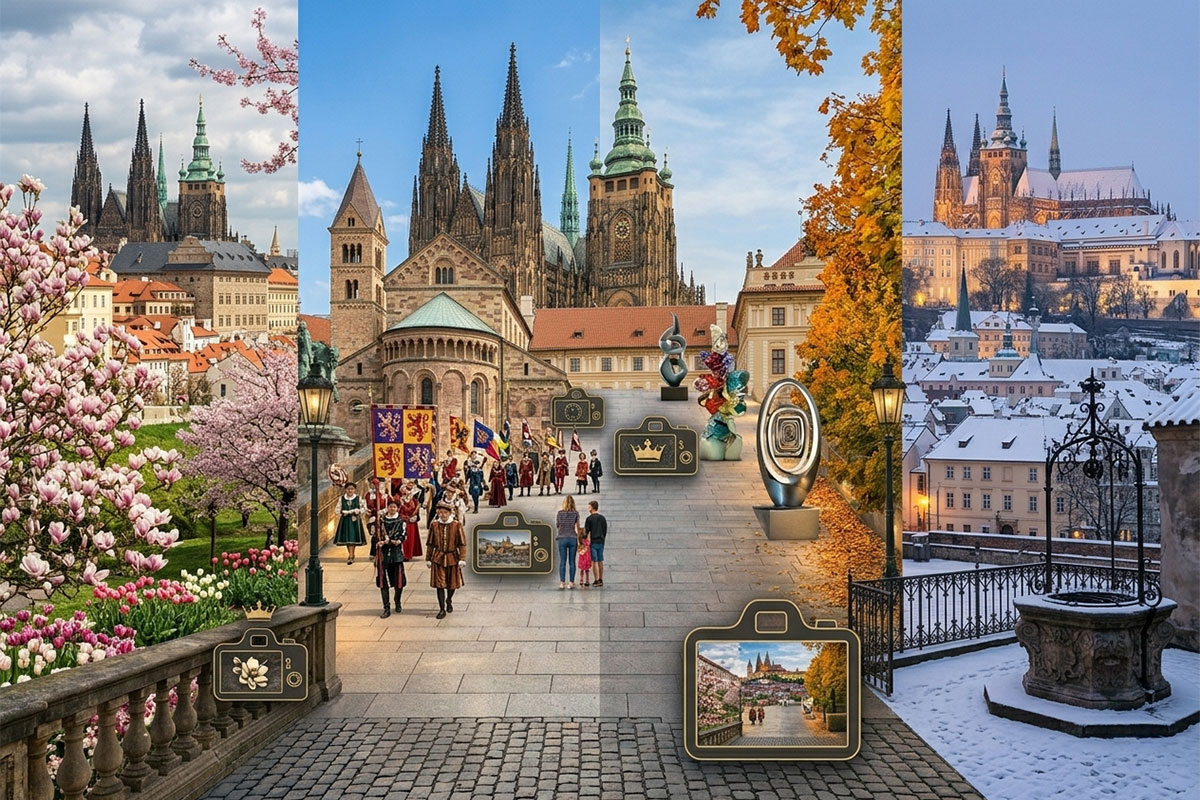
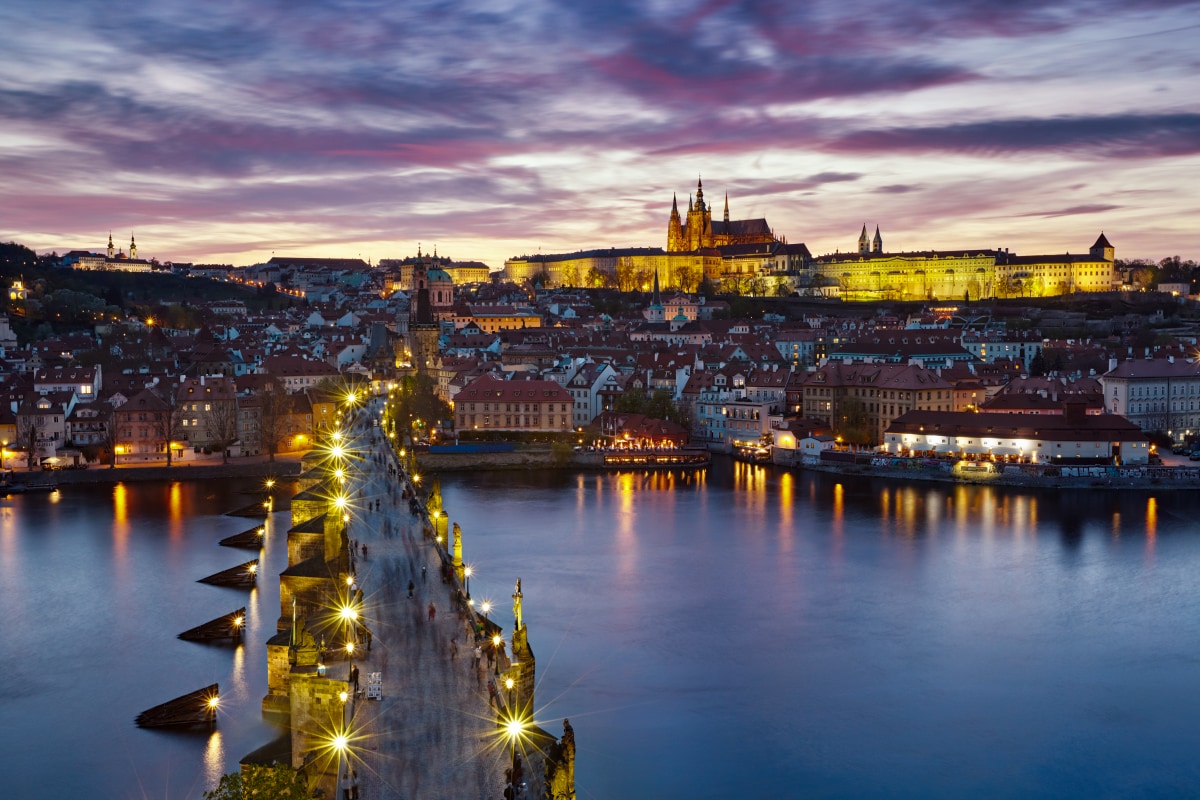
Standing atop the Hradčany hill, looking out over the sprawling city of spires, one cannot help but feel the immense weight of history that rests within the walls of Prague Castle. It is not merely a political fortress or a symbol of power; it is arguably one of the most complex and fascinating art galleries in the world, constructed not in a single burst of creativity, but layer by layer over a millennium. As we wander through its courtyards in January 2026, the winter light casts long shadows against the stone, revealing textures and details that tell the story of European art itself. To visit Prague Castle is to walk through a timeline where the rigid spirituality of the Middle Ages slowly gives way to the humanism of the Renaissance, the drama of the Baroque, and finally, the patriotic fervor of the modern era.
The castle complex is a testament to the ambitions of kings, emperors, and presidents who viewed architecture and art as the ultimate expression of their legacy. Unlike a curated museum where artifacts are placed in glass cases, the art here is the building itself—the frescoes on the ceilings, the statues guarding the gates, and the very layout of the gardens. This is a place where every stone has been shaped by the hands of master craftsmen, creating a continuous narrative of artistic evolution that remains unrivaled in Central Europe. Let us peel back the layers of time and explore how this monumental complex became a canvas for creativity across the ages.
The Gothic Soul: Reaching for the Heavens
The most defining silhouette of the Prague Castle complex is undoubtedly St. Vitus Cathedral, a masterpiece that embodies the spiritual intensity of the Gothic era. Commissioned by Charles IV in the 14th century, the cathedral was designed to be a physical representation of the divine on earth, with its vertical lines drawing the eye—and the soul—upward. The original architect, Matthias of Arras, laid the geometric foundations, but it was his successor, Peter Parler, who breathed life into the stone. Parler’s net vaults were revolutionary for their time, creating a ceiling that felt weightless, floating above the congregation like a stone lace web.
However, the Gothic art within the castle is not limited to architecture; it is deeply embedded in the decorative arts that adorn the sacred spaces. The Chapel of St. Wenceslas is perhaps the most breathtaking example of this era, where the walls are encrusted with over 1,300 semi-precious stones including amethyst, jasper, and chrysoprase. These stones are set in gilded plaster, creating a shimmering effect that mimics the description of the Heavenly Jerusalem. Combined with the extensive cycle of passion frescoes, the chapel serves as a total work of art, immersing the viewer in a medieval vision of sanctity and splendor that has survived wars and fires.
The Renaissance and the Mannerist Court
As the Middle Ages waned, the dark, mystical atmosphere of the Gothic style gave way to the light, symmetry, and humanism of the Renaissance. This shift is most visible in the Royal Summer Palace (Belvedere), commissioned by Ferdinand I for his wife, Queen Anne. It stands as the purest example of Italian Renaissance architecture north of the Alps, with its delicate arcades and singing fountain. But the true artistic explosion occurred under the reign of Emperor Rudolf II, who moved the Habsburg court to Prague and turned the castle into a sanctuary for alchemists, astronomers, and artists. His collection, known as the Kunstkammer, was legendary, filled with curiosities and Mannerist paintings that favored complexity and intellectual depth over simple realism.
Rudolf II’s patronage attracted artists like Giuseppe Arcimboldo and Bartholomeus Spranger, who brought a unique, somewhat eccentric aesthetic to the castle. While much of Rudolf’s original collection was looted during the Thirty Years' War, the architectural footprint of this era remains distinct. The Spanish Hall and the Rudolph Gallery were built specifically to house these immense collections. Although they were later remodeled, their sheer scale speaks to an era where art was considered a tool for understanding the universe. The transition from the spiritual Gothic to the intellectual Renaissance can be clearly seen when comparing the two dominant styles within the complex:
| Feature | Gothic Style (e.g., St. Vitus) | Renaissance Style (e.g., Belvedere) |
| Focus | Verticality, spirituality, reaching God | Symmetry, humanism, horizontal lines |
| Light | Filtered through stained glass, mystical | Natural, clear, airy spaces |
| Decoration | Pointed arches, gargoyles, ribbed vaults | Ionic columns, mythological reliefs, sgraffito |
| Atmosphere | Awe-inspiring, intimidating, divine | Harmonious, rational, elegant |
Baroque Drama and Theatricality
Following the upheaval of the Thirty Years' War, the Catholic Counter-Reformation brought the Baroque style to Prague Castle, transforming it into a stage for dramatic religious and imperial power. The stark facades were replaced or covered with dynamic stucco work, and the interiors became theaters of emotion. The reconstruction of the Royal Palace under the reign of Empress Maria Theresa unified the disparate buildings into the cohesive, monumental facade we see today. This era was about impressing the viewer, overwhelming the senses with gold, marble, and illusionistic ceiling paintings that opened up the roofs to painted skies.
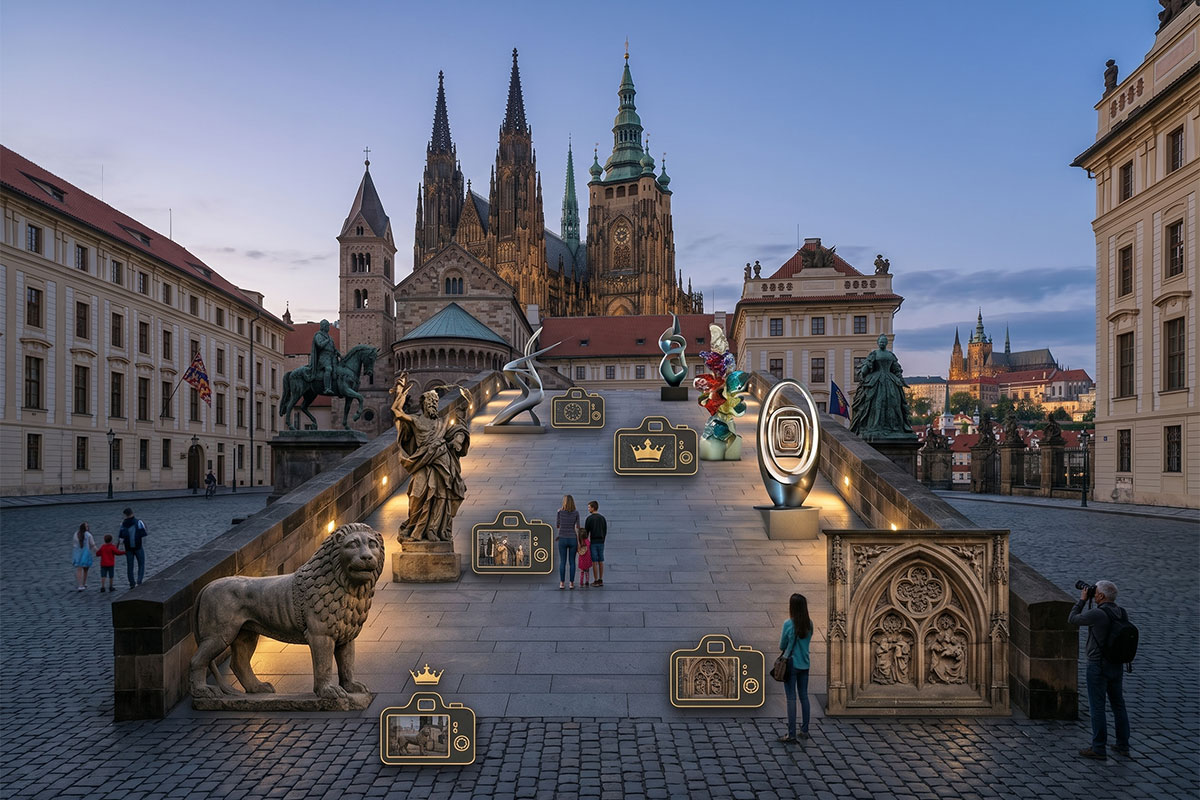
One cannot discuss the Baroque influence without mentioning the sculptural elements that define the courtyards. The Matthias Gate, the first Baroque structure in Prague, serves as a triumphant entry arch, signaling a move away from defensive architecture toward ceremonial grandeur. Inside the castle, the vivid frescoes and heavy drapery of the era reflect a time when art was used to solidify the authority of the Church and the Empire. The emotional intensity of Baroque art is palpable here; statues twist in agony or ecstasy, and the architecture itself seems to move with convex and concave lines, rejecting the flat surfaces of the Renaissance.
The Modern Era: Art Nouveau and Plečnik’s Interventions
Many visitors assume the artistic evolution of Prague Castle stopped in the 18th century, but the modern era brought some of its most significant, albeit subtle, changes. The completion of St. Vitus Cathedral in the 19th and early 20th centuries sparked a wave of nationalistic art. The most famous contribution from this period is the stained glass window designed by Alphonse Mucha in the 1930s. Unlike the traditional mosaic-style medieval glass, Mucha’s window is a painted masterpiece of Art Nouveau, depicting the origins of Christianity in the Slavic lands with his signature flowing lines and vibrant, emotive colors.
Furthermore, after the establishment of the independent Czechoslovakia in 1918, the castle needed to transition from a monarch’s palace to a democratic seat of power. President Tomáš Garrigue Masaryk hired the Slovenian architect Josip Plečnik to modernize the castle. Plečnik’s work is a brilliant dialogue between the old and the new. He did not destroy history; he reframed it. His additions include:
- The Bull Staircase: A majestic entrance connecting the Third Courtyard to the South Gardens, blending classical inspiration with modern functionality.
- The Granite Monolith: A massive obelisk in the Third Courtyard, intended to commemorate the fallen of WWI, standing as a testament to modern engineering and minimalist aesthetics.
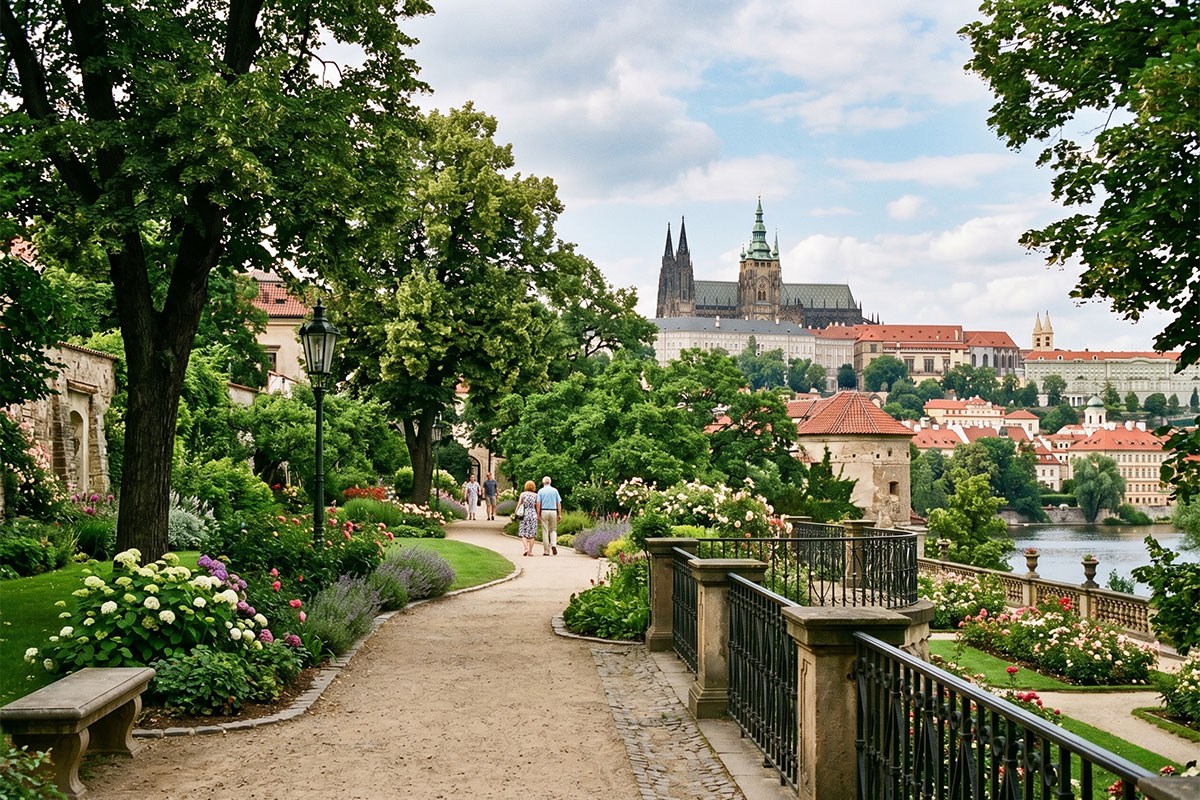
- The South Gardens: Plečnik redesigned these terraces to offer panoramic views of the city, using simple geometric forms and architectural follies that invite contemplation.
A Living Canvas for the Future
Today, Prague Castle is not merely a relic frozen in amber; it continues to breathe as a cultural hub. The riding schools and stables have been converted into world-class exhibition spaces that host everything from Renaissance masterworks to contemporary photography. The Picture Gallery of Prague Castle, reopened to the public, strives to recreate the glory of Rudolf II’s collection, constantly acquiring and restoring pieces that belong to the castle’s history. It is a place where the past is constantly being rediscovered and reinterpreted for a modern audience.
As you walk back down the Old Castle Stairs, leaving the complex behind, you realize that the art of Prague Castle is not defined by a single style or era. It is a collage of human aspiration. From the terrified gargoyles of the Gothic period to the serene geometry of Plečnik’s modernism, the castle documents the shifting values and dreams of European civilization. It is a journey through time that requires no time machine—only open eyes and a willing heart to see the stories etched into the walls.