Discover the serene and historically rich Gardens of Prague Castle. This guide explores the botanical diversity, architectural marvels, and peaceful corners of these hidden green spaces, offering a perfect escape from the city's bustle.
When travelers imagine Prague Castle, the first images that usually come to mind are the imposing silhouette of St. Vitus Cathedral, the ancient stones of the Old Royal Palace, or the charmingly narrow Golden Lane. However, surrounding these architectural giants lies a vibrant, living treasure that is often overlooked by the rushing crowds: the castle gardens. Spanning a massive area around the fortification walls, these green spaces offer not just a breath of fresh air, but a journey through centuries of landscape design and botanical curiosity. For the discerning traveler in 2026, stepping into these gardens provides a rare moment of tranquility and a unique vantage point over the City of a Hundred Spires.
The gardens are more than just decorative lawns; they are a testament to the changing tastes of monarchs and presidents, evolving from Renaissance vineyards and utility gardens into the manicured masterpieces we see today. While the castle courtyards bustle with energy, the gardens remain a sanctuary where the roar of the city fades into the rustling of leaves and the gentle splash of fountains. Whether you are a botany enthusiast, a history buff, or simply someone seeking a quiet bench with a view, exploring this hidden oasis reveals a softer, more intimate side of Prague’s grandeur.
A Journey Through History and Design
The history of the Prague Castle gardens is as complex and layered as the city itself. Originally, these slopes were utilized for practical purposes, serving as defensive barriers covered in dense forests or cultivated as vineyards and orchards to supply the royal court. It was during the Renaissance, particularly under the reign of Ferdinand I in the 16th century, that the concept of the garden as a place of pleasure and artistic expression truly took root. This era marked the transition from medieval utility to Italianate elegance, introducing exotic plants and symmetrical layouts that would forever change the castle's silhouette.
In the 20th century, a new layer of history was added by the famous Slovenian architect Jože Plečnik. Appointed by the first Czechoslovak president, Tomáš Garrigue Masaryk, Plečnik was tasked with transforming the castle from a symbol of monarchy into a democratic headquarters. His interventions in the gardens are subtle yet profound, blending modernism with classicism. He introduced architectural elements like the Bull Staircase and various obelisks that serve as visual anchors, guiding the visitor's eye across the landscape. Understanding this blend of Renaissance foundation and modernist renovation is key to appreciating the unique character of these grounds.
The Royal Garden (Královská zahrada)
Located on the northern side of the castle complex, the Royal Garden is historically the most significant. Established in 1534, it was one of the first Renaissance gardens north of the Alps. This is where the royal court once admired the first tulips brought to Europe from Turkey, long before they became a symbol of the Netherlands. Walking through this garden feels like stepping into a living museum. The layout is spacious and elegant, dominated by the Singing Fountain, a masterpiece of bell-metal casting that supposedly hums when water strikes its bronze basin.
At the eastern end of the Royal Garden stands the Queen Anne’s Summer Palace (Belvedere), often cited as the purest Renaissance building outside of Italy. The garden here is less about wild nature and more about order and beauty. It is a place of manicured hedges, ornamental flower beds, and ancient trees that have witnessed centuries of diplomatic strolls. The atmosphere here is regal yet inviting, encouraging visitors to slow down and admire the intricate details of the landscaping.
The South Gardens (Jižní zahrady)
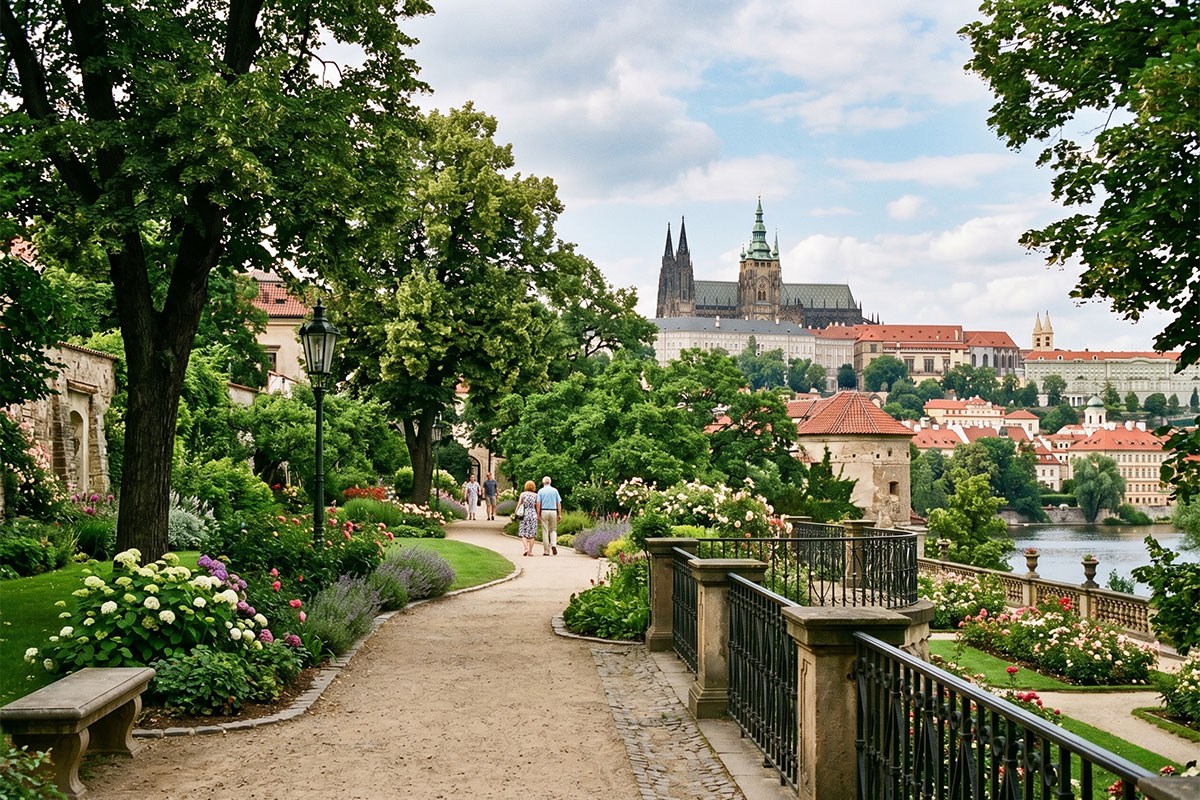
Contrasting the broad expanse of the Royal Garden, the South Gardens—comprising the Paradise Garden, the Garden on the Ramparts, and the Hartig Garden—form a narrow strip along the southern face of the castle. These gardens offer what is arguably the most breathtaking panoramic view of Prague. From here, the red-tiled roofs of Malá Strana (Lesser Town) seem close enough to touch, and the Vltava River winds its way through the city like a silver ribbon. This area was heavily influenced by Plečnik’s genius, featuring monumental basins and the famous granite bowl, which is a marvel of engineering carved from a single block of stone.
Botanical Diversity and Seasonal Blooms
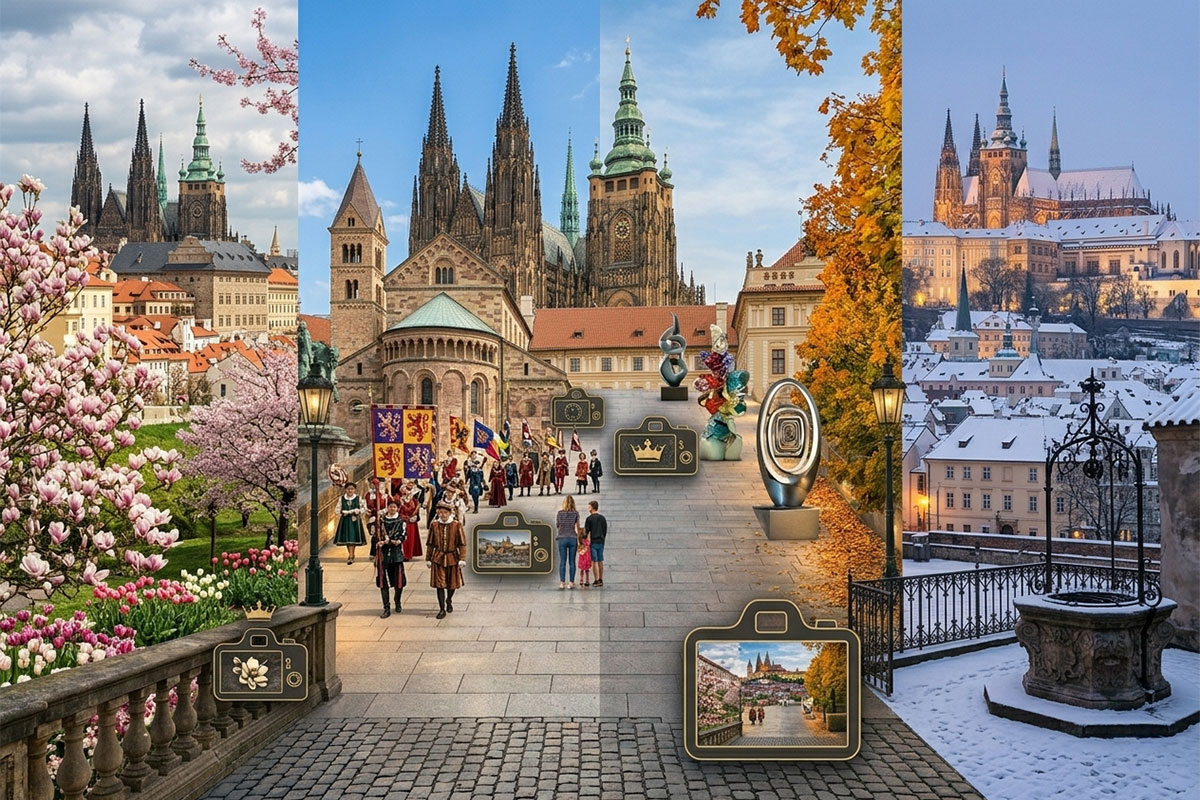
Beyond the architecture and history, the Gardens of Prague Castle are a botanical haven. The microclimate created by the south-facing slopes allows for the cultivation of flora that might struggle elsewhere in the city. The gardeners here maintain a delicate balance between historical accuracy and ecological diversity. In the spring, the grounds explode with color as thousands of tulips, daffodils, and hyacinths bloom in succession, creating living tapestries against the grey stone of the castle walls. Summer brings the lushness of roses and the shade of centennial trees, while autumn transforms the slopes into a fiery display of gold and crimson.
The diversity of trees is particularly notable. You can find ancient oaks, exotic maples, and even fig trees that have been acclimatized to the Central European weather. The careful selection of plants ensures that there is visual interest throughout the growing season. To help you understand what you might encounter, here is a breakdown of the botanical highlights found across the different sections:
| Garden Section | Dominant Style | Botanical Highlights | Best Season |
| The Royal Garden | Renaissance / English Park | Tulips, exotic trees (Metasequoia), ornamental shrubs | April - June |
| Garden on the Ramparts | Formal / Architectural | Climbing roses, wisteria, neatly trimmed hedges | June - August |
| The Stag Moat | Natural / Wild | Ferns, ivy, massive deciduous trees, wild ground cover | May - October |
| Hartig Garden | Baroque Terraced | Hydrangeas, fruit trees, aromatic herbs | July - September |
Exploring the Hidden Corners
While the Royal and South Gardens are relatively well-known, the true adventurer seeks out the deeper, quieter recesses of the complex. One such place is the Stag Moat (Jelení příkop). This natural ravine separates the castle promontory from the northern fortifications and was once used for breeding game. Today, it offers a completely different experience—a walk through a deep, green valley where the city feels miles away. Wooden walkways and earthen paths lead you through dense vegetation, and a brick tunnel designed by Plečnik connects the upper and lower parts of the moat, adding a touch of mystery to the walk.
Another overlooked gem is the Lumbe Garden, located near the riding school. Historically used for growing vegetables and fruits for the castle kitchens, it retains a more rustic, productive charm compared to the ornamental pleasure gardens. These hidden corners are perfect for those moments when you need to escape the sensory overload of the main tourist circuits. They remind us that the castle is not just a monument, but a living organism that breathes through its green spaces.
Practical Tips for a Serene Visit
Visiting the gardens requires a bit of planning, especially regarding the seasons. Generally, the gardens are open to the public from April 1st to October 31st, though the exact dates can fluctuate based on weather conditions. In the winter months, while the main gates to the green spaces are closed to protect the dormant plants and ensure safety on icy paths, the views from the castle ramparts remain accessible. If you are visiting during the open season, here are some tips to maximize your experience:
- Timing is Everything: The gardens are most peaceful right after opening in the morning (usually 10:00 AM) or late in the afternoon before closing. The light at these times is also best for photography.
- Footwear Matters: The paths vary from paved gravel to cobblestones and dirt tracks, especially in the Stag Moat. Comfortable walking shoes are essential.
- Respect the Rules: These are heritage sites. Picnicking is generally restricted to specific areas, and walking on the grass is often prohibited to protect the historic lawns.
- Entry Points: To avoid the main crowds at the front of the castle, try entering the Royal Garden from the tram stop "Královský letohrádek" (Queen Anne's Summer Palace). It’s a downhill walk toward the castle core.
- Photography: For the best shots of the city framed by greenery, head to the Garden on the Ramparts. The juxtaposition of nature and the urban landscape is stunning.
The Gardens of Prague Castle offer a narrative that complements the stone and mortar of the palaces. They tell a story of cultivation, aesthetics, and the human need for nature even within a fortress. Whether you are admiring the precise geometry of a flower bed or listening to the wind in the trees of the Stag Moat, you are participating in a tradition of leisure that has existed here for centuries. So, on your next trip to Prague, take a moment to step off the cobblestones and into the green—you might just find it to be the highlight of your journey.