Explore the rich artistic timeline of Prague Castle through its sculptures. This guide takes you from the Gothic gargoyles of St. Vitus to the bold modern interventions of the 20th century, revealing the hidden stories carved in stone and bronze. Includes images and an interactive map.
When you step through the imposing gates of Prague Castle, you are not merely entering a political stronghold or a historical monument; you are walking into an open-air gallery that has been curated over a millennium. For many travelers, the sheer scale of the architecture—the soaring spires of St. Vitus and the sprawling courtyards—can be overwhelming, causing them to overlook the intimate details that truly breathe life into the complex. The sculptures of Prague Castle serve as silent narrators of Czech history, documenting a profound shift from religious devotion to imperial power, and finally, to modern democratic symbolism. As we explore the grounds in early 2026, the contrast between the weather-beaten sandstone of the Middle Ages and the sharp, clean lines of modern installations offers a fascinating study in artistic evolution.
To truly understand the soul of this UNESCO World Heritage site, one must look closer at the statues that guard its doors, adorn its fountains, and hide in its gardens. These works are not just decorations; they are expressions of the era in which they were forged. From the terrifying gargoyles designed to ward off evil (and rain) to the serene bronze figures of the Renaissance and the bold, geometric forms introduced in the 20th century, the castle’s sculpture collection is a timeline of European art history. This journey will take you through the centuries, highlighting how stone and metal were transformed into masterpieces that continue to captivate visitors today.
The Gothic Soul: Stone Guardians of St. Vitus
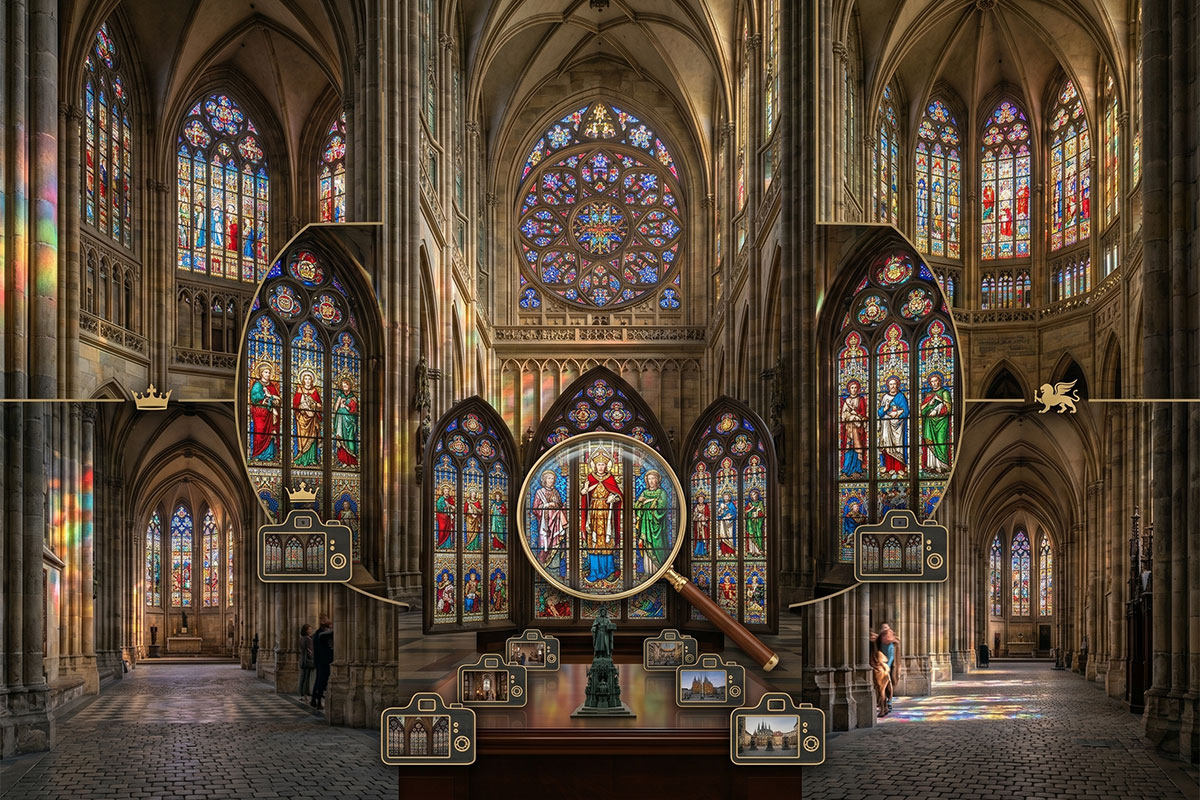
The story of sculpture at Prague Castle begins in earnest with the construction of St. Vitus Cathedral in the 14th century. Under the patronage of Charles IV and the artistic direction of Peter Parler, the cathedral became a laboratory for Gothic realism. Unlike the stiff, idealized figures of the earlier Romanesque period, Parler’s workshop introduced emotion and individuality into stone. The most visible examples are the gargoyles perched high above the courtyard. While their primary function is utilitarian—diverting rainwater away from the masonry—they were sculpted with an extraordinary degree of imagination, depicting dragons, demons, and distorted human faces that seem to scream silently at the city below.
However, the true sculptural revolution lies inside the cathedral, specifically in the triforium. Here, Peter Parler created a gallery of busts depicting the royal family, archbishops, and even the master builders themselves. This was a radical move for the medieval era; for the first time, the creators of the cathedral were placed on the same level as the monarchs and saints. These busts are considered some of the earliest true portraits in Central European art, capturing specific facial features, flaws, and expressions rather than generic archetypes. They remind us that the castle was built by human hands, driven by human ambition.
- Look for the Self-Portrait: Try to spot the bust of Peter Parler himself in the triforium; his gaze is confident, reflecting the pride of a master craftsman.
- The Golden Gate Mosaic: While technically a mosaic, the Last Judgment scene above the Golden Gate functions sculpturally within the architecture, bridging the gap between two-dimensional art and the 3D Gothic structure.
- St. Wenceslas Chapel: The statue of St. Wenceslas by Jindřich Parler (Peter's nephew) is a masterpiece of High Gothic style, showing the patron saint as a chivalric knight.
The Renaissance and the Bronze Age
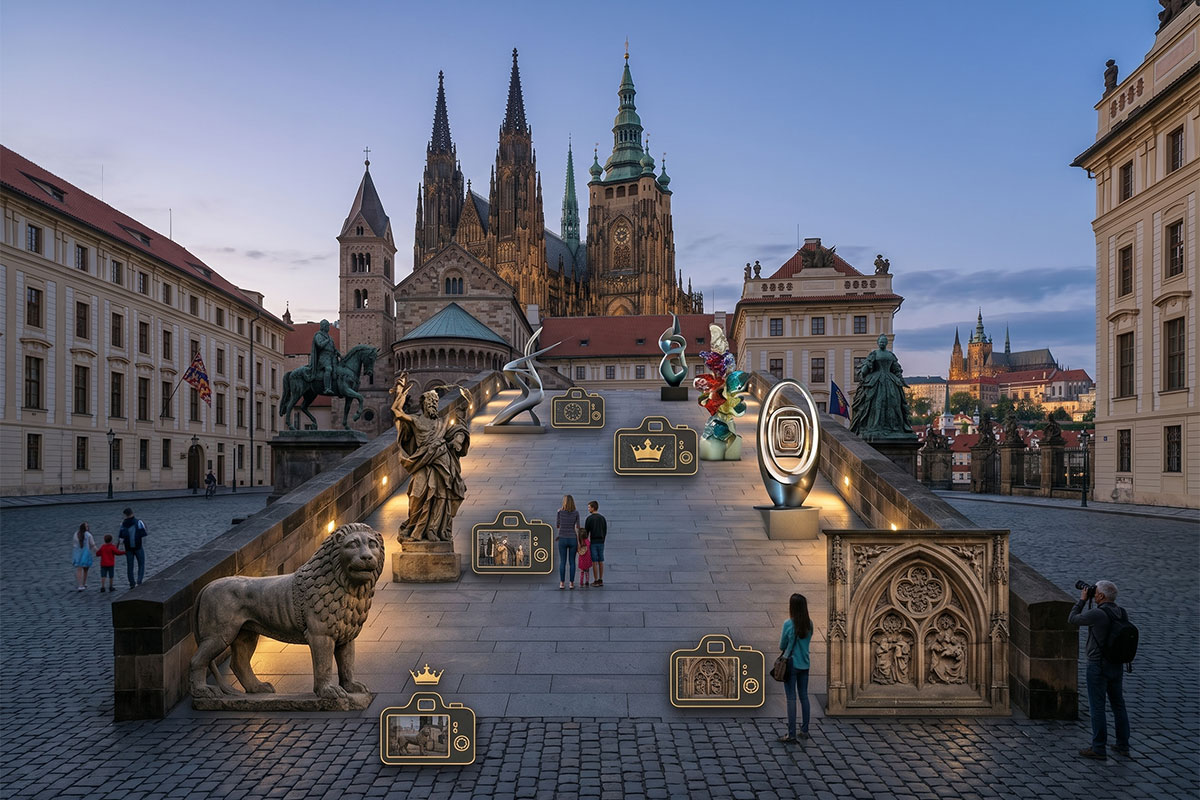
As the Middle Ages waned, the dark mysticism of the Gothic style gave way to the humanism and balance of the Renaissance. At Prague Castle, this transition is best exemplified by the shift from stone to bronze. The most famous piece from this era stands proudly in the Third Courtyard: the equestrian statue of St. George fighting the dragon. Cast in 1373 by the brothers Martin and George of Cluj, this statue is a marvel of medieval metallurgy that foreshadows the Renaissance. It is incredibly dynamic for its time, capturing the tension of the horse and the knight at the moment of the strike. The original statue has suffered from centuries of exposure and vandalism, so what you see in the courtyard today is a masterful copy, while the original rests safely in the National Gallery, yet its presence in the castle remains iconic.
Another gem of this era is found in the Royal Garden: the Singing Fountain. Created in the mid-16th century, this bronze masterpiece is not just a visual treat but an auditory one. The design is intricate, featuring mythological figures and hunting scenes that reflect the leisure activities of the aristocracy. The "singing" refers to the rhythmic sound the water makes as it falls into the bronze basin, a sound best heard by placing your ear against the metal bowl. This playful interaction between art and the senses marks a departure from the purely religious function of earlier castle art, signaling a time when art was created for pleasure and courtly refinement.
Baroque Grandeur: Drama and Emotion
The Baroque era brought a wave of theatricality and emotional intensity to Prague Castle, transforming its entrances and gardens into stages for imperial power. The most striking example of this is the Matthias Gate, the first Baroque structure in Prague. Flanking the gate are the colossal statues of the Wrestling Titans, created by Ignác František Platzer in the late 18th century. These figures are not passive; they are caught in a violent struggle, their muscles straining and faces contorted with effort. They symbolize the raw power of the monarchy and serve as an intimidating welcome to anyone entering the royal complex.
Baroque sculpture is characterized by movement and the play of light and shadow, and you can see this throughout the castle grounds. The statues adorning the balustrades and the smaller fountains in the courtyards all share this sense of drama. Unlike the serene saints of the Gothic era, Baroque figures are often caught in mid-action, their robes swirling as if caught in a divine wind. This era was about impressing the viewer, overwhelming the senses, and cementing the authority of the Habsburg rulers through sheer artistic scale and complexity.
Modern Interventions: The Plečnik Era
Following World War I and the establishment of the independent Czechoslovak Republic, Prague Castle underwent a significant transformation under the guidance of Slovenian architect Jože Plečnik. President Tomáš Garrigue Masaryk appointed Plečnik to update the castle from a symbol of monarchy to a symbol of democracy. Plečnik’s sculptural additions are subtle, symbolic, and deeply respectful of history while being undeniably modern. He introduced clean lines, monoliths, and obelisks that contrast beautifully with the ornate historical styles.
One of the most prominent modern features is the granite obelisk in the Third Courtyard. Originally intended to be much larger, the monolith broke during transport, but the remaining piece was erected as a memorial to the fallen of the First World War. Its smooth, unadorned surface stands in stark conversation with the intricate Gothic details of St. Vitus Cathedral just meters away. Plečnik also redesigned the gardens and staircases, incorporating sculptural elements like the Bull Staircase, where bronze bulls support a canopy, blending ancient Minoan inspirations with 20th-century functionalism. These works prove that modern art can coexist harmoniously with ancient heritage, adding a new layer of meaning to the complex.
Comparing the Eras: A Sculptural Timeline
To help you navigate the vast array of artistic styles, here is a breakdown of the key sculptures you will encounter, categorized by their historical period and artistic intent.
| Era | Key Characteristic | Must-See Sculpture | Location |
| Gothic (14th Century) | Religious realism, emotional expression, gargoyles. | Triforium Busts & Gargoyles | St. Vitus Cathedral (Exterior & Interior) |
| Renaissance (16th Century) | Humanism, bronze casting, mythological themes. | St. George & The Dragon | Third Courtyard |
| Baroque (17th-18th Century) | Drama, movement, muscular forms, grand scale. | Wrestling Titans (Platzer) | Matthias Gate (Main Entrance) |
| Modern (20th Century) | Symbolism, geometric forms, democratic ideals. | The Granite Obelisk | Third Courtyard |
Interactive Map of Prague Castle
Contemporary Echoes and Temporary Exhibitions
The artistic evolution of Prague Castle did not stop with Plečnik. Today, the castle grounds frequently host temporary exhibitions of contemporary sculpture, creating a dialogue between the past and the present. It is not uncommon to walk through the Royal Gardens or the Ball Game Hall and encounter avant-garde installations by renowned Czech and international artists. These modern works often challenge the permanence of the surrounding architecture, using materials like glass, steel, and light to create fleeting, ephemeral experiences.
Furthermore, contemporary Czech artists continue to leave their mark on the vicinity of the castle. While not strictly inside the castle walls, the works of artists like David Černý often spark conversations that ripple up to the castle hill. The inclusion of modern art ensures that Prague Castle remains a living cultural center rather than a static museum. It invites visitors to question how we interpret history and how art serves as a mirror for society's changing values.
Conclusion: Reading the Stone
As you conclude your tour of Prague Castle, take a moment to look back at the silhouette of the complex against the sky. The sculptures you have seen are more than just decorative elements; they are the fingerprints of the generations that built this city. From the fearful piety of the Gothic gargoyles to the confident humanism of the Renaissance bronze, the theatrical power of the Baroque giants, and the dignified simplicity of the modern obelisk, each piece tells a story of the people who lived, ruled, and created here.
We encourage you to walk slowly. Don't just snap a photo of the cathedral and move on. Look for the small details—the expression on a saint's face, the tension in a bronze muscle, or the way the light hits a granite monolith. These are the details that transform a visit to Prague Castle from a simple sightseeing trip into a deep engagement with European art history. The stones are speaking; you only need to listen.