Master the art of capturing Prague Castle by learning the optimal times for lighting and crowd avoidance. This guide covers seasonal tips, golden hour secrets, and practical advice for photographers.
Prague Castle is not merely a monument; it is a sprawling skyline of spires, palaces, and courtyards that defines the visual identity of the Czech capital. For photographers, capturing this UNESCO World Heritage site is a dream, yet the reality of navigating through thousands of daily visitors can make getting that perfect shot a challenge. The key to unlocking the true photographic potential of the castle complex lies not just in your gear, but in your timing. Understanding how light interacts with the Gothic architecture and knowing exactly when the tour groups disperse can transform a chaotic snapshot into a breathtaking masterpiece.
Every corner of the castle grounds offers a different narrative depending on the time of day and the season of the year. Whether you are chasing the ethereal morning mist that clings to St. Vitus Cathedral or the dramatic silhouettes created by the setting sun over the Lesser Town, planning your visit strategically is essential. This guide dives deep into the specific windows of time that offer the best lighting conditions and the most serene atmosphere, ensuring your portfolio captures the majestic essence of Prague without the distraction of selfie sticks and bustling crowds.
The Magic of Morning: Sunrise and Early Hours
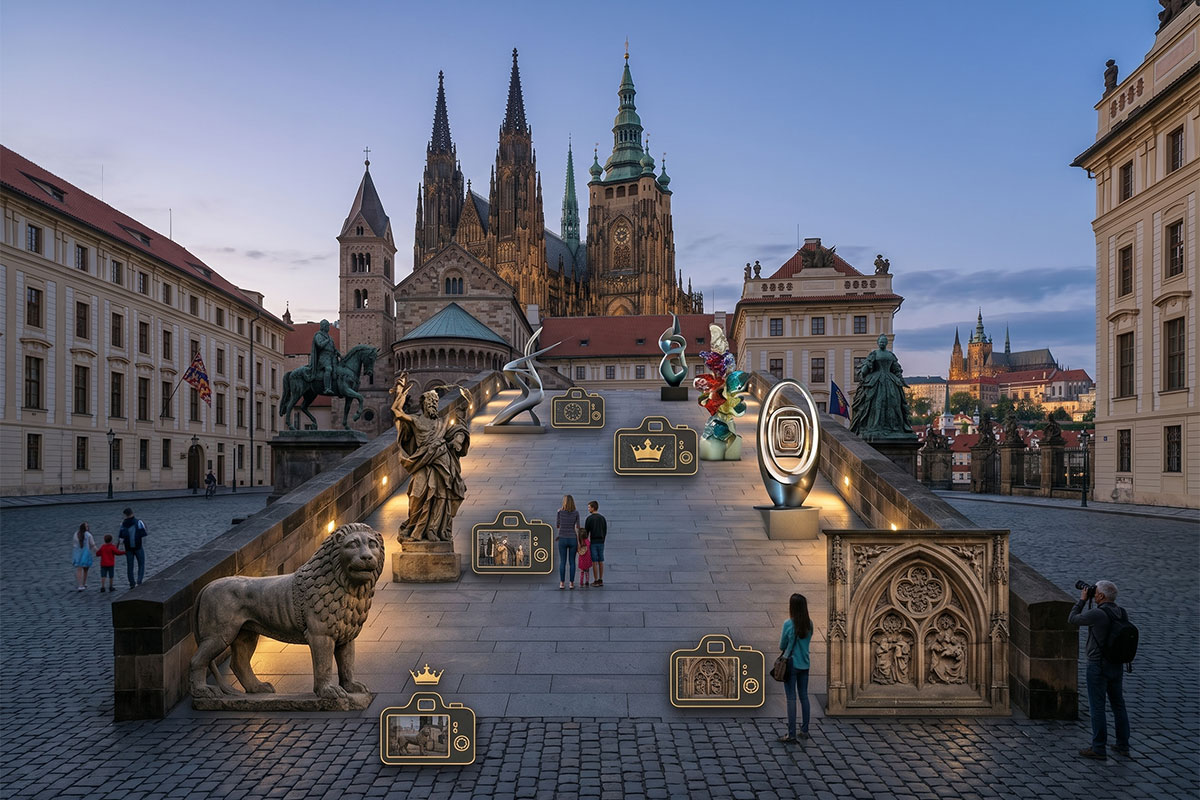
If there is one golden rule for photographing popular landmarks, it is to arrive before the city wakes up, and nowhere is this more true than at Prague Castle. The castle grounds generally open at 6:00 AM, long before the ticketed interiors and historical buildings open their doors to the general public. This window of time, specifically from 6:00 AM to 8:00 AM, is the holy grail for photographers seeking clean compositions and unobstructed views of the architecture. During these hours, you can capture the vast Second and Third Courtyards in almost complete silence, allowing the grandeur of the surroundings to speak for itself without human interference.
The lighting during the early morning is soft, diffused, and incredibly flattering for the intricate stone details of the Gothic structures. As the sun rises, it often hits the eastern facade of St. Vitus Cathedral, bathing the gargoyles and flying buttresses in a warm, golden glow that is impossible to replicate later in the day. Furthermore, the morning air in Prague, especially near the river and on the hill, can be crisp and clear, providing excellent visibility across the city rooftops below. This is the moment to stand in Hradčanské náměstí (Castle Square) and shoot the entrance gates with the guards in a relaxed state, framed perfectly against the waking sky.
Specific Morning Shot Locations
- The First Courtyard: Capture the dramatic Matthias Gate without the usual queue of tourists blocking the view.
- St. Vitus South Tower: The morning light accentuates the golden mosaic of the Last Judgment, making the colors pop against the dark stone.
- The Ramparts Garden: If accessible, shooting downwards toward the city as the sun crests over the horizon offers a spectacular urban landscape.
Chasing the Sunset: Golden Hour and Blue Hour
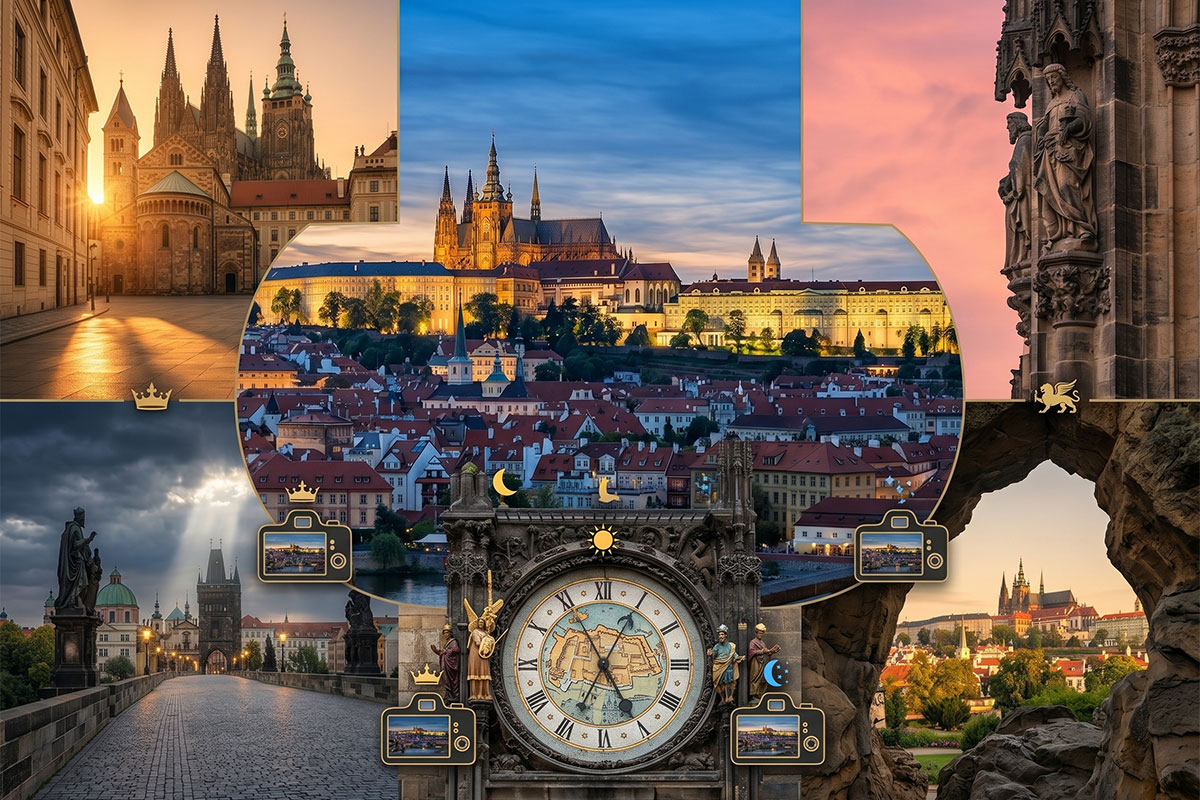
While mornings are for solitude, evenings at Prague Castle are for drama and atmosphere, offering a completely different color palette for your images. As the sun begins to dip towards the horizon, the warm light casts long, cinematic shadows across the cobblestones, adding depth and texture to your photographs. The hour leading up to sunset, known as the Golden Hour, paints the castle walls in rich amber and honey tones, which contrasts beautifully with the red tile roofs of the city below. This is the ideal time to position yourself on the castle ramparts or at the eastern exit near the Black Tower to capture the cityscape bathed in this magical light.
Immediately following the sunset, the Blue Hour presents a fleeting but magnificent opportunity that every photographer should capitalize on. This is the short period when the sky turns a deep, velvety indigo, but the city lights—including the majestic illumination of the castle itself—begin to flicker on. The contrast between the cool tones of the sky and the warm, tungsten glow of the streetlamps and castle floodlights creates a surreal, fairytale aesthetic. Using a tripod during this time is highly recommended to keep your ISO low and ensure sharp images of the illuminated cathedral spires piercing the twilight sky.
Seasonal Guides for Photographers
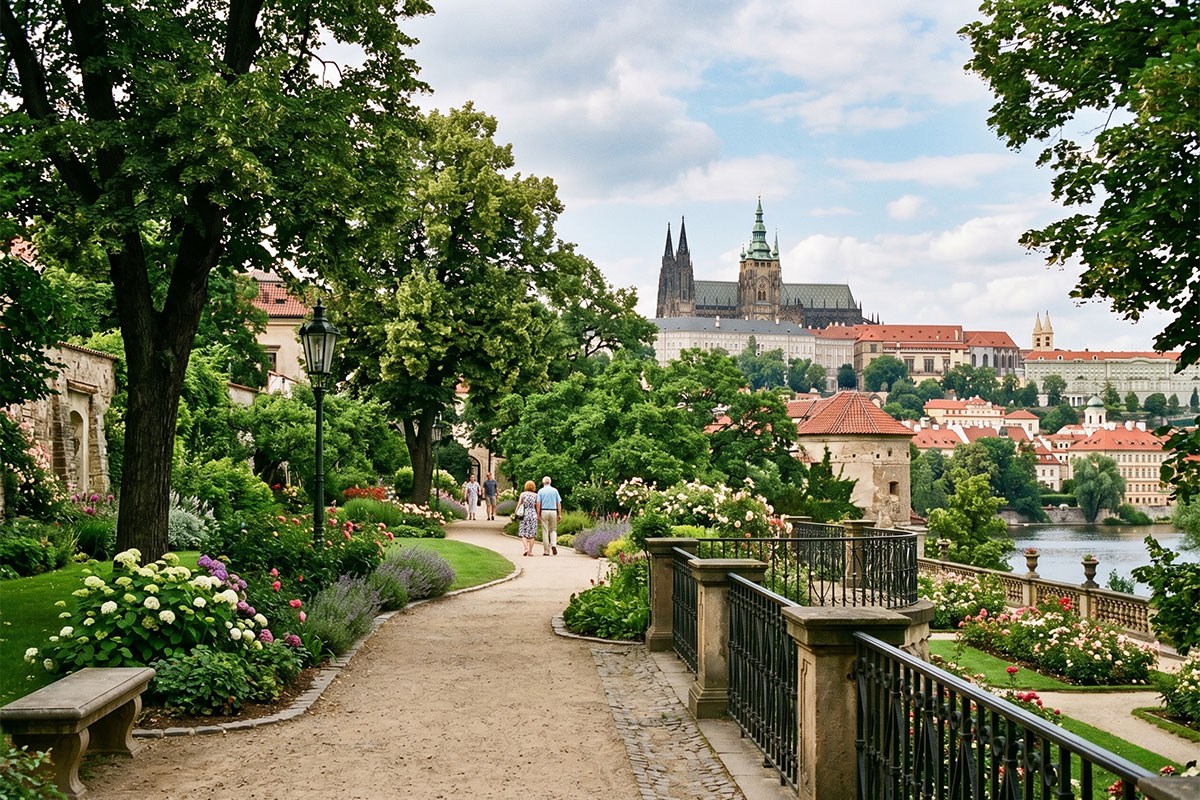
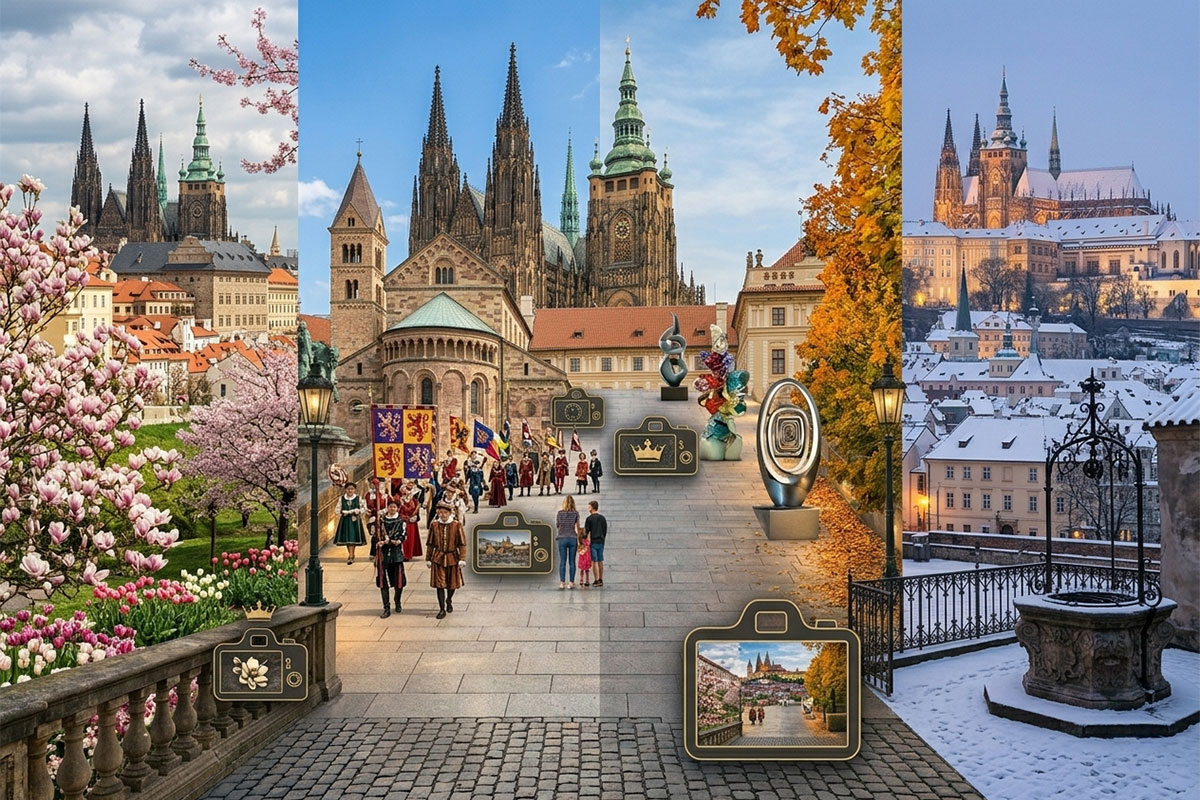
The character of Prague Castle changes drastically with the seasons, and understanding these shifts can help you plan the mood of your photography. Spring and summer bring vibrancy, with the Royal Garden and the Stag Moat exploding in lush greens and blooming flowers, providing natural frames for the architectural shots. However, summer also means the sun is high and harsh by mid-day, creating strong contrasts that can be difficult to manage; therefore, sticking to the very early mornings or late evenings is crucial during these months to avoid blown-out highlights.
Conversely, autumn and winter offer a moody, atmospheric vibe that suits the Gothic nature of the castle perfectly. In late autumn, the trees surrounding the complex turn into a tapestry of gold and rust, while the frequent morning fog can isolate the cathedral towers, making them look as if they are floating in the clouds. Winter brings its own charm, especially if you are lucky enough to witness a snowfall that dusts the dark spires in white, turning the scene into a monochrome wonderland. Additionally, the lower angle of the sun in winter means that acceptable shooting light lasts longer throughout the day, not just at sunrise and sunset.
Seasonal Pros and Cons
- Spring (April-May): Blooming magnolias and tulips add color; weather is unpredictable with sudden showers.
- Summer (June-August): Longest days allow for extended shooting; crowds are at their absolute peak.
- Autumn (September-November): Best for fog and foliage; light becomes softer and more manageable.
- Winter (December-March): Dramatic, moody skies and potential snow; very short days limit shooting time.
Navigating the Crowds: Weekdays vs. Weekends
Even if you nail the lighting, physical crowds can ruin a composition, so choosing the right day of the week is just as important as the time of day. Weekends, particularly Saturdays, attract not only international tourists but also locals and day-trippers from neighboring regions, resulting in high density throughout the complex. If your schedule permits, plan your primary photography session for a Tuesday or Wednesday morning. Mid-week days generally see a reduction in foot traffic, giving you a few extra moments to compose your shots without someone walking into the frame.
Another tactical approach is to avoid the top of the hour when the changing of the guard ceremony takes place at the main gates. This event draws massive clusters of onlookers, effectively blocking the main entrance and the First Courtyard for about twenty minutes. Instead, use this time to explore the quieter, rear sections of the castle, such as the Golden Lane (after closing hours when it is free to enter) or the remote corners of the castle gardens. By moving against the flow of the main tour groups—who usually start at the front gate and move back—you can often find pockets of solitude even on busier days.
Summary of Optimal Timing
To help you plan your visit effectively, the following table breaks down the photographic potential based on the time of day and the expected conditions. Use this as a quick reference guide when building your itinerary.
| Time of Day | Lighting Conditions | Crowd Level | Best For |
| 06:00 AM - 08:00 AM | Soft, cool morning light (Sunrise) | Very Low | Wide shots of empty courtyards, St. Vitus exterior, gates. |
| 08:00 AM - 10:00 AM | Brightening, directional light | Moderate | Details of architecture, gargoyles, garden macros. |
| 12:00 PM - 03:00 PM | Harsh, overhead sun | Very High | Interior shots (requires ticket), shaded alleyways. |
| Golden Hour (Pre-Sunset) | Warm, golden, long shadows | High but manageable | City views from ramparts, warm stone textures. |
| Blue Hour (Post-Sunset) | Deep blue sky, artificial lights | Low to Moderate | Illuminated castle shots, dramatic cityscapes, tripods. |
Essential Gear and Practical Tips
When packing your camera bag for Prague Castle, versatility is key because the shooting environments range from vast open squares to narrow, dimly lit alleyways. A wide-angle lens (16-35mm full-frame equivalent) is practically mandatory for capturing the immense scale of St. Vitus Cathedral within the tight confines of the Third Courtyard. Without a wide angle, you will find it nearly impossible to fit the entire tower and facade into a single frame. Additionally, a mid-range zoom (24-70mm) is excellent for general street photography within the complex and capturing the changing of the guard.
While tripods are generally tolerated in the exterior courtyards, especially early in the morning or late at night, they are strictly forbidden inside the historical buildings and cathedrals. If you plan to shoot during the Blue Hour, bring a sturdy but lightweight tripod to manage the longer exposures required for the night lights. Finally, consider a polarizing filter to help manage reflections on glass windows and to deepen the blue of the sky during the day, which helps the sandstone architecture stand out more prominently in your final images.