Step into the past and discover how Charles IV, Rudolf II, and Maria Theresa transformed Prague Castle. Learn about other royals like Vladislav II and Ferdinand I who also shaped this iconic landmark.
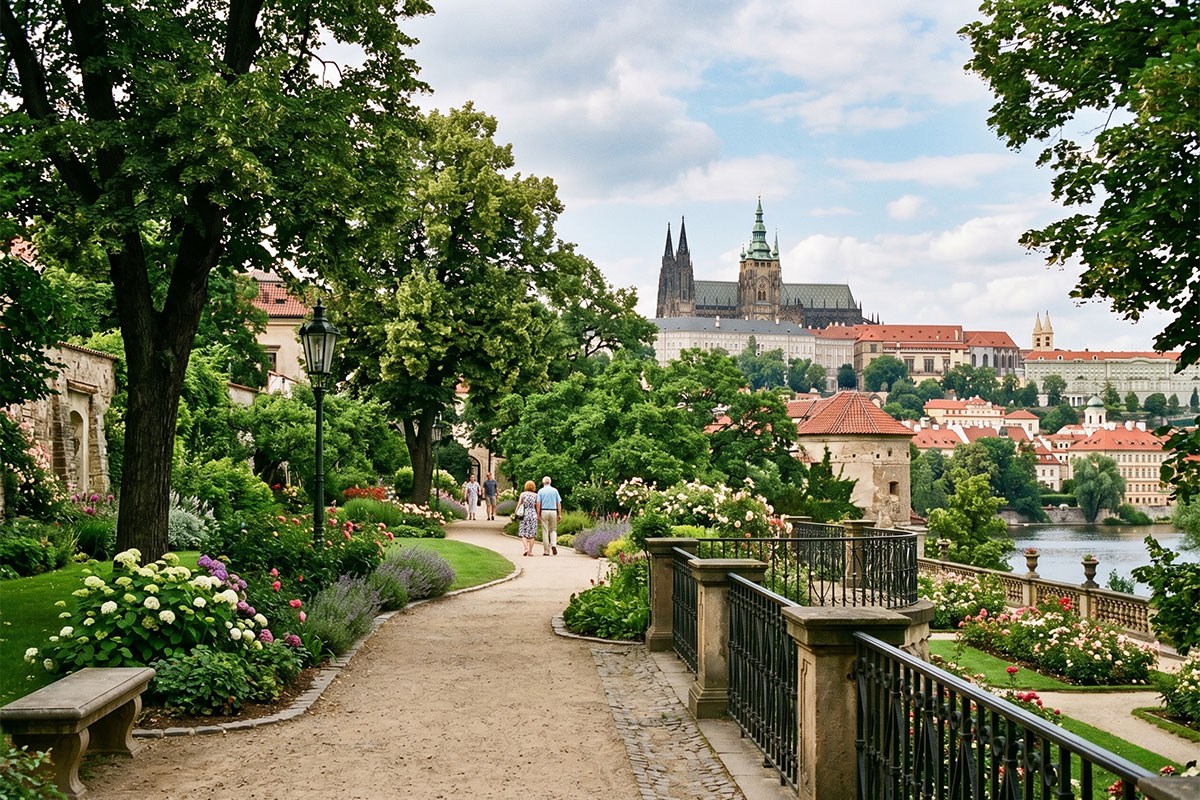
When you stand on the banks of the Vltava River and look up at the sprawling complex dominating the skyline, you are not just looking at a collection of buildings; you are witnessing a timeline carved in stone. Prague Castle is often described as the largest ancient castle in the world, but its true magnitude lies in the stories of the men and women who called it home. For centuries, this hilltop fortress has been the stage for triumphs, tragedies, and transformative visions that have rippled out to shape the very soul of Prague. As travelers wandering through the courtyards in 2026, we are walking in the footsteps of giants whose decisions determined the architectural and cultural DNA of this magical city.
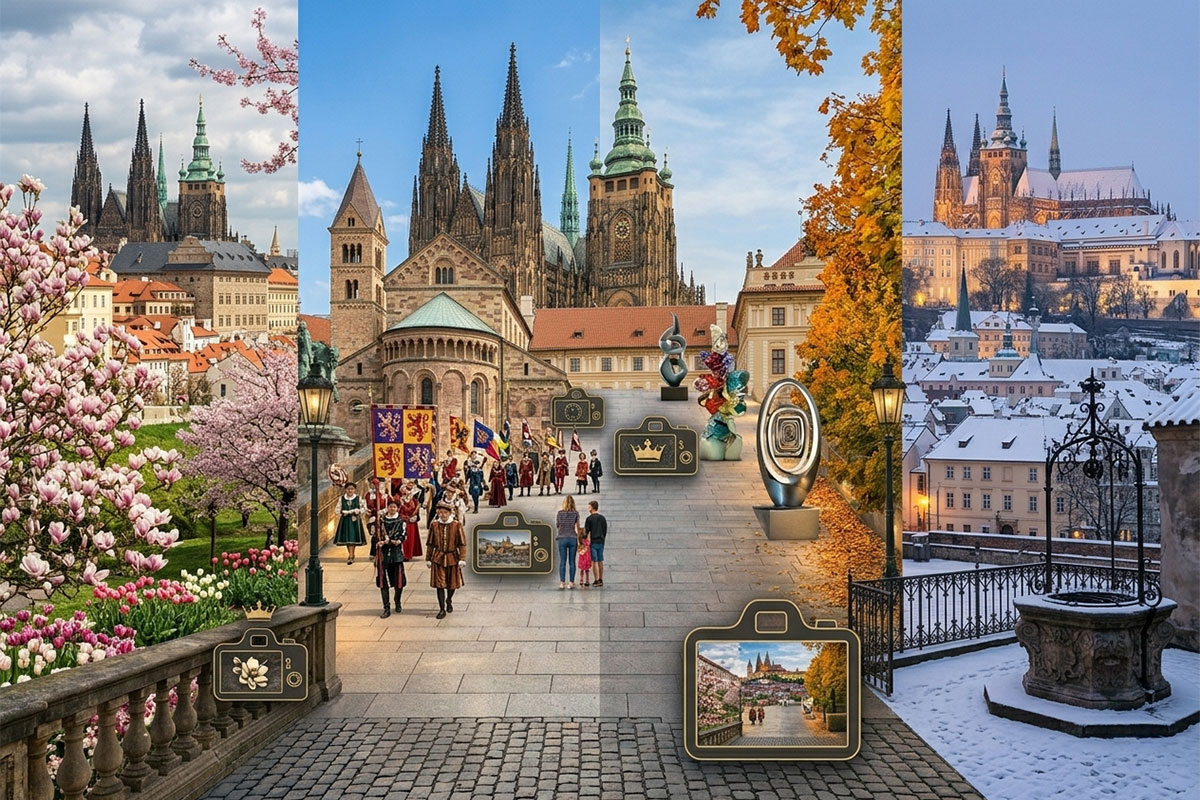
The castle is a palimpsest of history, where Gothic spires pierce the sky above Renaissance gardens, and Baroque facades hide Romanesque foundations. Understanding the castle requires more than a map; it requires an introduction to the characters who built it. From the Golden Age of the Holy Roman Empire to the mysterious days of alchemists and astronomers, the legends of the castle are inextricably linked to the personalities of its most famous royal residents. Let’s peel back the layers of history and meet the monarchs who turned a fortress into a legend.
Charles IV: The Visionary Who Built a Capital
If there is one name you will hear repeated endlessly in Prague, it is Charles IV. Born as Wenceslas but choosing the name Charles at his confirmation, he was not merely a king; he was a visionary who elevated Prague from a provincial town to the glittering capital of the Holy Roman Empire. His reign in the 14th century is affectionately known as the "Golden Age," and his impact on the castle was nothing short of revolutionary. Before Charles, the castle was in a state of disrepair, but he saw the potential for a residence that would rival Paris and Rome.
Charles IV embarked on a massive reconstruction project that gave the castle its distinct Gothic character. He commissioned the construction of the St. Vitus Cathedral, a masterpiece that took nearly six centuries to complete but found its heart under his patronage. He brought in the French architect Matthias of Arras and later the young genius Peter Parler, whose intricate vaulting systems still leave visitors breathless today. Under Charles, the castle became a spiritual and political center, housing the Crown Jewels and the relics of saints, solidifying Prague's status as a holy city.
However, his influence extended far beyond the castle walls. To connect his royal seat with the growing Old Town, he commissioned the stone bridge that now bears his name—the Charles Bridge. His legacy is one of intellect and grandeur; he founded Charles University, the first university in Central Europe, ensuring that his capital was a hub of knowledge as well as power. When you walk through the Old Royal Palace, remember that this was the stage where Charles IV dreamed of a unified Europe centered in Bohemia.
Rudolf II: The Eccentric Patron of Arts and Alchemy
Fast forward to the late 16th and early 17th centuries, and the atmosphere at Prague Castle shifts from pious grandeur to mysterious eccentricity. Rudolf II is perhaps the most fascinating character to ever inhabit the castle. Unlike his predecessors who focused on military might or religious authority, Rudolf was obsessed with the occult, the stars, and the secrets of the universe. He moved the Habsburg capital back to Prague, turning the castle into a sanctuary for astronomers, painters, and, most infamously, alchemists.
Under Rudolf’s reign, the castle became a "Kunstkammer" (cabinet of curiosities). He invited legends like Tycho Brahe and Johannes Kepler to court, blending the lines between science and magic. It was during this era that the legends of the Golem and the Philosopher’s Stone took root in the city's folklore. Rudolf’s influence is best felt in the Golden Lane, a tiny row of colorful houses built into the castle fortifications. Legend has it that alchemists worked here day and night, attempting to turn lead into gold for the Emperor, though historically, it was home to castle guards and later goldsmiths.
Rudolf’s legacy is less about stone walls and more about the atmosphere of mystery that still clings to Prague. He expanded the castle with the Spanish Hall and the New Royal Palace to house his vast collections of art and exotic oddities. While he was eventually deposed by his brother due to his mental instability and political inaction, he left Prague with a reputation as a city of magic—a reputation that draws millions of visitors to the castle's misty courtyards every year.
Comparing the Royal Legacies
To truly understand how different these eras were, it helps to look at the specific contributions each monarch made to the castle complex. Here is a breakdown of how their distinct personalities shaped the architecture we see today:
| Monarch | Era & Style | Key Contribution | Where to Feel Their Presence |
| Charles IV | 14th Century (Gothic) | Established Prague as an Imperial Capital; started St. Vitus Cathedral. | St. Vitus Cathedral & Old Royal Palace |
| Rudolf II | 16th/17th Century (Renaissance) | Turned the castle into a center for science, art, and alchemy. | Golden Lane & The Spanish Hall |
| Maria Theresa | 18th Century (Baroque/Classicism) | Unified the disparate buildings into a single monumental facade. | First Courtyard & The Castle Facade |
Maria Theresa: The Empress of Unification
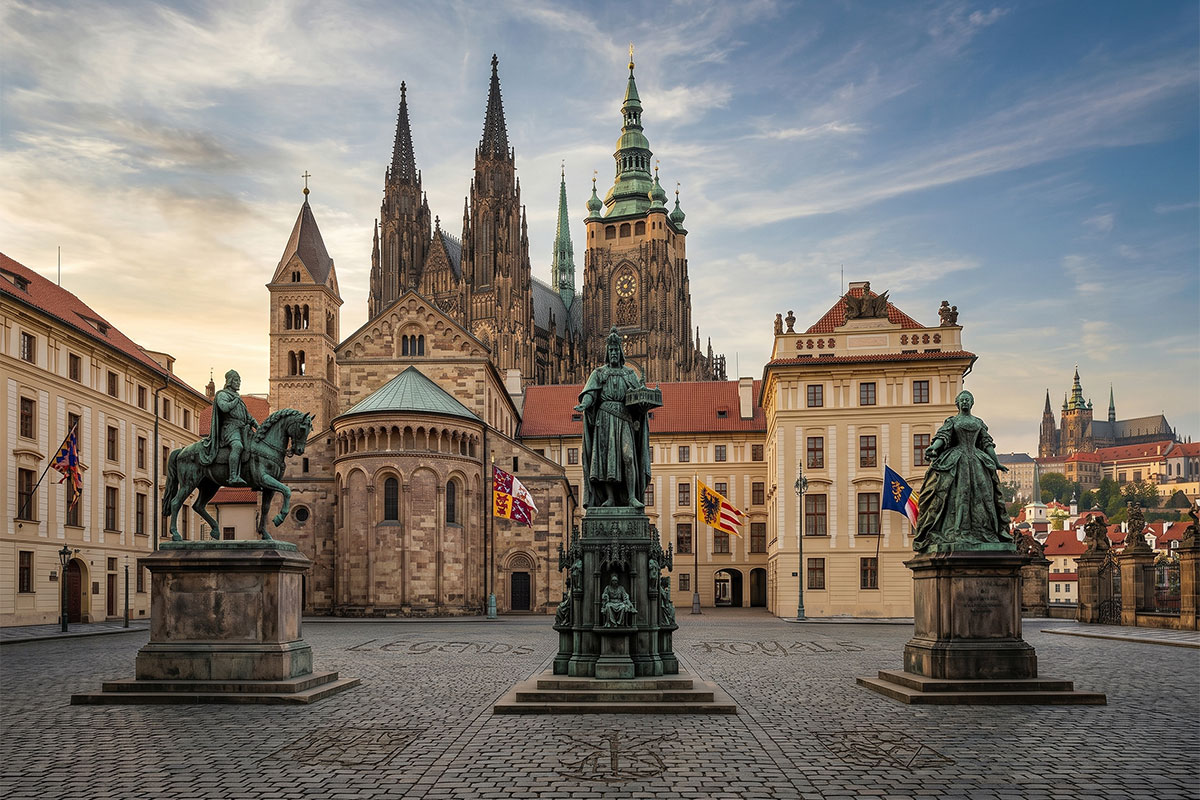
While Charles IV gave the castle its vertical ambition and Rudolf II gave it its soul, it was Empress Maria Theresa in the 18th century who gave the castle the face we recognize today. By the time she ascended the throne, Prague Castle was a hodgepodge of different architectural styles—a medieval tower here, a Renaissance palace there, resulting from centuries of ad-hoc additions. Maria Theresa, a ruler known for her desire for order and centralization, found this unacceptable for a royal residence.
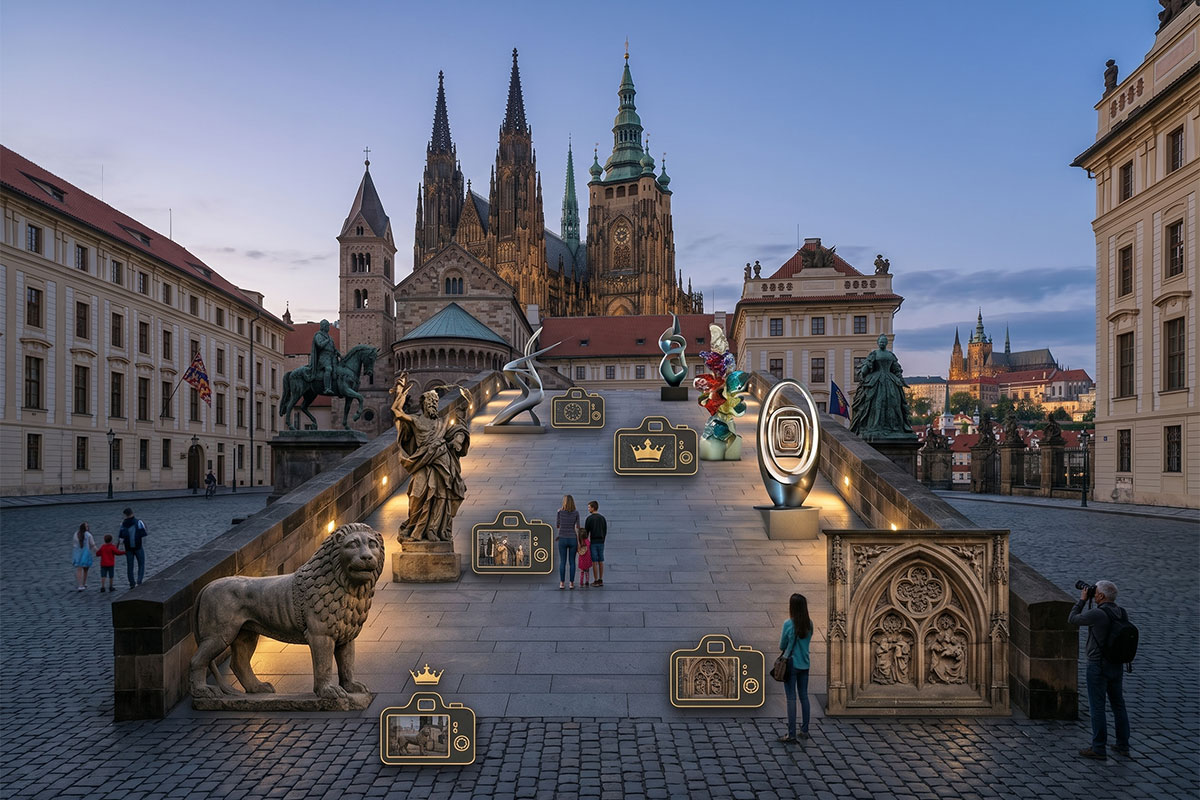
She commissioned the Viennese architect Nicolo Pacassi to undertake a massive renovation that would unify the complex. This project created the continuous, pale-yellow facade that greets visitors as they approach from Hradčany Square. While some historians criticize her renovation for covering up older, more intricate architectural details, there is no denying that she created a sense of monumental grandeur. The First Courtyard, with its wrestling Titans statues, is largely a product of her reign, designed to impress visitors with the sheer scale of Habsburg power.
Maria Theresa’s influence was about modernization and functionality. She turned a medieval fortress into a residential palace suitable for the standards of the 18th-century court. Her touches are evident in the structured courtyards and the formal consistency of the buildings. She ensured that the castle remained a relevant seat of power, rather than crumbling into a medieval relic.
Other Notable Figures and Their Contributions
While Charles IV, Rudolf II, and Maria Theresa left indelible marks on Prague Castle, other rulers and figures also contributed to its rich history. Consider figures like:
- Vladislav II: In the 12th century, Vladislav II significantly expanded the Romanesque palace, laying the foundation for future royal residences. His construction efforts helped establish the castle as a prominent center of power.
- Ferdinand I: Following the Habsburg accession to the Bohemian throne, Ferdinand I introduced Renaissance elements to the castle. He established the Royal Garden, a serene space that offered a contrast to the castle's more imposing structures.
- Emperor Joseph II: While he didn't reside in Prague Castle, Joseph II's reforms in the late 18th century impacted its administration and accessibility. He opened parts of the castle to the public, fostering a sense of connection between the monarchy and the people.
The Enduring Impact on the City Below
The decisions made within the castle walls did not stay there; they flowed down the hill like the Vltava itself, shaping the neighborhoods of Malá Strana (Lesser Town) and Staré Město (Old Town). The presence of the royal court meant that nobility flocked to be near the king, building the magnificent Baroque palaces and gardens that characterize the Lesser Town today. The needs of the castle drove the economy, the arts, and the urban planning of the entire city.
- The Royal Route: The coronation path taken by kings, from the Powder Tower to the Castle, became the architectural spine of the city.
- Cultural Hub: The patronage of monarchs like Rudolf II attracted artists from across Europe, infusing Prague with diverse cultural influences that remain visible in its art galleries and museums.
- Spiritual Skyline: The completion of St. Vitus Cathedral under various patrons ensured that the castle remained the spiritual north star for the Bohemian people.
Visiting Prague Castle is more than a sightseeing tour; it is a dialogue with the past. Whether you are admiring the Gothic ribs of the cathedral, peeking into a tiny house on Golden Lane, or marveling at the sheer size of the courtyard facades, you are engaging with the legacies of Charles, Rudolf, and Maria Theresa. They were the architects of the city's destiny, and their stories are the invisible mortar holding these ancient stones together.