Step away from the tourist crowds and discover the secret side of Prague Castle. This guide takes photographers on a journey through hidden courtyards, quiet lanes, and unique architectural details that define the true magic of this ancient complex. Learn about its history and photographic opportunities.
Standing at the gates of the world’s largest ancient castle complex, it is easy to feel overwhelmed by its sheer scale. Most visitors rush toward the towering spires of St. Vitus Cathedral, cameras clicking in a frenzy to capture the same wide-angle shot that appears on thousands of postcards. However, for a photographer seeking the soul of Prague, the real magic lies not in the obvious monuments, but in the shadows, the overlooked textures, and the quiet corners where history whispers rather than shouts. As we explore the castle grounds in January 2026, the crisp air and soft winter light provide the perfect canvas for uncovering these hidden gems.
Photography at Prague Castle is an exercise in patience and observation. While the main courtyards bustle with activity, a few steps off the beaten path can transport you into a world of solitude. This treasure hunt is designed to help you capture the unique charm of the castle complex, focusing on composition, light, and the unexpected details that tell a richer story than the standard tourist snapshots. Let’s adjust our aperture, slow down our pace, and dive into the secret world behind the fortifications.
Before we delve into the hidden corners, a brief glimpse into the castle's rich history is essential. Prague Castle, dating back to the 9th century, has served as a seat of power for kings of Bohemia, Holy Roman emperors, and presidents of Czechoslovakia and the Czech Republic. This millennium of history has left its mark on every stone, archway, and courtyard, creating a layered tapestry of architectural styles and historical narratives. Understanding this context will enrich your photographic journey, allowing you to capture not just images, but echoes of the past.
The Romantic Silence of Nový Svět
While technically situated just outside the castle walls, no photographer’s journey to the castle is complete without passing through Nový Svět (New World). Often missed by the masses streaming in from the tram stops, this winding cobblestone lane feels like a preserved village from a bygone era. It is the perfect prologue to your castle exploration.
Here, the grandiosity of the castle is replaced by humble, pastel-colored houses huddled together. The lack of heavy foot traffic allows you to experiment with leading lines and low-angle shots without interruption. Look for the contrast between the rough cobblestones and the smooth plaster of the tiny cottages. In the early morning or late afternoon, the light hits these narrow streets at oblique angles, creating dramatic shadows that highlight the architectural textures. It is a place where you can capture the intimacy of old Prague before facing the grandeur of the royal complex.
Descending into the Stag Moat (Jelení příkop)
For a perspective that completely flips the script, head toward the Stag Moat. This natural ravine divides the castle promontory and offers a lush, green retreat that feels miles away from the city center. Even in the cooler months, the structural interplay between nature and the towering castle walls provides endless photographic opportunities.
The Stag Moat offers a unique "worm's eye view" of the fortifications. Instead of looking down at the city, you are looking up at the sheer mass of the castle’s foundations. This angle emphasizes the impregnability and scale of the structure in a way that eye-level shots cannot. Key elements to photograph here include:
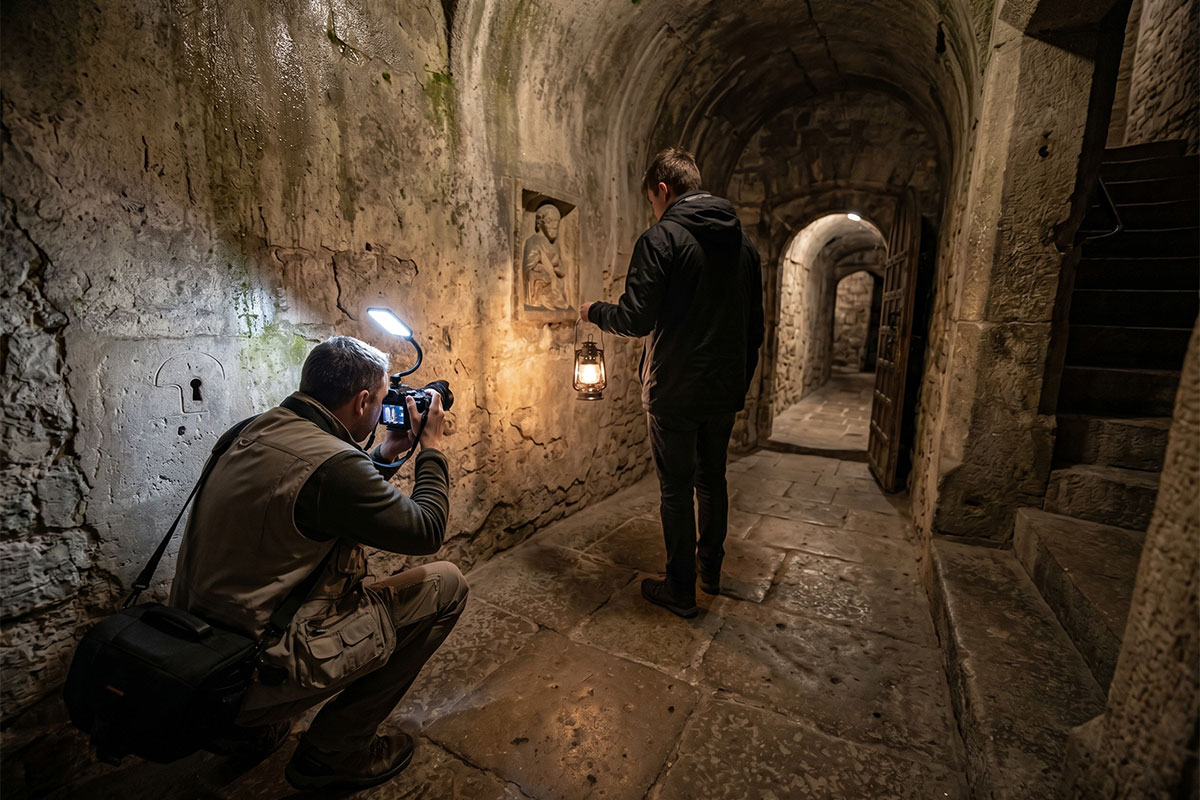
- The Tunnel: A brick-lined pedestrian tunnel connects the upper and lower parts of the moat, offering excellent symmetry and moody lighting conditions.
- The Wooden Walkways: Modern wooden paths snake through the greenery, creating interesting geometric lines against the organic backdrop.
- The Masaryk Viewpoint: A secluded spot that offers a framed view of St. Vitus Cathedral rising above the trees, often devoid of other people.
Architectural Whispers: Details Often Missed
Once inside the castle complex proper, the challenge is to look past the monumental and focus on the ornamental. The walls of Prague Castle are a gallery of art history, layering Gothic, Renaissance, and Baroque styles. A keen eye will find abstract compositions in the details that most walk past.
The Sgraffito Narratives
Make your way to the Ball Game Hall in the Royal Garden. The façade is covered in intricate sgraffito—a technique where layers of plaster are scratched away to reveal contrasting colors underneath. These aren't just patterns; they are stories. Use a telephoto lens to isolate specific figures or allegorical scenes. The texture of the scratched plaster adds a tactile quality to images, making them feel almost three-dimensional.
Gothic Guardians
While everyone photographs the front façade of St. Vitus, the side profiles offer a darker, more dramatic aesthetic. Focus your lens on the gargoyles. These aren't merely decorative; they are functional rain spouts designed with grotesque creativity. Capturing them against a brooding sky or silhouetted against the sun can result in powerful, emotive images. Look for the interplay of shadow on the flying buttresses, where the stone seems to weave a web against the sky.
Golden Lane: The Blue Hour Secret
Golden Lane is famous for its tiny, colorful houses and its association with alchemists and Franz Kafka. During the day, it can be incredibly crowded, making clean composition nearly impossible. The secret to photographing this gem is timing. You do not need to fight the crowds if you wait until the evening.
After the interiors close, the lane remains open to the public (usually free of charge after opening hours). This is when the magic happens. The historic lanterns flicker on, casting a warm, yellow glow against the blue twilight sky. This "Blue Hour" is the photographer's golden ticket. The empty street allows you to capture the curvature of the lane and the uneven rhythm of the small houses. The atmosphere transforms from a busy tourist attraction to a mysterious, medieval setting straight out of a fairy tale.
Curating Your Composition: A Location Guide
To help you plan your route, here is a breakdown of specific spots and how to best approach them photographically:
| Location | Best Time | Lens Recommendation | Photographic Focus |
| Nový Svět | Early Morning | 35mm or 50mm Prime | Cobblestone textures, pastel colors, quiet solitude. |
| Stag Moat | Mid-day (Overcast) | Wide Angle (16-24mm) | Scale of walls, nature meeting architecture, symmetry. |
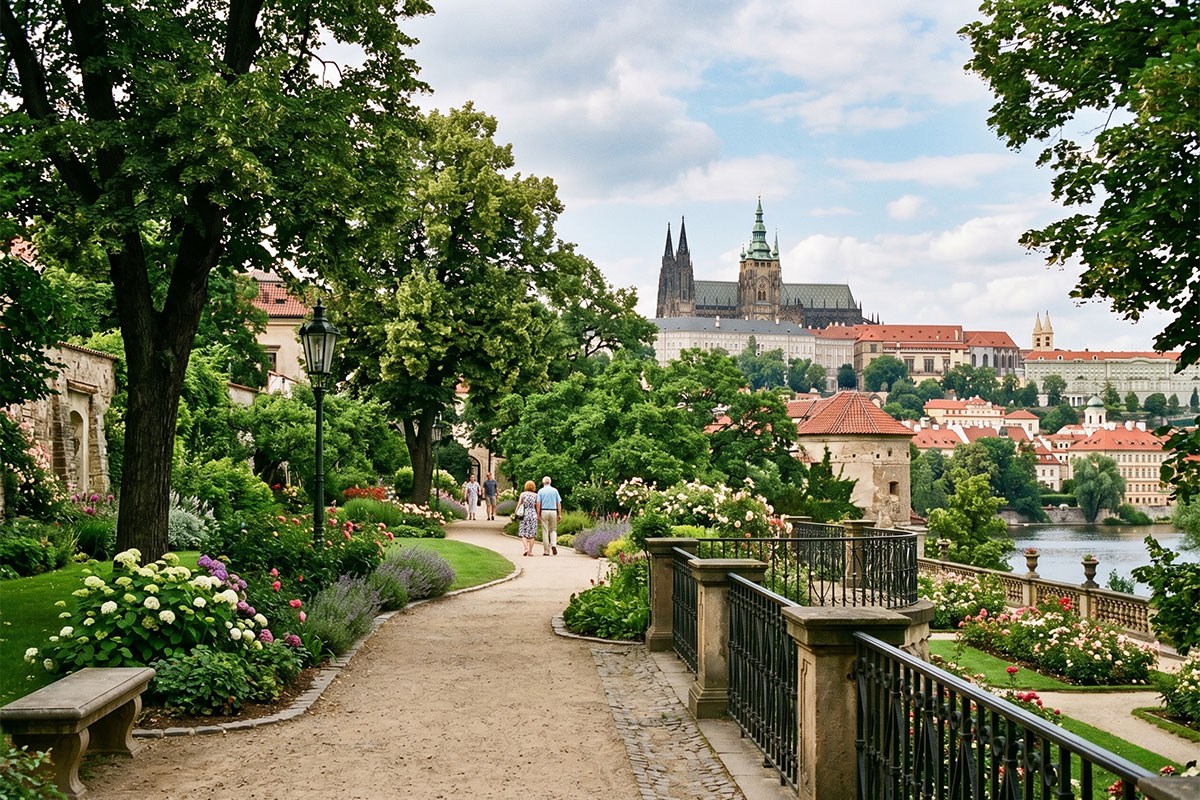
| South Gardens | Golden Hour | Telephoto (70-200mm) | City panoramas, rooftops of Malá Strana, warm light. |
| St. Vitus (Side View) | Afternoon Sun | Telephoto / Macro | Gargoyles, flying buttresses, stained glass details. |
| Golden Lane | Blue Hour / Evening | Fast Prime (f/1.8 or lower) | Atmospheric lighting, empty streets, night ambiance. |
| Old Royal Palace | Early Morning | 24-70mm | Vladislav Hall's architecture, historical details, light through windows. |
| Powder Tower (Mihulka) | Late Afternoon | Wide Angle / Standard Zoom | Renaissance architecture, cylindrical form, shadows and textures. |
Practical Tips for the Castle Photographer
Exploring these hidden corners requires a bit of preparation. Since the castle complex is vast and involves walking on uneven surfaces, mobility and gear choice are crucial. Avoid carrying a heavy backpack; instead, opt for a versatile setup. A standard zoom lens (24-70mm) covers most scenarios, but carrying a fast prime lens is invaluable for the darker corners and evening shots in Golden Lane.
Be mindful of security checks at the castle entrances. To maximize your shooting time, try to enter through the eastern gate (near the Black Tower) or the northern gate near the Queen Anne's Summer Palace, as lines tend to be shorter there than at the main western gate. Finally, remember that tripods are often restricted in busy areas or interiors, so having a camera with good in-body image stabilization or learning to brace yourself against walls for slower shutter speeds will serve you well.
Capturing the Spirit of Prague
The true beauty of Prague Castle isn't found in the checklist of famous sites, but in the moments of discovery between them. It is the light hitting a Renaissance window, the silence of a moat hidden beneath the city, and the glow of a lantern on an empty medieval street. By seeking out these hidden corners, you aren't just taking photos; you are preserving the timeless atmosphere of a city that has inspired artists for centuries. So, pack your camera, step away from the crowd, and let the castle reveal its secrets to you one frame at a time.