Discover the most photogenic corners of the world's largest ancient castle complex, steeped in over a millennium of history. From the Gothic spires of St. Vitus to the colorful charm of Golden Lane, this guide reveals the best angles, lighting tips, and hidden gems for photographers visiting Prague in 2026.
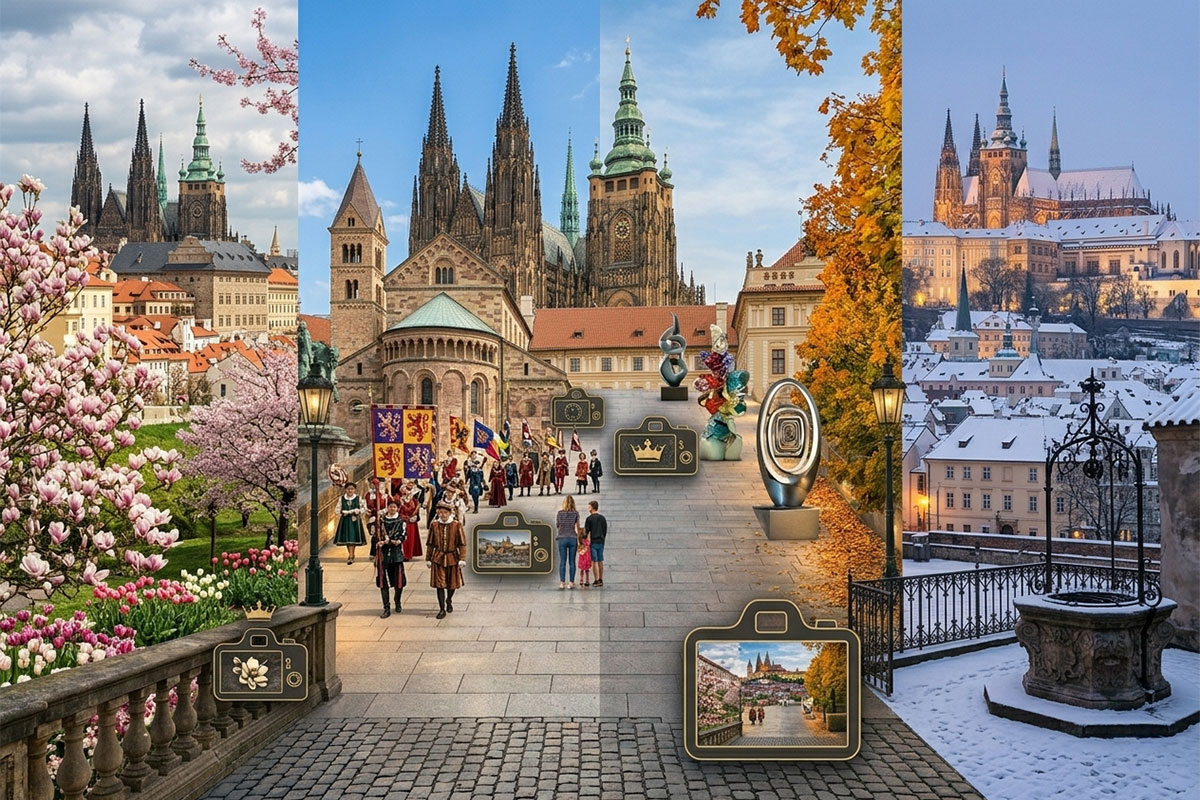
Walking up the cobblestone path toward the Prague Castle complex feels less like a typical sightseeing tour and more like stepping directly into a storybook illustration. As the largest ancient castle in the world, this sprawling architectural marvel dominates the skyline, offering a visual feast that changes with every shifting shadow and passing cloud. Before diving into the best photography spots, it's worth noting that Prague Castle's history stretches back over a millennium, serving as a seat of power for kings of Bohemia, Holy Roman emperors, and presidents of Czechoslovakia and the Czech Republic. This rich history is etched into every stone, spire, and courtyard, adding layers of depth to your photographic pursuits. For photographers and travel enthusiasts visiting in January 2026, the castle presents a unique, moody atmosphere where winter light plays dramatically against Gothic spires and Baroque facades. Whether you are wielding a professional DSLR or the latest smartphone, capturing the essence of this UNESCO World Heritage site requires knowing exactly where to stand and when to click the shutter. Beyond the standard postcards, there are angles that capture the soul of the city, turning fleeting moments into timeless travel memories.
The Gothic Grandeur of St. Vitus Cathedral
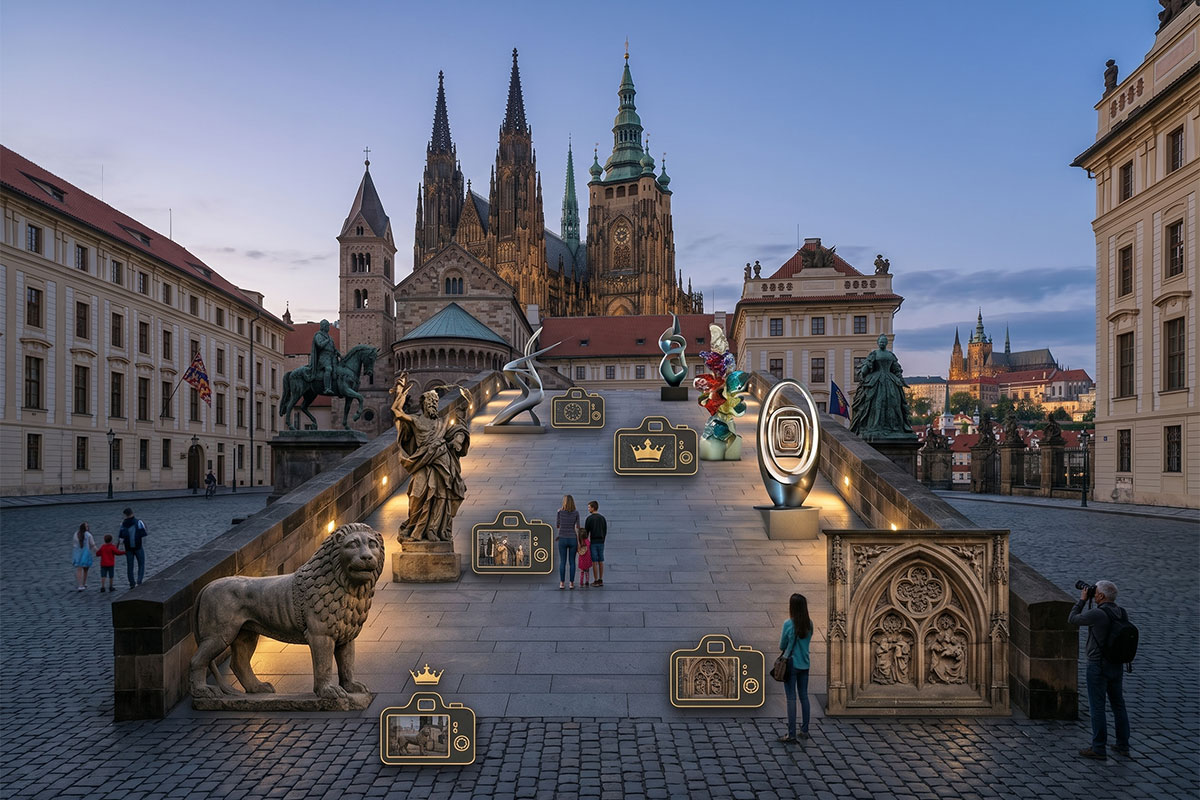
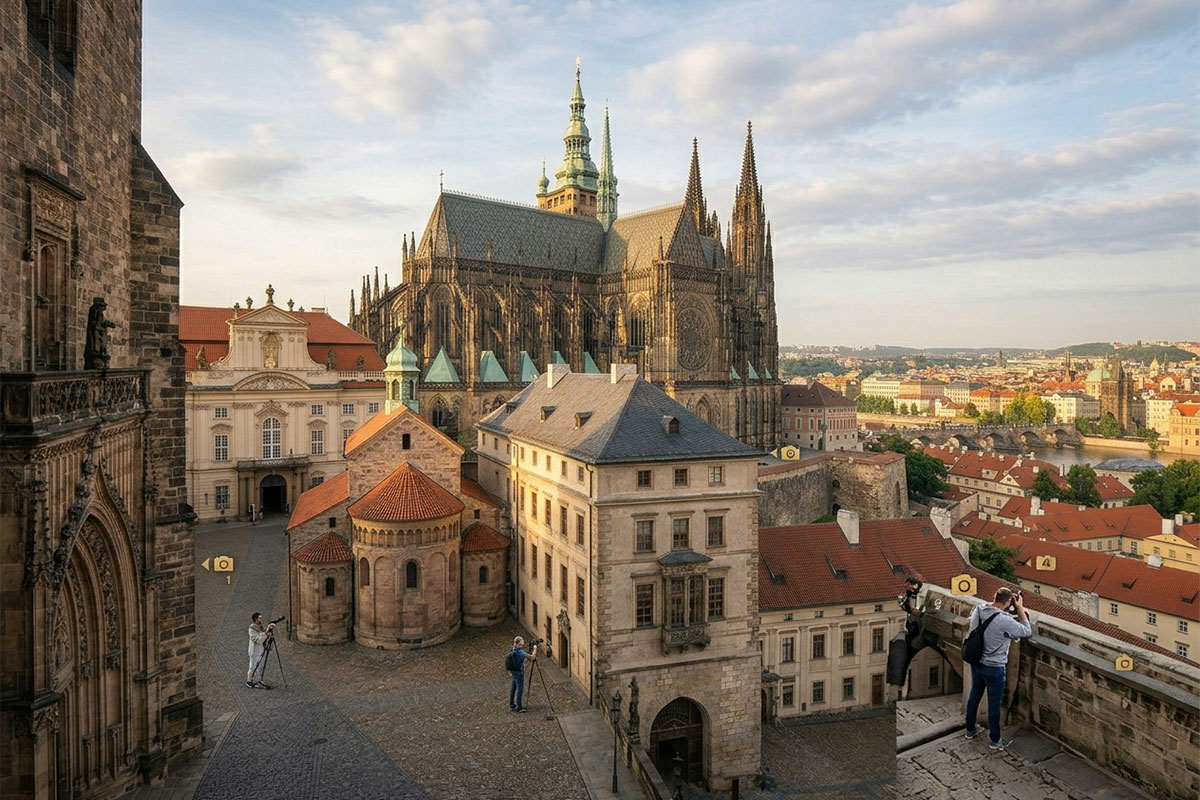
The silhouette of St. Vitus Cathedral is arguably the most recognizable feature of the Prague skyline, but photographing it up close is a delightful challenge due to its immense scale. When you stand in the Third Courtyard, the cathedral towers over you, making it difficult to fit the entire structure into a single frame without a wide-angle lens. To capture the sheer dominance of the architecture, try shooting from a low angle near the base of the Old Provost’s House, looking upwards to emphasize the soaring vertical lines against the sky. The intricate gargoyles and flying buttresses offer endless opportunities for detail shots, especially when the sunlight hits the stone, creating high-contrast textures that look stunning in black and white.
Inside the Cathedral: Stained Glass Light
Stepping inside brings a completely different photographic experience, characterized by the ethereal light filtering through the stained glass windows. The most famous of these is the Art Nouveau window designed by Alfons Mucha, which casts a vivid kaleidoscope of blues, yellows, and greens onto the stone pillars. To photograph this effectively without a tripod (which is generally restricted inside), you will need to bump up your ISO and keep a steady hand to capture the rich saturation of the glass without blurring the dark architectural details surrounding it. The best time for this is mid-morning when the sun is high enough to penetrate the glass but not so harsh that it washes out the colors.
The Charm of Golden Lane (Zlatá ulička)
Golden Lane is famous for its tiny, colorful houses that were once home to castle guards and, later, goldsmiths and writers like Franz Kafka. This street is incredibly photogenic, but it is also one of the narrowest and most crowded parts of the castle complex, making clean shots difficult to achieve during peak hours. The vibrant pastel facades—blue, yellow, and red—create a whimsical composition that works best when you focus on the geometry of the windows and doors. Because the lane is narrow, shooting straight on can flatten the image; instead, try shooting from a 45-degree angle to capture the depth of the street and the uneven cobblestones that add so much character.
- Arrive Early or Late: To capture Golden Lane without a sea of tourists, aim to be there right when the gates open or an hour before closing.
- Look Up: The upper levels often feature medieval armor displays and wooden walkways that offer unique framing opportunities.
- Details Matter: Don't just shoot the houses; focus on the antique door handles, the tiny windows, and the texture of the plaster.
Panoramic Views from the Castle Ramparts
While the interior of the castle is breathtaking, the views looking outward over the city of Prague are what truly define the "City of a Hundred Spires." The viewing platform near the Black Tower (Černá věž) offers one of the finest panoramas of the Lesser Town (Malá Strana) and the Charles Bridge crossing the Vltava River. From here, the sea of terracotta red roofs creates a warm, textured carpet that contrasts beautifully with the green dome of St. Nicholas Church. In January 2026, you might be lucky enough to catch a dusting of snow on these roofs, which transforms the scene into a monochromatic winter wonderland, adding a layer of silence and magic to your images.
Hradčanské Náměstí (Hradčany Square)
Before you even enter the main gates, Hradčany Square offers a spectacular vantage point. The statue of T.G. Masaryk stands guard over a view that stretches all the way to the Old Town Square and Týn Church in the distance. This is a fantastic spot for telephoto landscape photography, allowing you to compress the distance between the foreground towers and the distant horizon. Shooting from the edge of the square during the "Blue Hour"—just after sunset—balances the artificial city lights with the fading natural light, creating a deep blue sky that makes the illuminated landmarks pop.
Lighting Conditions and Timing Strategy
Understanding light is the key to elevating your Prague Castle photography from good to breathtaking. The castle sits on a hill facing east, which means the lighting conditions change drastically throughout the day. To help you plan your shoot, we have broken down the photographic potential based on the time of day in the table below.
| Time of Day | Lighting Characteristic | Best Subject to Photograph |
| Sunrise | Soft, golden, rising from the city side. | The view of the city from the ramparts; the Charles Bridge with the castle in the background. |
| Mid-Day | Harsh, high contrast, bright. | Interiors (St. Vitus), architectural details, textures of stone walls, Golden Lane shadows. |
| Golden Hour | Warm, directional, long shadows. | The West Facade of the Cathedral, Hradčany Square, portraits against the castle walls. |
| Blue Hour / Night | Deep blue skies, artificial illumination. | The illuminated castle from the riverbank, St. George's Basilica facade. |
The Royal Garden and Summer Palace
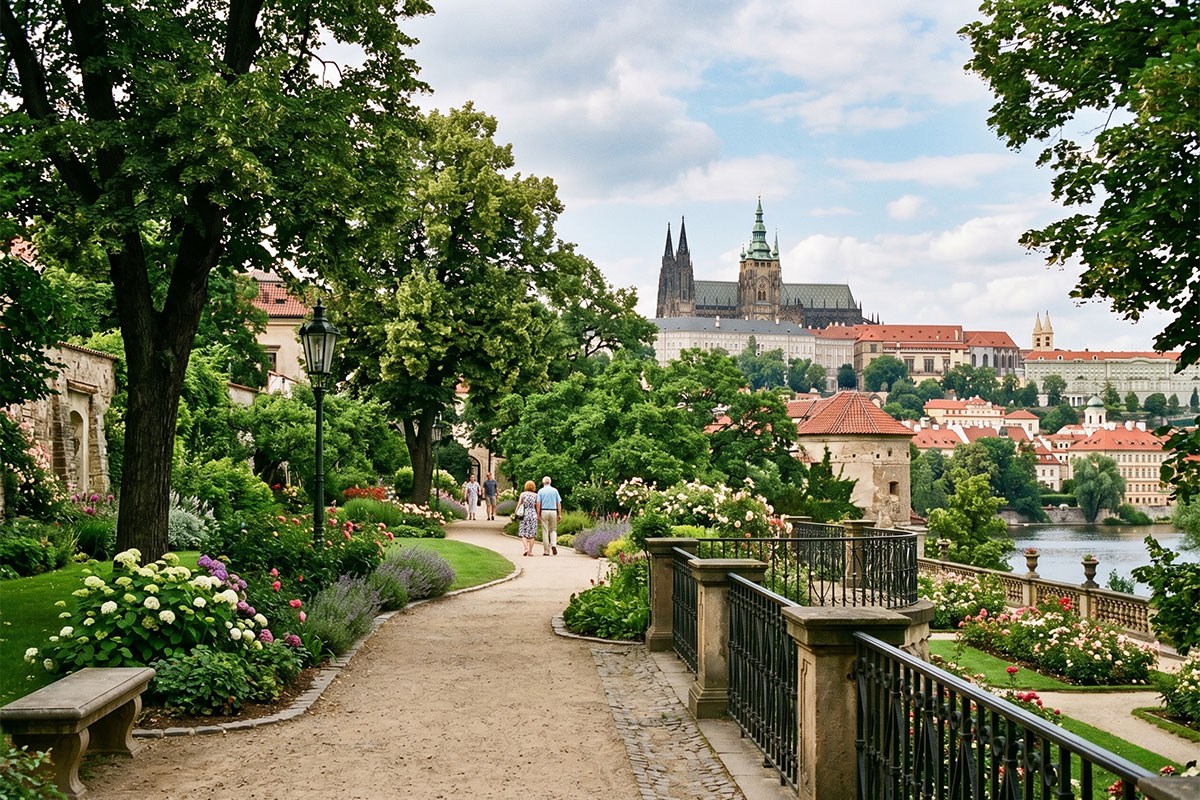
Although access can be seasonal, the Royal Garden (Královská zahrada) offers some of the most refined compositions when open. The Renaissance-style Queen Anne’s Summer Palace (Belvedere) is an architectural gem with its singing fountain and symmetrical arcades that frame the cathedral in the distance perfectly. Even in winter months when the flowers aren't in bloom, the manicured hedges and the structure of the trees provide leading lines that draw the viewer's eye toward the main castle complex. Photographing from the garden allows you to capture the castle in the context of nature, softening the heavy stone architecture with organic shapes and greenery.
Hidden Gems and Alternative Perspectives
Beyond the well-trodden paths, Prague Castle offers several lesser-known spots that can yield unique and rewarding photographs:
- Old Castle Steps (Staré zámecké schody): These historic steps offer a stunning perspective looking up towards the castle, especially during sunrise or sunset. The winding staircase and surrounding vineyards create a picturesque frame.
- Lobkowicz Palace: While there's an entrance fee, the Lobkowicz Palace offers breathtaking views from its balcony, providing a different angle of St. Vitus Cathedral and the city below.
- St. George's Basilica (Bazilika sv. Jiří): This Romanesque basilica, often overlooked, features stunning interiors and a serene atmosphere, perfect for capturing the contrast between light and shadow. Focus on the details of the frescoes and the architecture.
Essential Gear and Practical Tips
You don't need a studio's worth of equipment to capture Prague Castle, but a few strategic choices will make your life easier. A wide-angle lens (16-35mm equivalent) is practically mandatory for the courtyard shots and the interiors of the cathedral. Conversely, a telephoto lens (70-200mm) is excellent for picking out architectural details on the towers or compressing the city views from the ramparts. Wear comfortable shoes with good grip; the cobblestones can be slippery, especially in the winter or after rain, and you will be doing a significant amount of walking. Remember to be respectful of the surroundings; this is not just a tourist attraction but a functioning seat of government and a religious site.
Conclusion: Framing Your Memories
Prague Castle is more than just a collection of buildings; it is a layered history book written in stone, waiting to be read through your camera lens. Whether you are capturing the grand sweep of the Vltava River from the heights of the castle walls or zooming in on a centuries-old door handle in Golden Lane, the opportunities for creativity are endless. By exploring these specific spots and paying attention to the unique light of the season, you ensure that your photos are not just snapshots, but evocative pieces of art that transport you back to this magical city every time you look at them. So charge your batteries, clear your memory cards, and get ready to capture the timeless beauty of Prague.